Expo 2016
Status:
R&D
Year:
2014-2017
Type:
Expo Center
Size:
17,200 m²
Client:
IABA Antalya
Location:
Antalya, Turkey
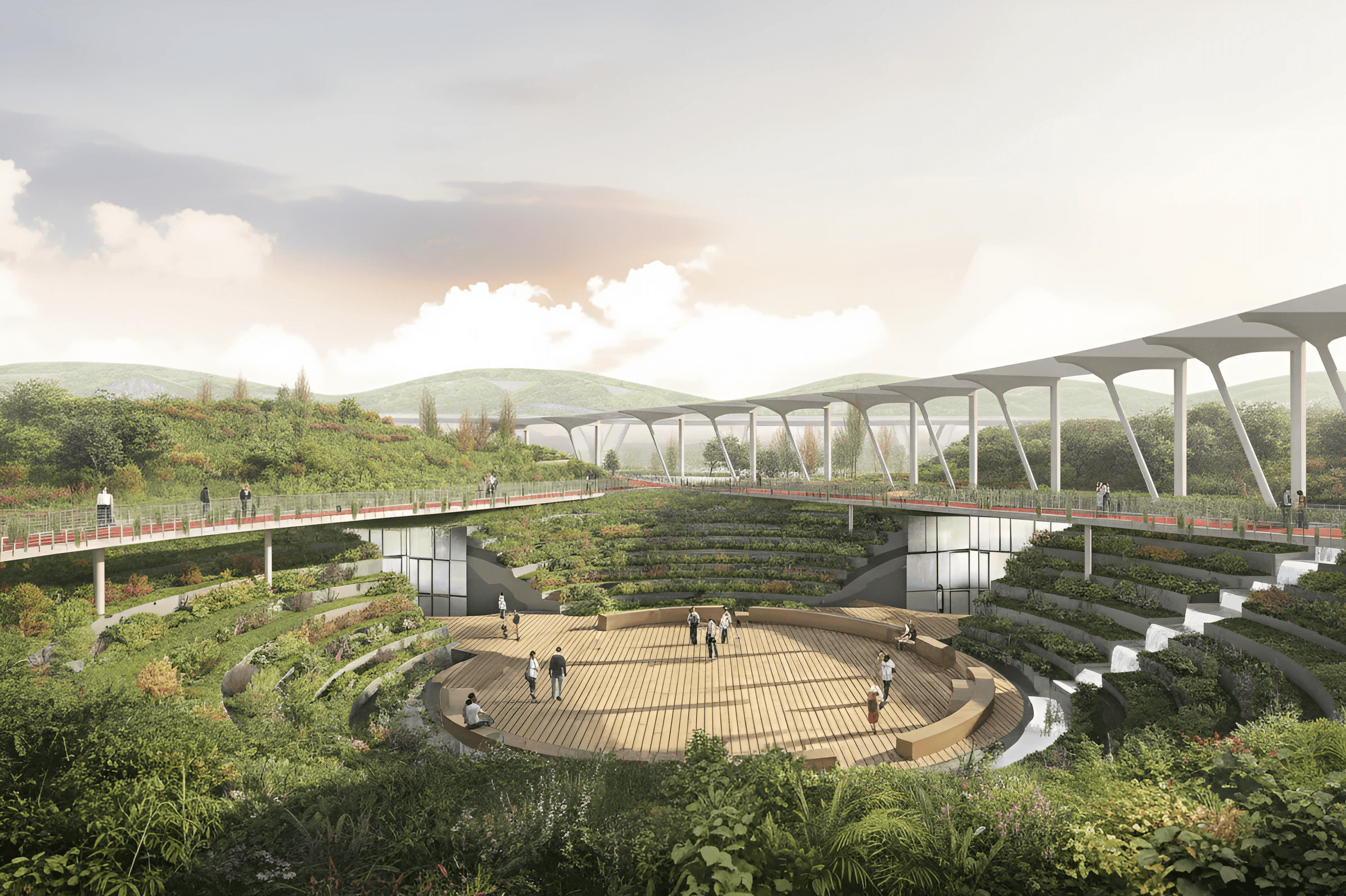
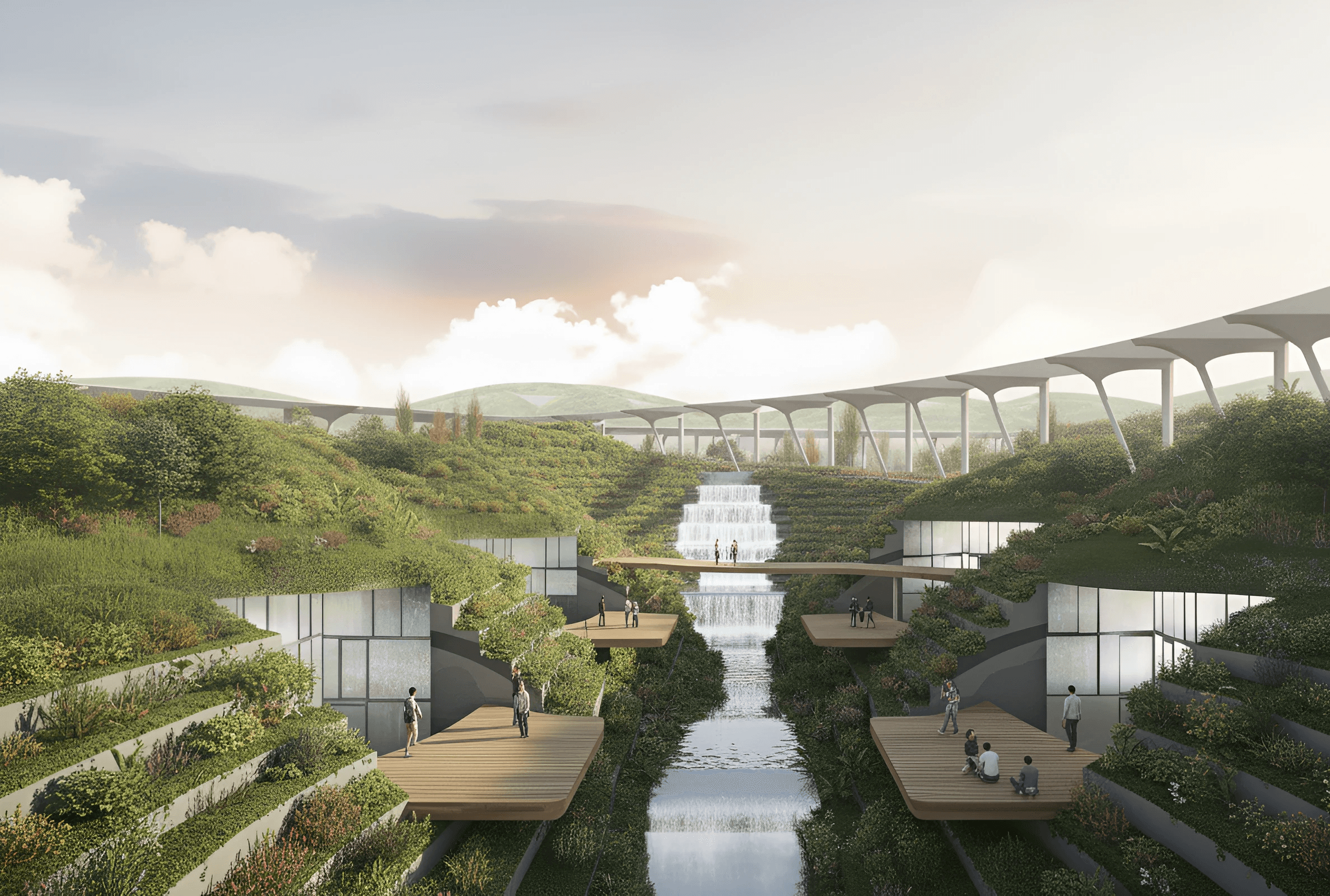
The proposal for Expo 2016 Antalya envisions the exhibition grounds as a performative ecological landscape in which architecture, endemic vegetation, and climatic intelligence are woven into a single spatial continuum. Rather than treating the Expo as a collection of isolated pavilions, the project operates as a dispersed network of atmospheric structures—lightweight timber domes, elevated botanical corridors, and shaded micro-topographies—that together construct a living anatomy of the Mediterranean environment. The architectural language draws from the deep lineage of Anatolian timber craftsmanship, yet it is refracted through contemporary computational methods that generate shell geometries capable of mediating light, humidity, and air flow with precision. These domes act simultaneously as climatic vessels and cultural artifacts, shaping interior atmospheres calibrated to the botanical narratives they host.
The design process began with a careful study of site conditions. Dense woodland encloses the western edge, while open meadows stretch toward the east. In response, the building adopts a long, narrow footprint aligned east to west — allowing for optimal daylighting and soft transitions between interior zones. Spaces are organized sequentially: the north-facing studio receives cool, even light ideal for painting, while the south-facing living space opens to a wooden terrace that catches afternoon sun and extends the interior into the surrounding field. Daily life follows the movement of light — from the quiet east-facing bedroom at sunrise to the golden shadows cast across the workspace at dusk. The elevated pathways that connect these domes are conceived as endemic ecological bridges. Rather than functioning as mere circulation, they serve as linear habitats suspended above the ground plane, carrying soil beds and plant communities native to the Antalya region. Their slow, unfolding trajectories create a second landscape in the air: a gradient of scents, textures, and micro-ecosystems that allows visitors to traverse the Expo as though moving through an elevated botanical archive. The bridges also stage a series of shifting vantage points from which the domes, the ground gardens, and the broader Antalya horizon can be read as a continuous ecological field. In this sense, the project does not present nature; it curates a multi-scalar ecological experience that expands and densifies the presence of Mediterranean flora across the site.
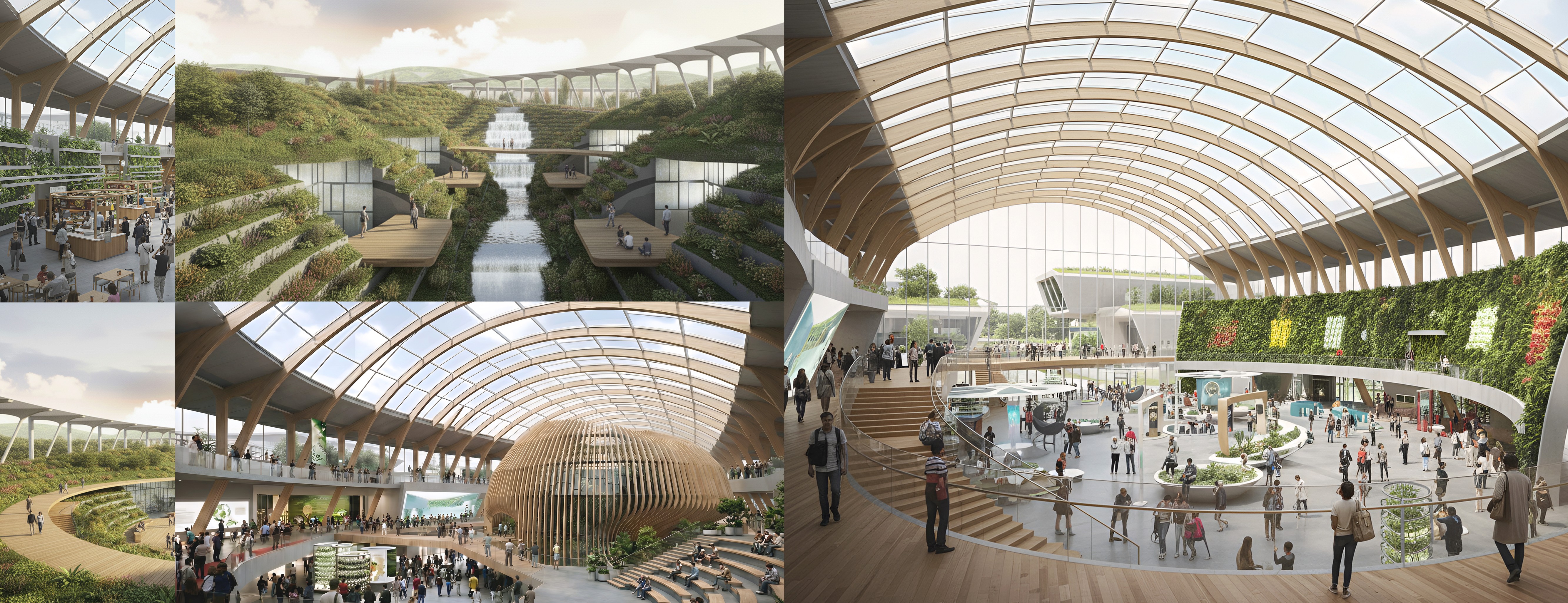
The timber domes themselves embody a synthesis of structural clarity and atmospheric nuance. Their latticed shells are tuned to filter Antalya’s intense light into gentle variations of shade, producing interior climates that oscillate between cool, cavernous calm and luminous openness. The geometry of each dome responds to specific botanical themes, enabling precise control of moisture, wind, and photic conditions. Some domes are enclosed in translucent skins that act as breathable membranes; others remain partially open, functioning as porous climatic thresholds between interior gardens and the surrounding landscape. Collectively, the domes form a dispersed constellation of micro-worlds—an index of ecological diversity articulated through architectural form. At ground level, the Expo becomes a sequence of shaded clearings and planted courts, each shaped by the interplay of topography, vegetation, and the overhead structures. The architecture mediates between earth and sky through a vocabulary of suspended gardens, filtered light, and tectonic elegance. Materials remain deliberately elemental: timber for its warmth and circularity, stone and earth for their grounding presence, and tensile fabrics where soft transitions between shade and light are required. The project’s environmental performance is embedded in its form rather than added as technology; ventilation arises from geometric apertures, cooling from evaporative plant masses, and shading from the density of structural ribs.
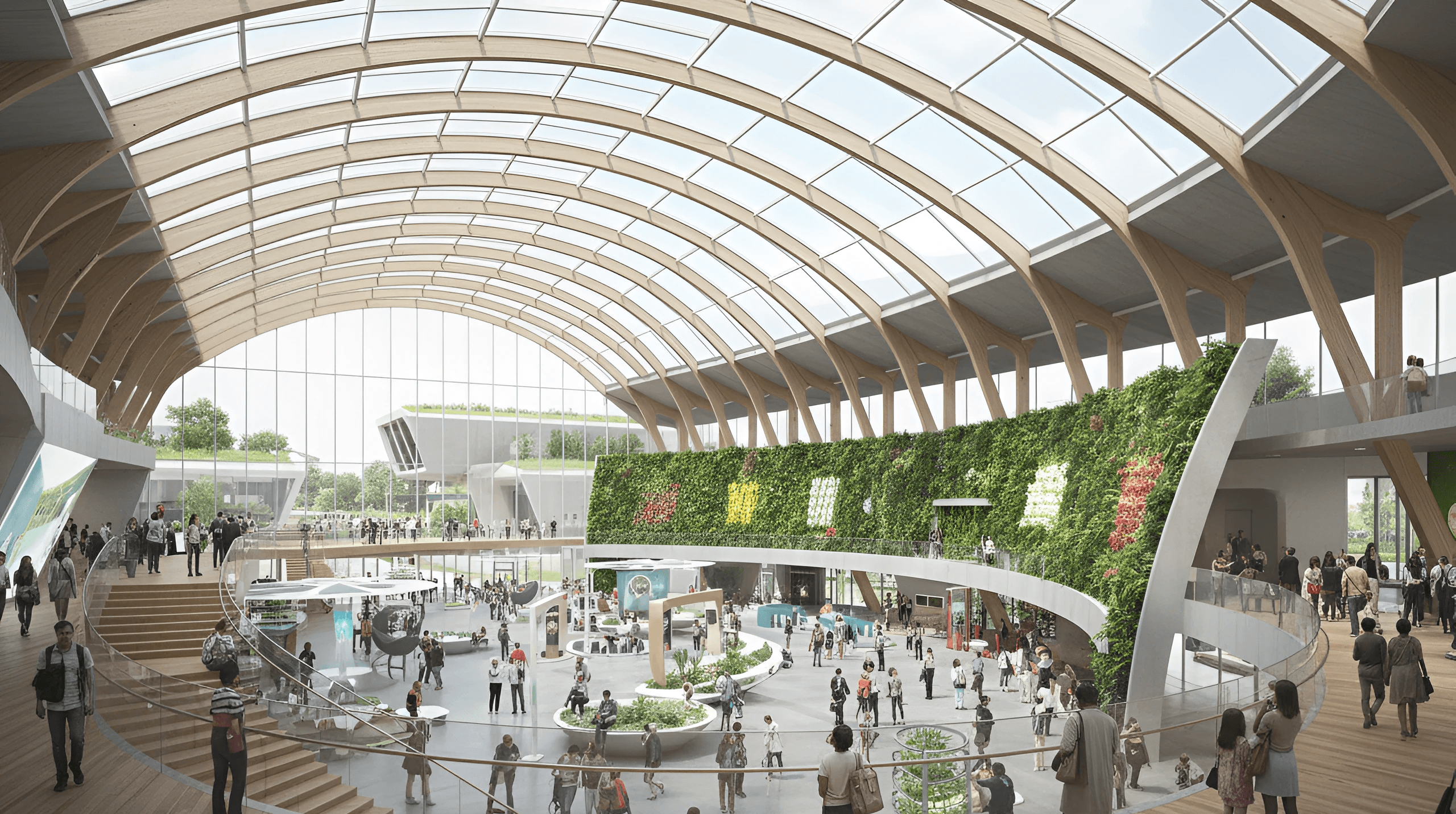
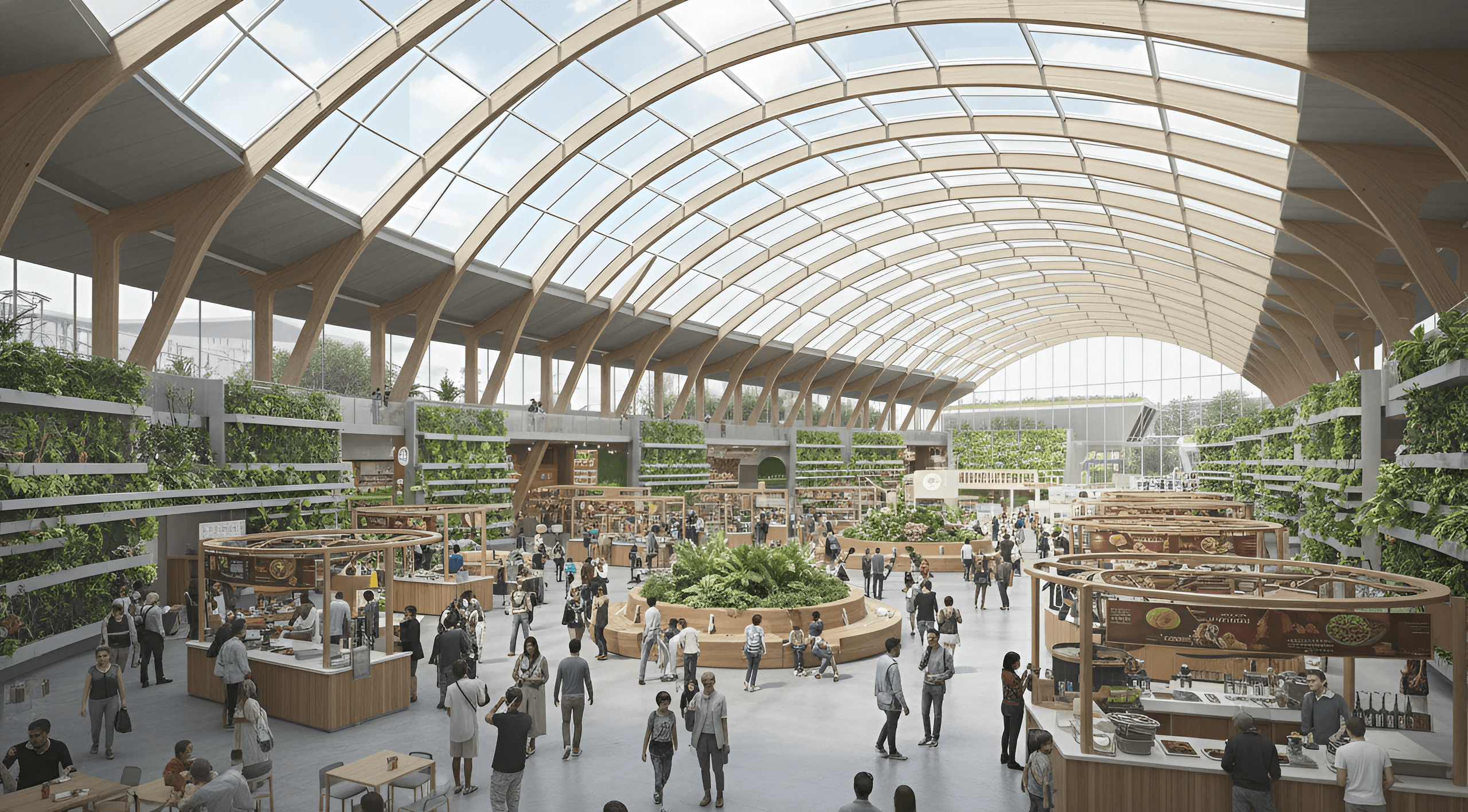
The proposal for Expo 2016 Antalya envisions the exhibition grounds as a performative ecological landscape in which architecture, endemic vegetation, and climatic intelligence are woven into a single spatial continuum. Rather than treating the Expo as a collection of isolated pavilions, the project operates as a dispersed network of atmospheric structures—lightweight timber domes, elevated botanical corridors, and shaded micro-topographies—that together construct a living anatomy of the Mediterranean environment. The architectural language draws from the deep lineage of Anatolian timber craftsmanship, yet it is refracted through contemporary computational methods that generate shell geometries capable of mediating light, humidity, and air flow with precision. These domes act simultaneously as climatic vessels and cultural artifacts, shaping interior atmospheres calibrated to the botanical narratives they host.
The design process began with a careful study of site conditions. Dense woodland encloses the western edge, while open meadows stretch toward the east. In response, the building adopts a long, narrow footprint aligned east to west — allowing for optimal daylighting and soft transitions between interior zones. Spaces are organized sequentially: the north-facing studio receives cool, even light ideal for painting, while the south-facing living space opens to a wooden terrace that catches afternoon sun and extends the interior into the surrounding field. Daily life follows the movement of light — from the quiet east-facing bedroom at sunrise to the golden shadows cast across the workspace at dusk. The elevated pathways that connect these domes are conceived as endemic ecological bridges. Rather than functioning as mere circulation, they serve as linear habitats suspended above the ground plane, carrying soil beds and plant communities native to the Antalya region. Their slow, unfolding trajectories create a second landscape in the air: a gradient of scents, textures, and micro-ecosystems that allows visitors to traverse the Expo as though moving through an elevated botanical archive. The bridges also stage a series of shifting vantage points from which the domes, the ground gardens, and the broader Antalya horizon can be read as a continuous ecological field. In this sense, the project does not present nature; it curates a multi-scalar ecological experience that expands and densifies the presence of Mediterranean flora across the site.
The timber domes themselves embody a synthesis of structural clarity and atmospheric nuance. Their latticed shells are tuned to filter Antalya’s intense light into gentle variations of shade, producing interior climates that oscillate between cool, cavernous calm and luminous openness. The geometry of each dome responds to specific botanical themes, enabling precise control of moisture, wind, and photic conditions. Some domes are enclosed in translucent skins that act as breathable membranes; others remain partially open, functioning as porous climatic thresholds between interior gardens and the surrounding landscape. Collectively, the domes form a dispersed constellation of micro-worlds—an index of ecological diversity articulated through architectural form. At ground level, the Expo becomes a sequence of shaded clearings and planted courts, each shaped by the interplay of topography, vegetation, and the overhead structures. The architecture mediates between earth and sky through a vocabulary of suspended gardens, filtered light, and tectonic elegance. Materials remain deliberately elemental: timber for its warmth and circularity, stone and earth for their grounding presence, and tensile fabrics where soft transitions between shade and light are required. The project’s environmental performance is embedded in its form rather than added as technology; ventilation arises from geometric apertures, cooling from evaporative plant masses, and shading from the density of structural ribs.
Project team:
S&A
Building physics:
S&A BPC
Honors:
Expo 2016 International Project Awards and Exhibition, 1st Prize
(Other works)