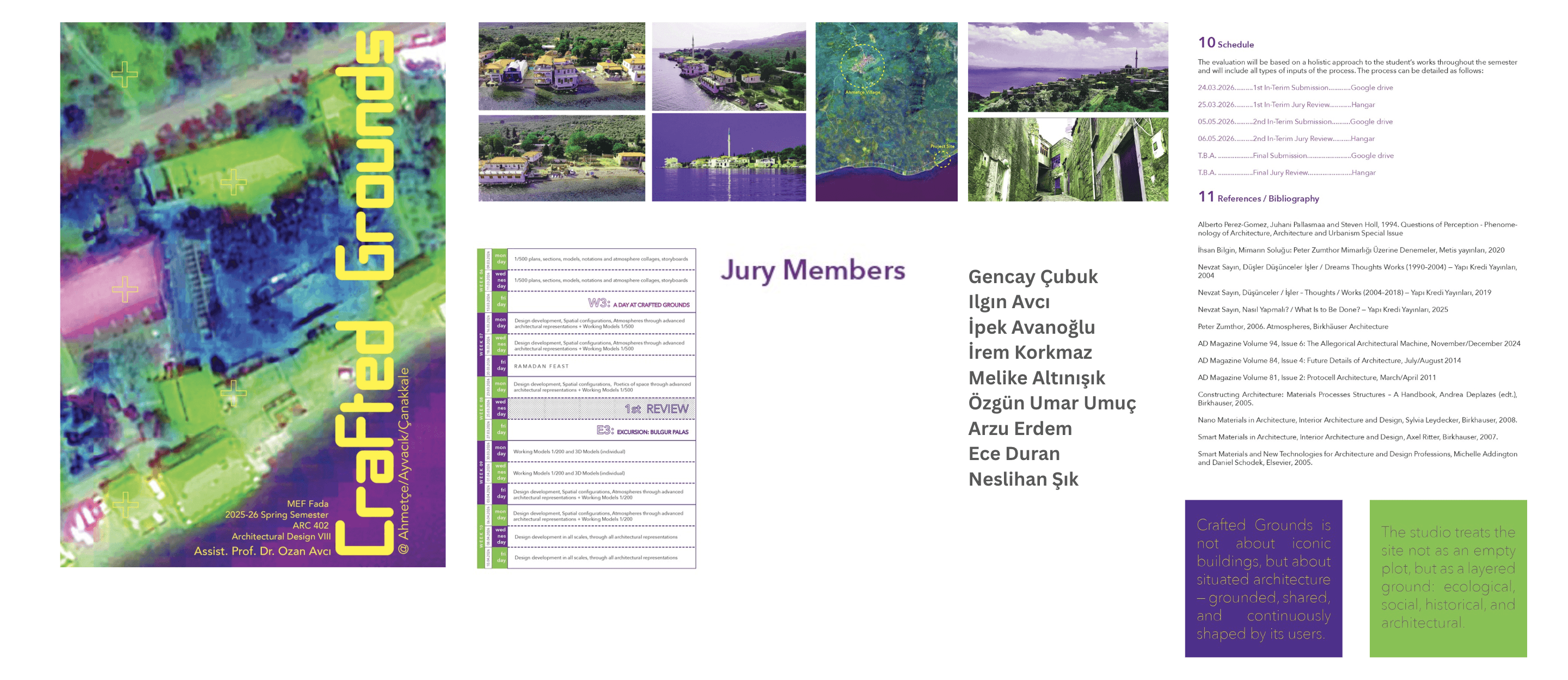
Gencay Çubuk's Europe 40 Under 40 Awards Recognition
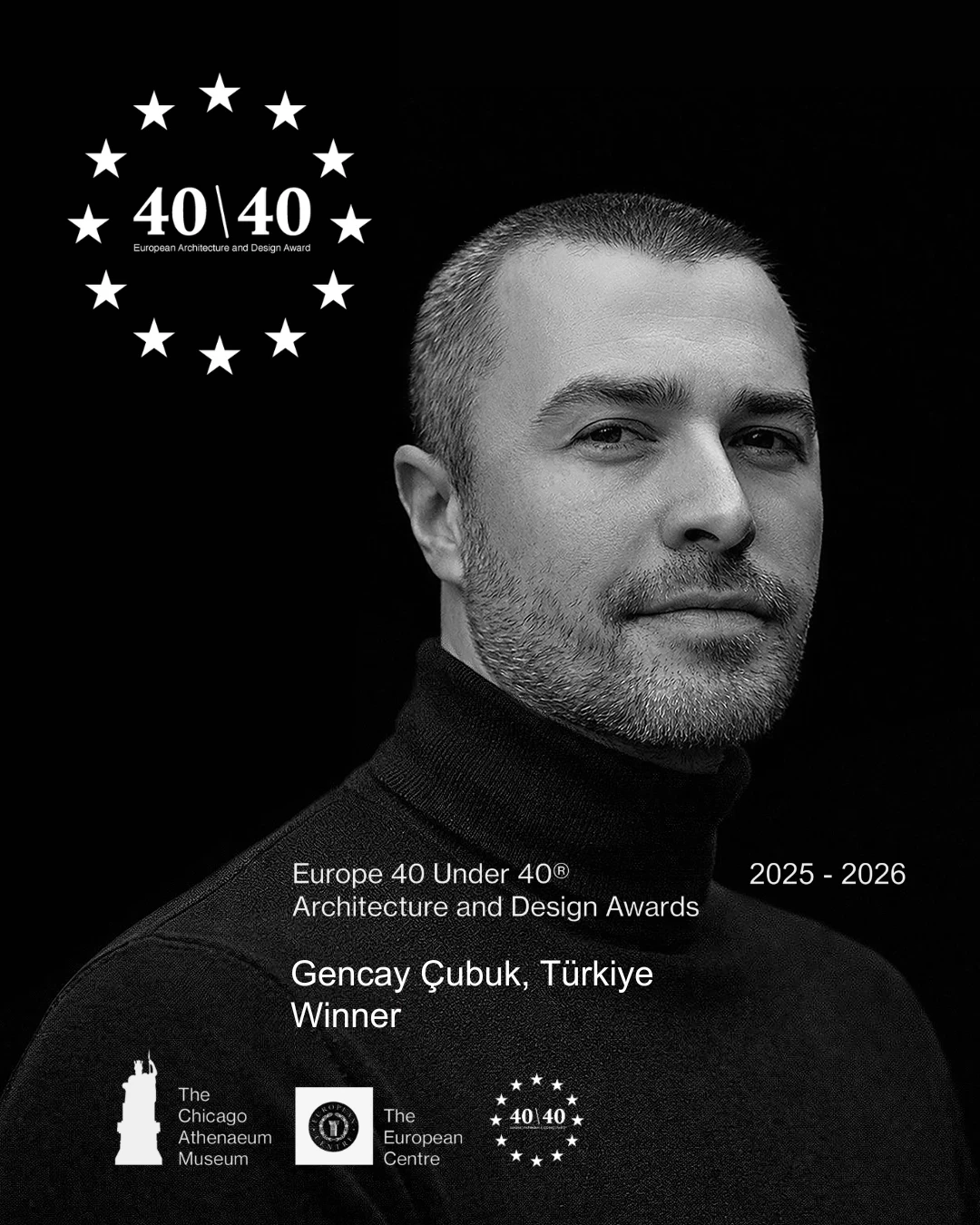
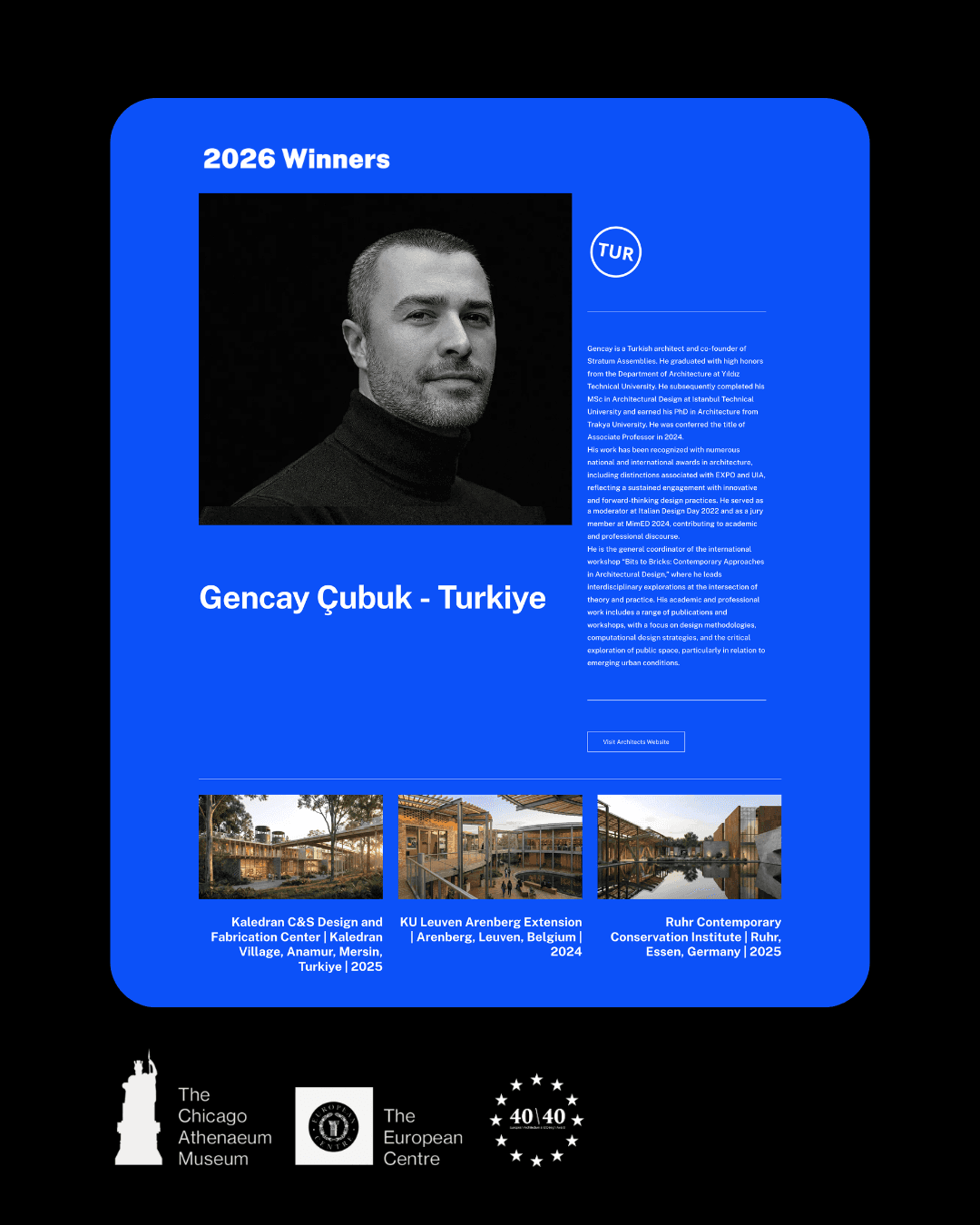
Gencay Çubuk has been selected as one of the winners of the prestigious Europe 40 Under 40 Awards, an internationally recognized program organized by The European Centre for Architecture Art Design and Urban Studies together with The Chicago Athenaeum: Museum of Architecture and Design. The program annually identifies and promotes Europe’s most promising architects and designers under the age of 40 whose work contributes new perspectives to architecture, urbanism, design culture, and the contemporary built environment. Beyond a conventional award structure, Europe 40 Under 40 functions as an international platform that brings emerging practices into a broader architectural discourse through publications, exhibitions, and institutional visibility across Europe and beyond.
The selection includes three projects developed across different geographies and scales, each investigating the relationship between architecture, landscape, material systems, and cultural continuity through distinct spatial approaches.

Rural Infrastructure and Mediterranean Topologies
Kaledran C&S Design and Fabrication Center is conceived as a contemporary ceramic design and production infrastructure embedded within the rural Mediterranean landscape of Kaledran Village in Anamur, Mersin. Rather than reproducing nostalgic or curated interpretations of rurality, the project engages directly with the agricultural rhythms, climatic conditions, and low-density production ecology of the region. Ceramic practice is approached not as an isolated craft activity but as a collective spatial process shaped by labor, ground, material transformation, and continuity.
Architecturally, the proposal unfolds as a dispersed constellation of low-rise volumes carefully calibrated to existing topographic gradients and agricultural traces. Kilns, workshops, drying courtyards, material preparation areas, educational units, and semi-open production spaces are articulated as interconnected yet independent structures operating within a porous field condition rather than a singular institutional object. Shaded circulation routes, transitional thresholds, galleries, and open-air working zones regulate light, heat, airflow, and social interaction while establishing continuous spatial relationships between production environments and the surrounding Mediterranean terrain. The project ultimately positions architecture as an adaptive environmental framework capable of mediating between craft production, climate, landscape, and collective learning.
Porous Campus Ecology and Spatial Restraint
KU Leuven Arenberg Extension proposes an alternative model for academic expansion through spatial continuity, landscape integration, and architectural restraint. Located within the existing green structure of the Arenberg Campus in Leuven, the project deliberately avoids the language of iconic institutional growth and instead develops a quiet, research-oriented environment where architecture operates as a supporting framework for intellectual exchange and collective academic life.
The extension is organized as a network of low-rise pavilions embedded within the campus landscape, generating a porous academic ground in which built form and open space operate as a continuous system rather than separate entities. Courtyards, planted clearings, shaded pedestrian routes, and intermediate exterior spaces establish a sequence of spatial conditions mediating between openness and enclosure. This approach allows educational, social, and research activities to unfold in close dialogue with vegetation, seasonal change, and everyday campus rhythms. Material continuity, calibrated proportions, and landscape-sensitive positioning reinforce the project’s intention to produce not monumentality, but legibility, continuity, accessibility, and long-term institutional adaptability.