Visiting Professorship at the University of Florence
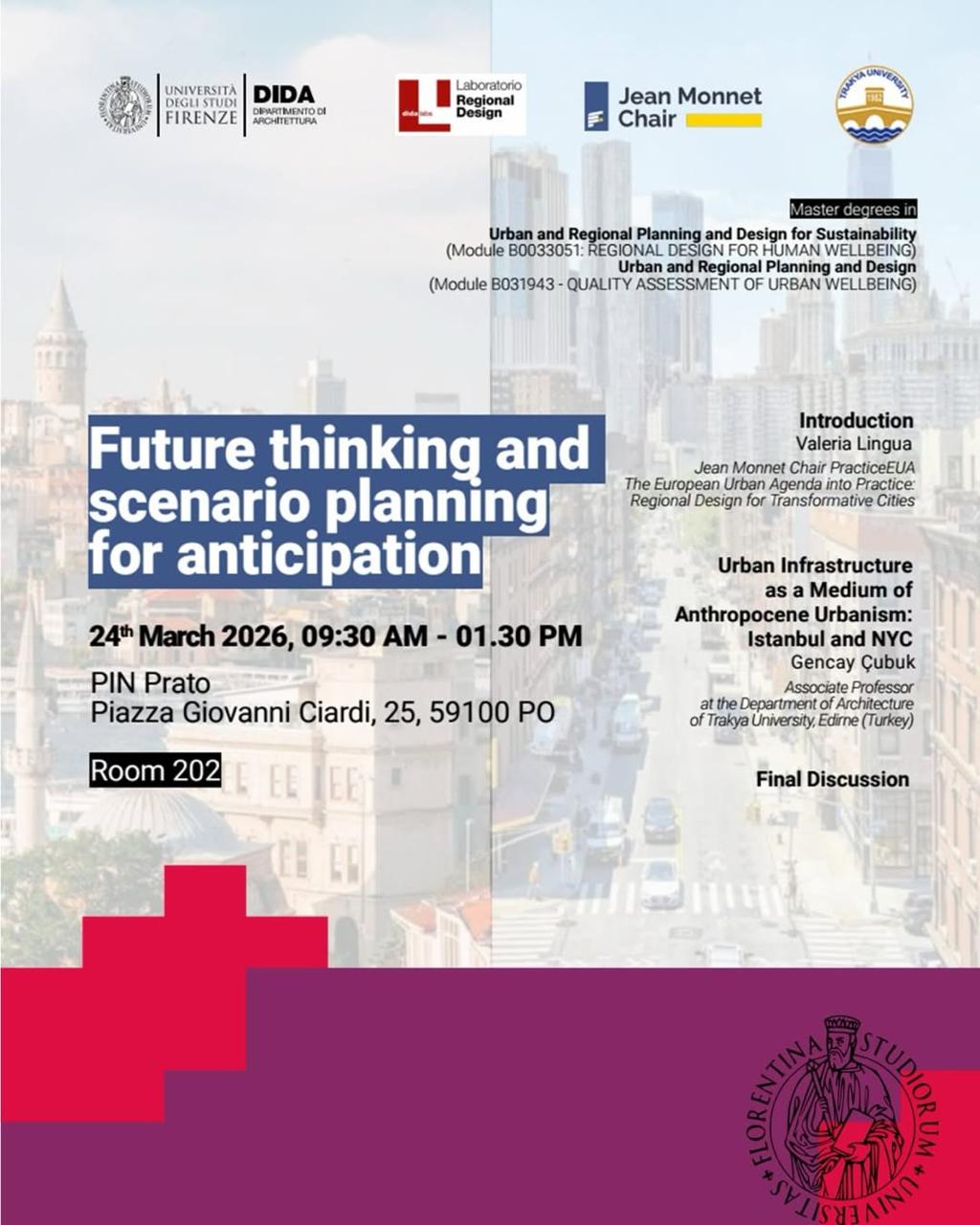
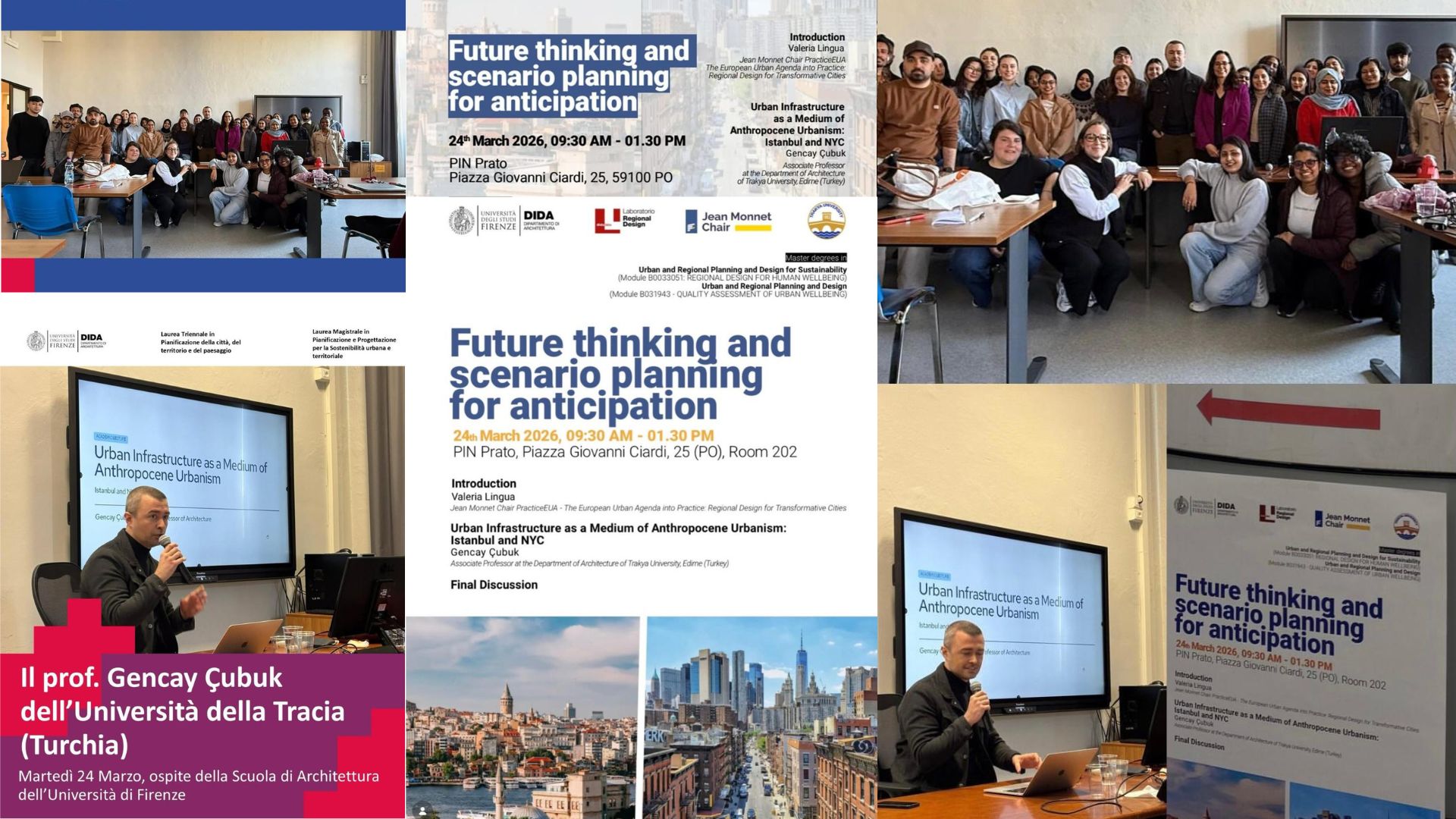
Assoc. Prof. Dr. Gencay Çubuk participated in the Erasmus Staff Mobility Programme as a visiting faculty member at the Faculty of Architecture of Università degli Studi di Firenze between March 23 and April 3, 2026. During the mobility period, he delivered a series of graduate- and doctoral-level lectures, seminars, and academic discussions focusing on contemporary metropolitan transformations, infrastructure urbanism, adaptive reuse, and future-oriented urban design methodologies within the context of Istanbul and other large-scale metropolitan environments.
Within the scope of the master’s course titled “Future Thinking and Scenario Planning for Anticipation,” the lectures explored the relationship between urban transformation, ecological crises, infrastructure systems, and speculative design thinking under the conditions of the Anthropocene. The course addressed topics including Anthropocene Urbanism in Istanbul, metropolitan infrastructure networks such as highways, metro systems, ports, and logistics corridors, as well as the spatial consequences of post-infrastructure urbanism in rapidly transforming metropolitan territories. Particular emphasis was placed on the evolving role of infrastructural systems not merely as technical networks, but as spatial, ecological, and socio-political frameworks shaping contemporary urban life.
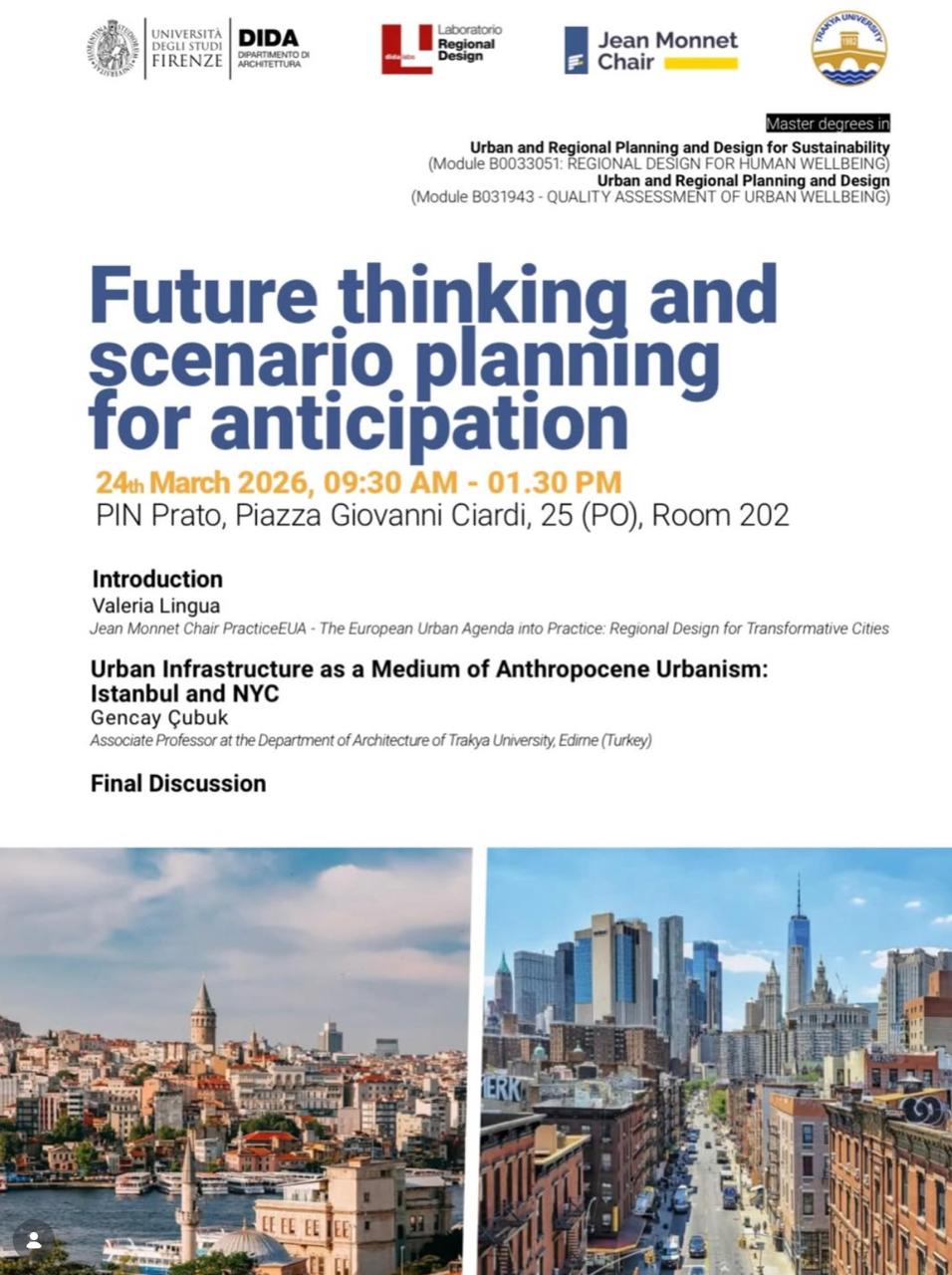
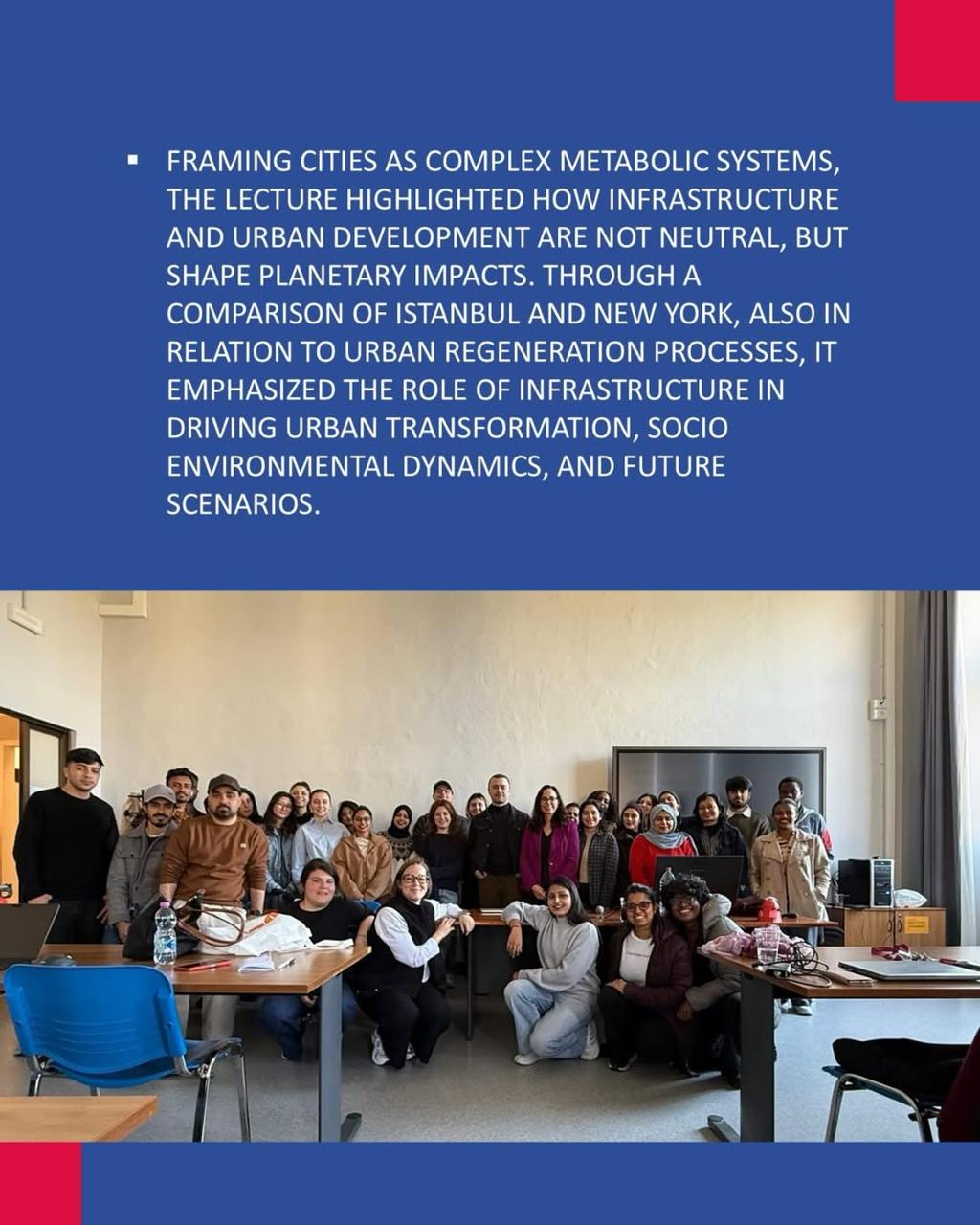
Anthropocene Urbanism and Metropolitan Infrastructure
The course also examined adaptive reuse strategies for industrial structures and obsolete urban infrastructures, discussing how abandoned or underutilized industrial environments can be reinterpreted as new cultural, social, and public interfaces within metropolitan contexts. In addition, the theme of Water Urbanism was discussed through the spatial and historical relationships established by the Bosphorus and the Golden Horn, focusing on waterfront ecologies, maritime infrastructures, coastal transformation processes, and the interaction between water systems and urban morphology in Istanbul.
As part of the doctoral seminar series titled “Metropolitan in Transition,” the lectures focused on large-scale urban transformation processes, informal urbanization dynamics, and contemporary urban design strategies emerging within rapidly evolving metropolitan territories. The seminars addressed topics such as Marmara Coastline and Waterfront Transformations, the changing spatial character of coastal settlements, and the socio-environmental implications of waterfront redevelopment processes in Istanbul and the Marmara Region.
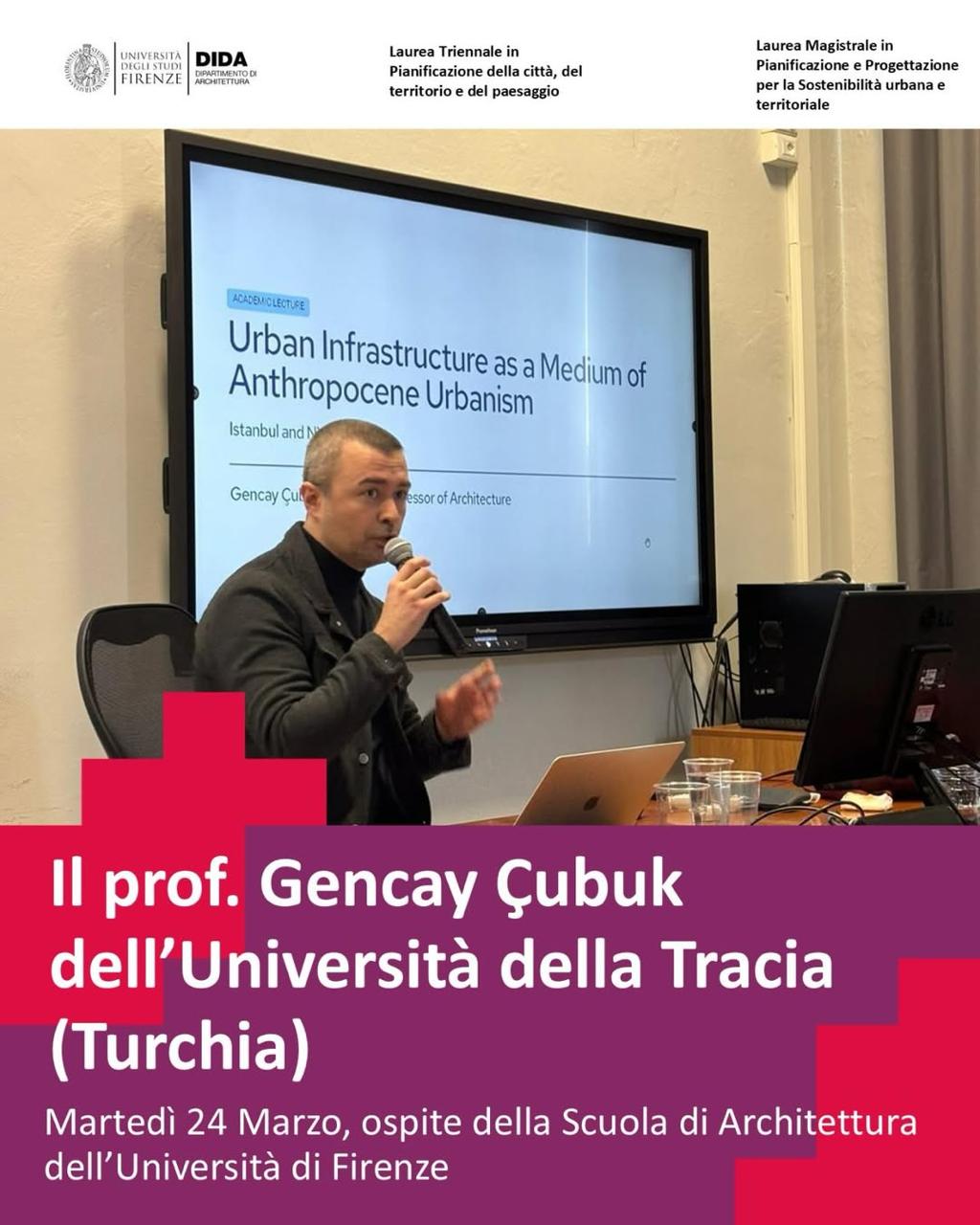
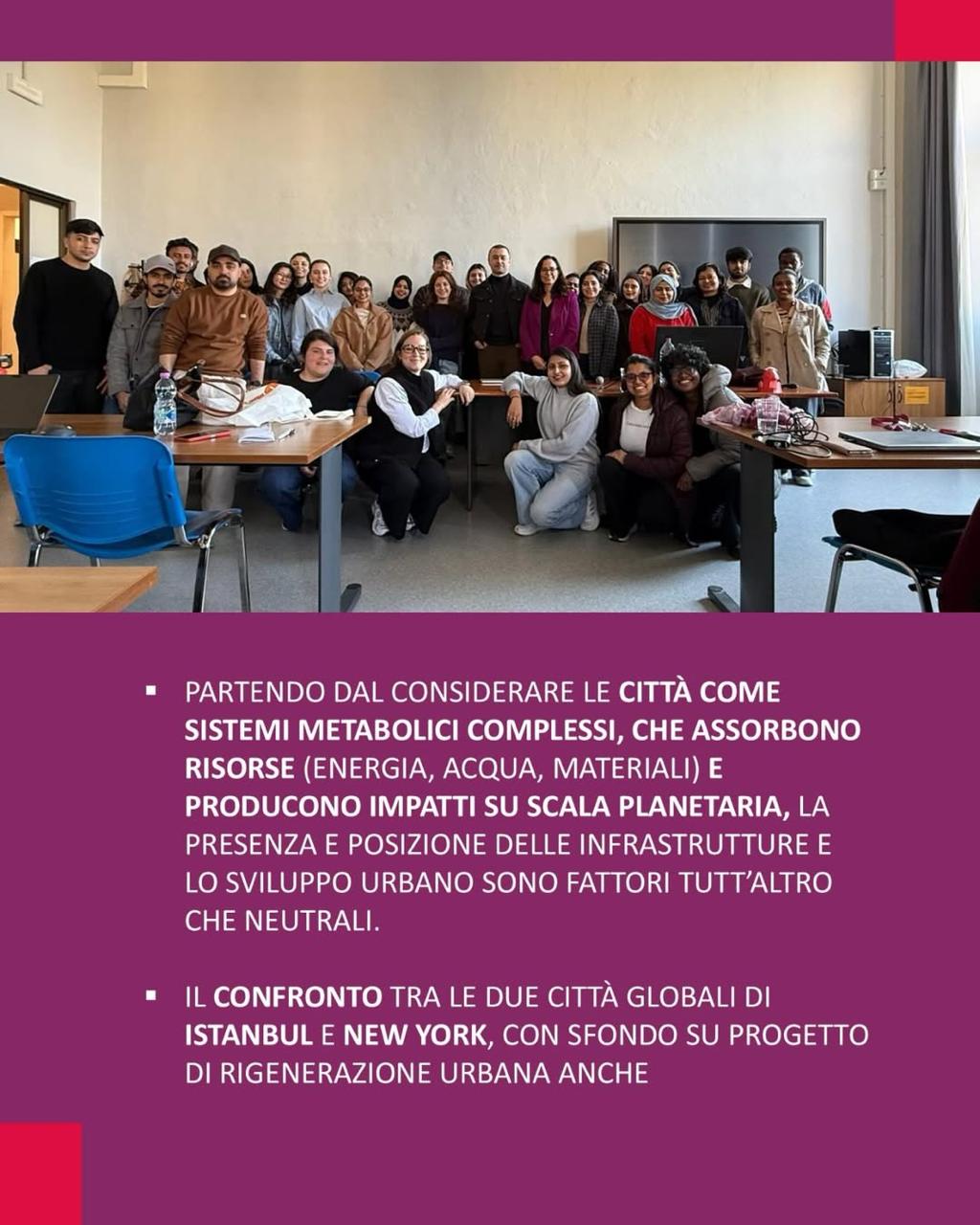
Transformations and Contemporary Urban Design
Further discussions examined Informal Urbanism and Self-Built Neighborhoods as critical components of metropolitan growth, emphasizing incremental urbanization processes, spatial adaptability, and the complex relationship between formal planning systems and informal settlement structures. The seminars additionally explored Urban Morphology and Incremental Urban Growth alongside contemporary urban design approaches developed for Istanbul, discussing questions of density, infrastructure, mobility, resilience, and layered urban continuity within historical and contemporary metropolitan fabrics.
The programme was completed through interactive discussions, student presentations, collective critiques, feedback sessions, and final evaluations, fostering an interdisciplinary academic exchange between students, researchers, and faculty members. The Erasmus mobility process contributed to an international dialogue on architecture, urbanism, infrastructure, and metropolitan futures while strengthening academic collaboration between Università degli Studi di Firenze and Turkish architectural education and research environments.