Cadaqués Hideaway
Status:
R&D
Year:
2019-2024
Type:
Eco-Residency / Artist & Research Retreat
Size:
2900 m²
Client:
Esteve Casals, Quim Rovira
Location:
Cadaqués, Girona, Spain


Located in the hinterland of Cadaqués, Cadaqués Hideaway is conceived as a landscape-embedded residency retreat that privileges silence, production, and spatial restraint over visibility and spectacle. Rather than operating as a conventional destination, the project is imagined as a deliberate withdrawal—an architecture that recedes into the terrain and allows inhabitation to unfold slowly, through movement, light, and time.
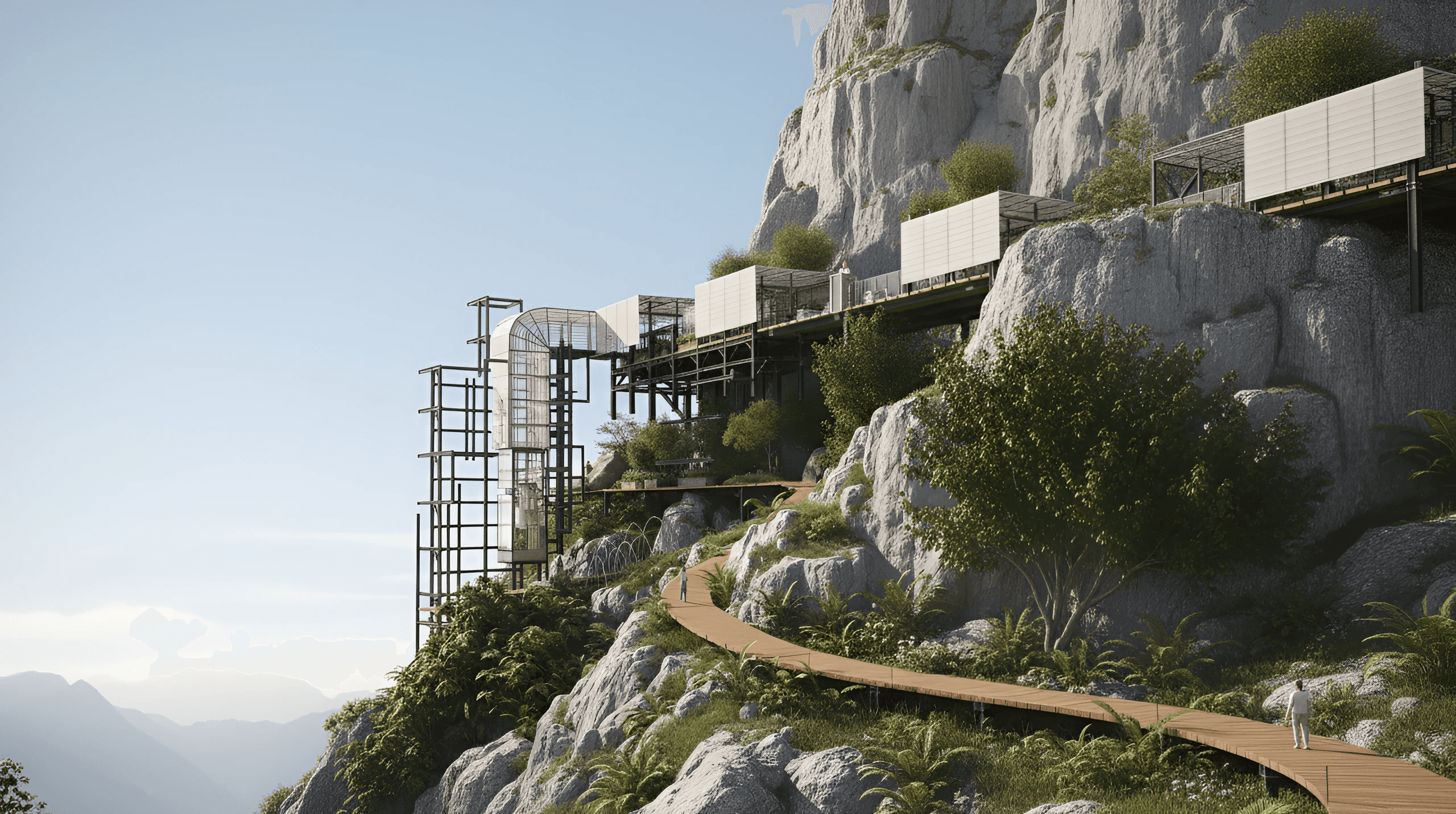
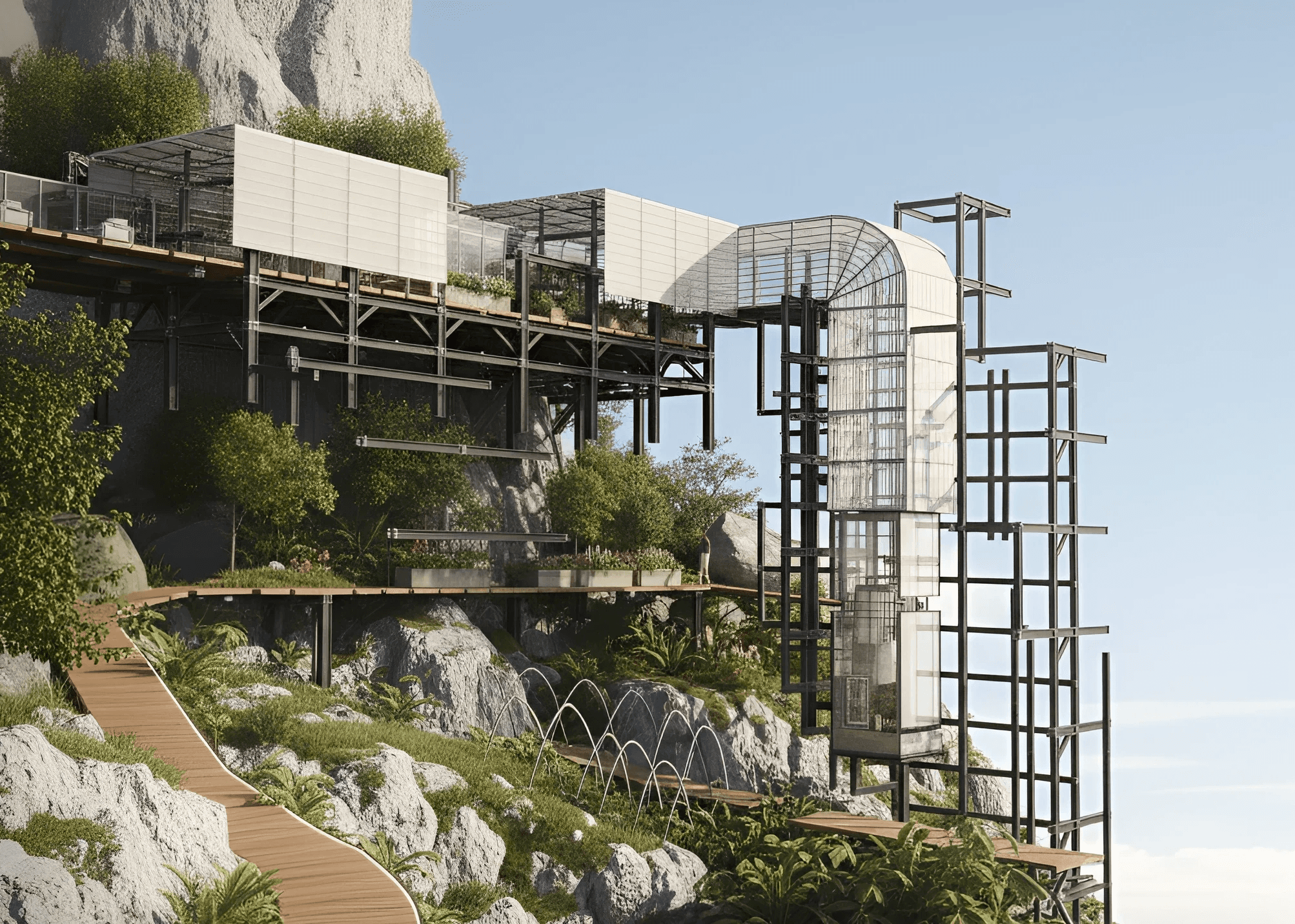
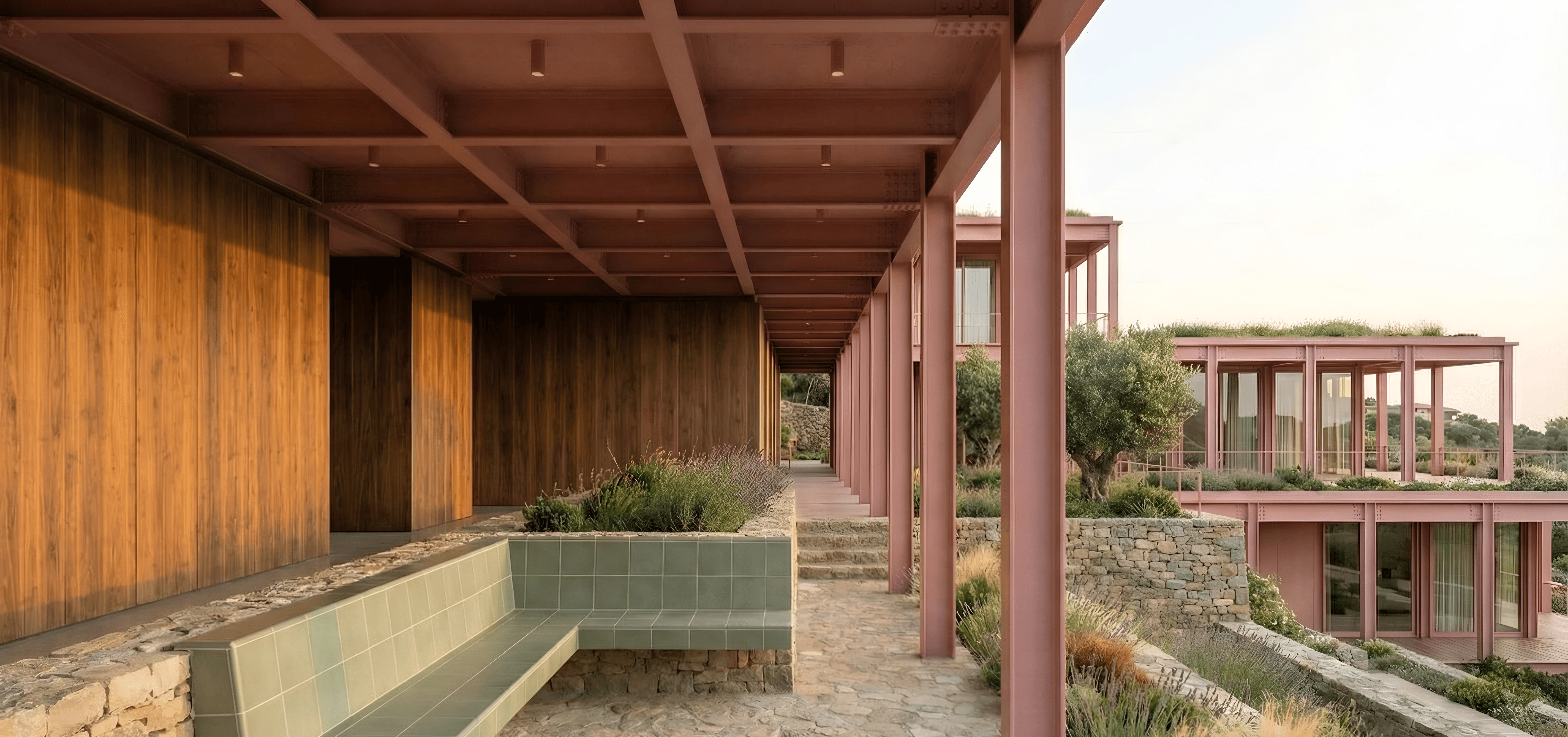
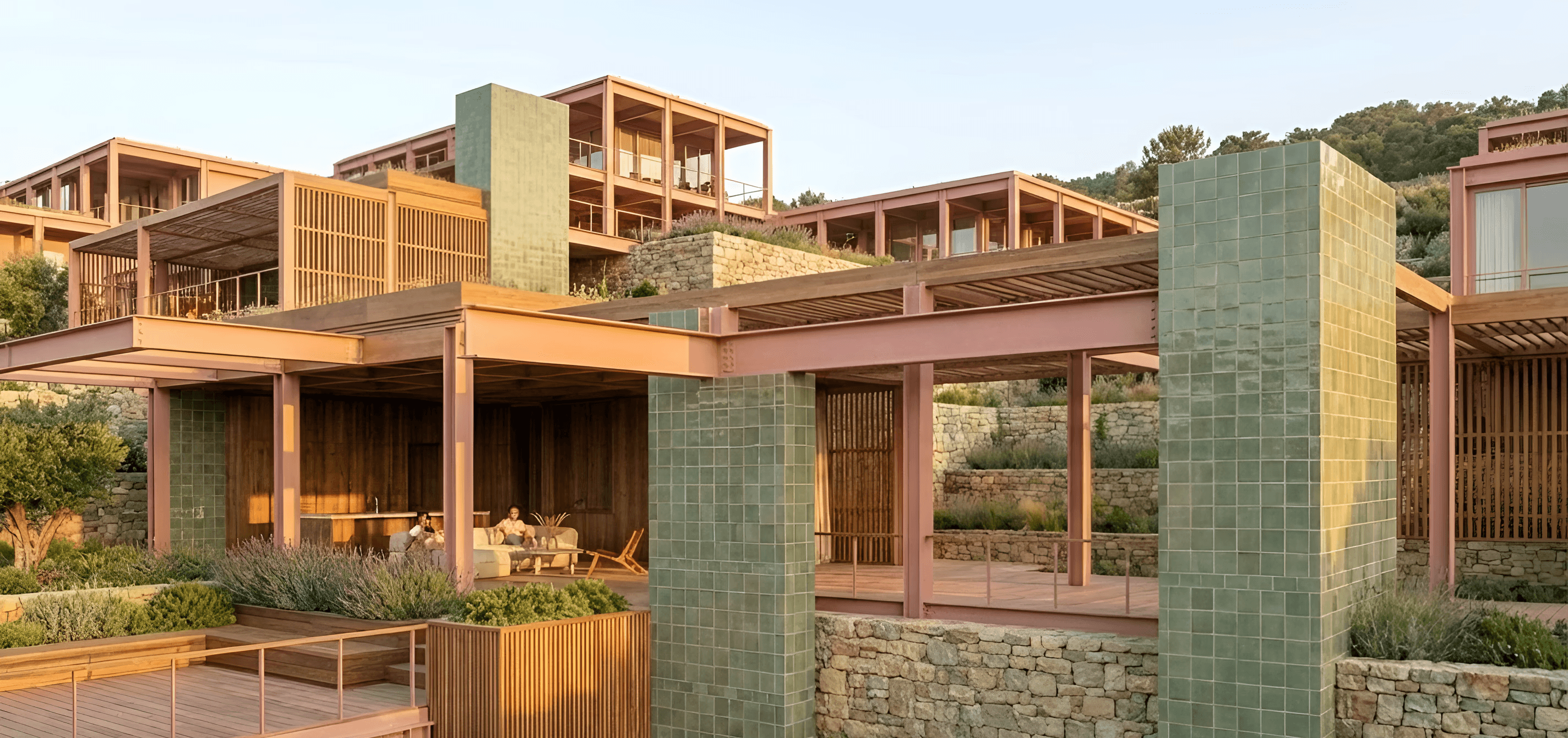
The project is structured as a constellation of low-rise pavilions terraced along the natural slope. These pavilions function as residency units for artists, architects, writers, and researchers, each combining spaces for living and production within a compact architectural footprint. The units are not conceived as isolated objects, but as fragments of a continuous topographic system, stitched together by shaded walkways, stone retaining walls, and planted terraces. Architecture and landscape operate as a single field condition, where built form appears as a calibrated interruption rather than a dominant figure.
Materiality is restrained and tactile. Locally sourced stone grounds the project within the geological memory of the site, while timber surfaces mediate between interior and exterior, filtering light and framing views. A lightweight steel structure enables openness and flexibility, allowing pavilions to remain permeable, reversible, and minimally invasive. Pergolas, deep overhangs, and open decks extend living and working spaces outward, blurring thresholds and reinforcing a Mediterranean logic of inhabitation.
The residency program is intentionally limited in scale. Shared facilities—including a collective pavilion for meals and conversations, a reading and archive space, and open terraces for informal presentations—are positioned as moments of encounter rather than central attractions. These shared spaces act as spatial thresholds, where individual retreat intersects with collective exchange, without imposing constant interaction.
Cadaqués Hideaway resists the language of hospitality and tourism. It is neither resort nor institution, but a calibrated environment for focused retreat and cultural production. The absence of vehicles within the site reinforces a slow, pedestrian rhythm, allowing daily movement to follow the contours of the land. Views toward the surrounding hills and distant sea are framed, never staged, reinforcing a sense of distance from the immediate pressures of the coastal town.
Ultimately, the project proposes architecture as an instrument of withdrawal and attention. By minimizing formal expression and foregrounding landscape, Cadaqués Hideaway becomes a place not to be consumed, but to be inhabited—quietly, temporarily, and with care.


Located in the hinterland of Cadaqués, Cadaqués Hideaway is conceived as a landscape-embedded residency retreat that privileges silence, production, and spatial restraint over visibility and spectacle. Rather than operating as a conventional destination, the project is imagined as a deliberate withdrawal—an architecture that recedes into the terrain and allows inhabitation to unfold slowly, through movement, light, and time.
The project is structured as a constellation of low-rise pavilions terraced along the natural slope. These pavilions function as residency units for artists, architects, writers, and researchers, each combining spaces for living and production within a compact architectural footprint. The units are not conceived as isolated objects, but as fragments of a continuous topographic system, stitched together by shaded walkways, stone retaining walls, and planted terraces. Architecture and landscape operate as a single field condition, where built form appears as a calibrated interruption rather than a dominant figure.
Materiality is restrained and tactile. Locally sourced stone grounds the project within the geological memory of the site, while timber surfaces mediate between interior and exterior, filtering light and framing views. A lightweight steel structure enables openness and flexibility, allowing pavilions to remain permeable, reversible, and minimally invasive. Pergolas, deep overhangs, and open decks extend living and working spaces outward, blurring thresholds and reinforcing a Mediterranean logic of inhabitation.
The residency program is intentionally limited in scale. Shared facilities—including a collective pavilion for meals and conversations, a reading and archive space, and open terraces for informal presentations—are positioned as moments of encounter rather than central attractions. These shared spaces act as spatial thresholds, where individual retreat intersects with collective exchange, without imposing constant interaction.
Cadaqués Hideaway resists the language of hospitality and tourism. It is neither resort nor institution, but a calibrated environment for focused retreat and cultural production. The absence of vehicles within the site reinforces a slow, pedestrian rhythm, allowing daily movement to follow the contours of the land. Views toward the surrounding hills and distant sea are framed, never staged, reinforcing a sense of distance from the immediate pressures of the coastal town.
Ultimately, the project proposes architecture as an instrument of withdrawal and attention. By minimizing formal expression and foregrounding landscape, Cadaqués Hideaway becomes a place not to be consumed, but to be inhabited—quietly, temporarily, and with care.
Project team:
S&A
Building physics:
S&A BPC
(Other works)