Mersin Urban Design
Status:
R&D
Year:
2024-2025
Type:
Urban Design
Size:
14200 m²
Client:
Mersin Municipality
Location:
Yenişehir, Mersin, Turkey


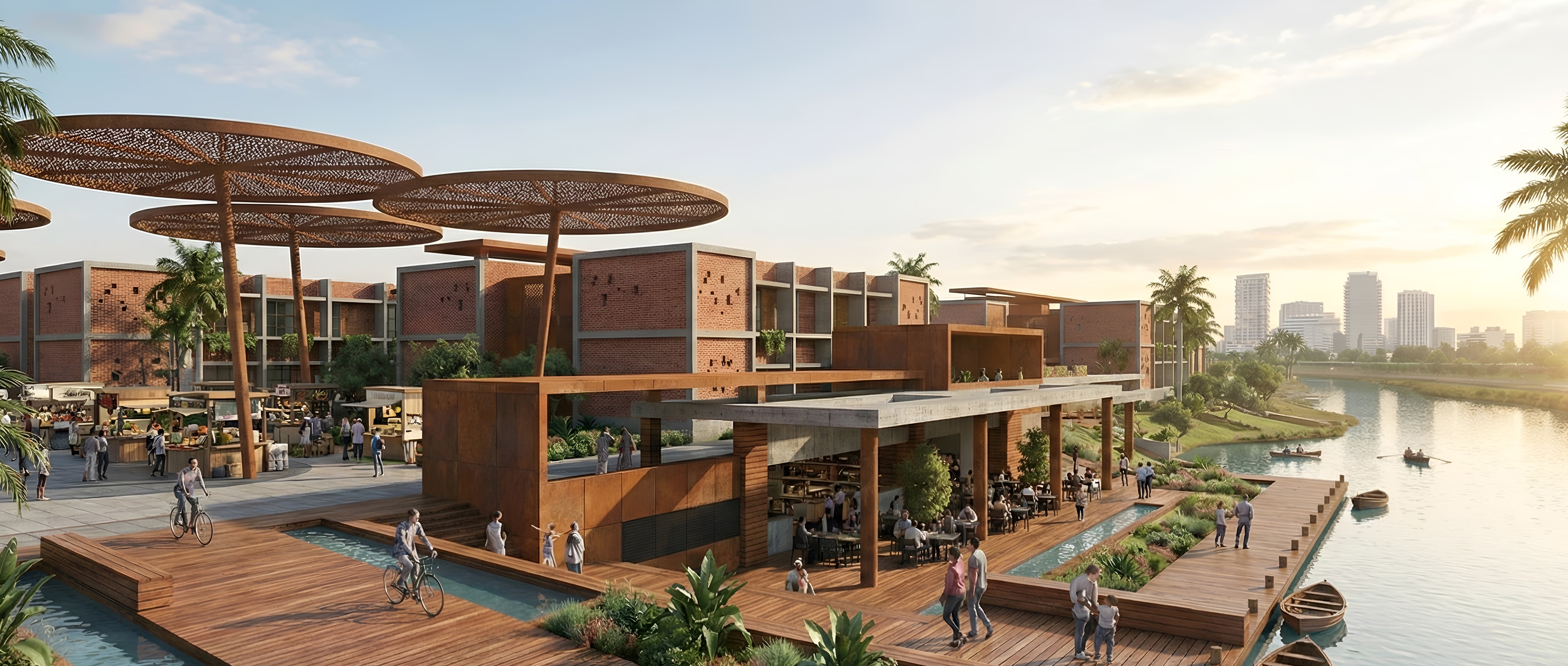
The proposal approaches the Mersin waterfront not as a singular recreational edge, but as a spatial continuum in which urban form, landscape systems, and collective life are gradually interwoven. Stretching between the former Tevfik Sırrı Gür Stadium, the disused lunapark grounds, and the port interface, the project reinterprets the coastline as a civic structure—one that mediates between infrastructure, ecology, and everyday urban rituals.
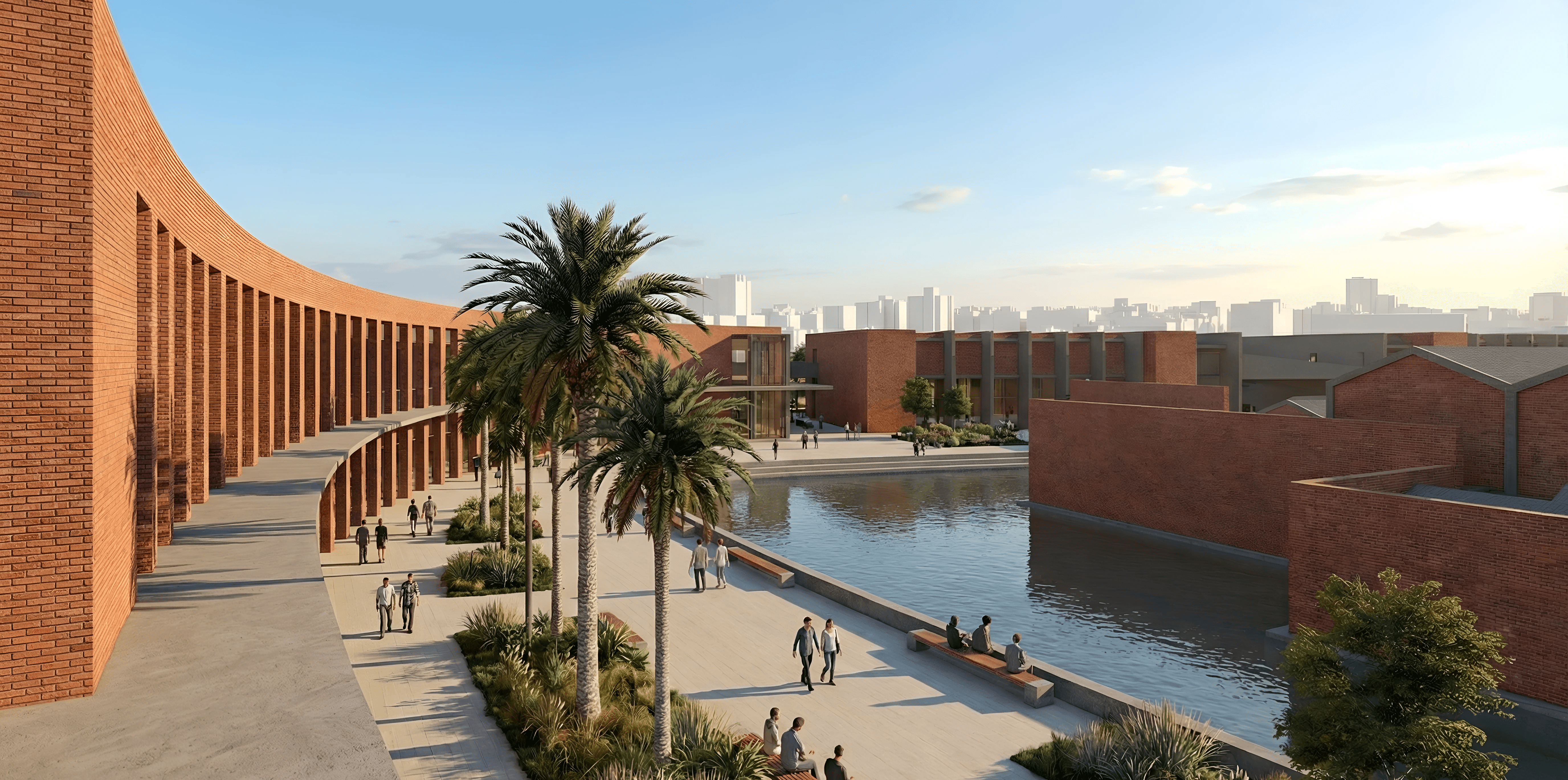
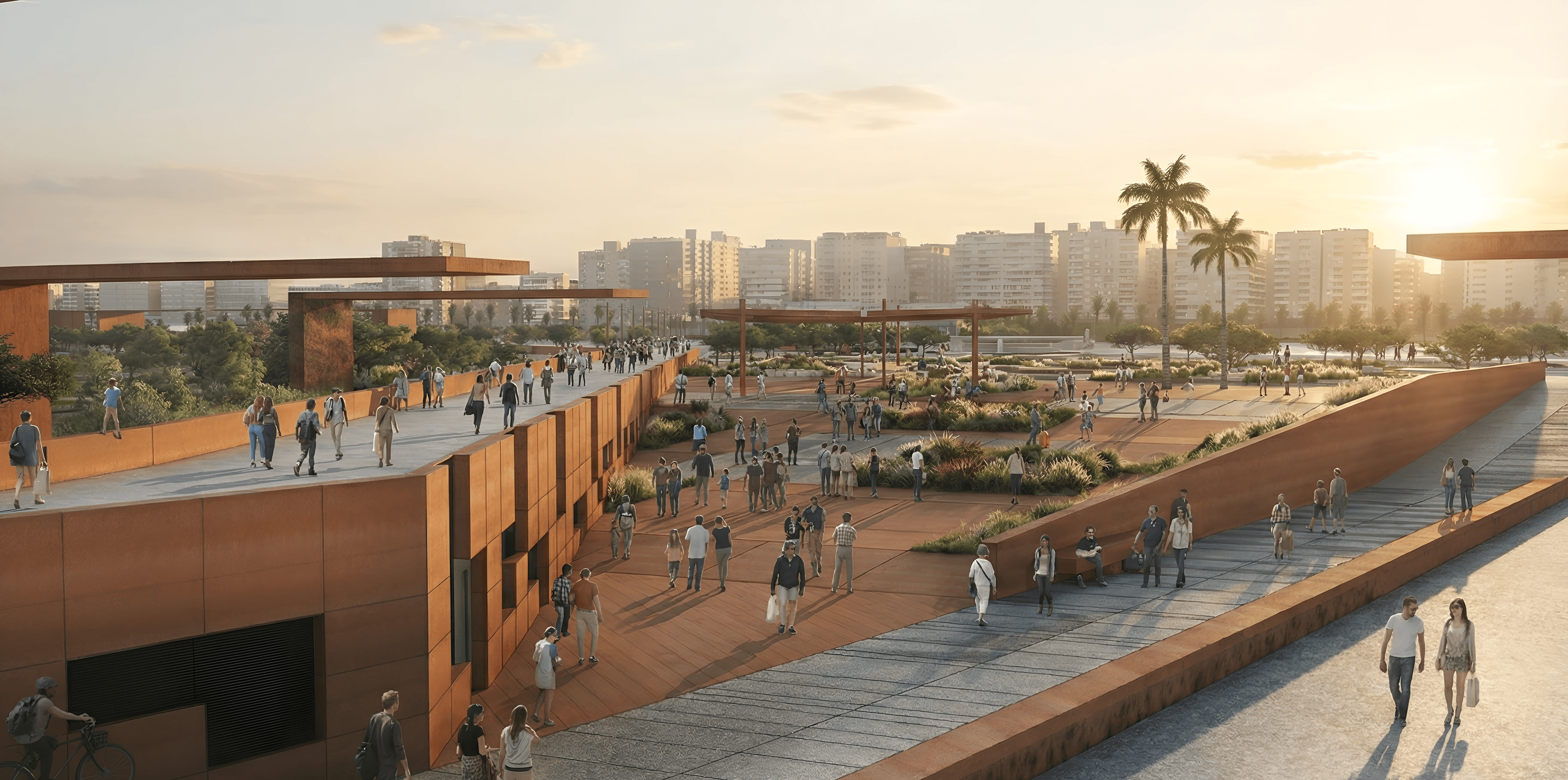
The design framework is guided by a dual logic of linear orientation and elliptical aggregation. Linear traces establish uninterrupted pedestrian and bicycle continuity along the coast, while elliptical spatial fields condense social activity into legible yet permeable urban rooms. This interplay produces a rhythm of compression and release, allowing the waterfront to operate simultaneously as a passage, a destination, and a lived landscape.
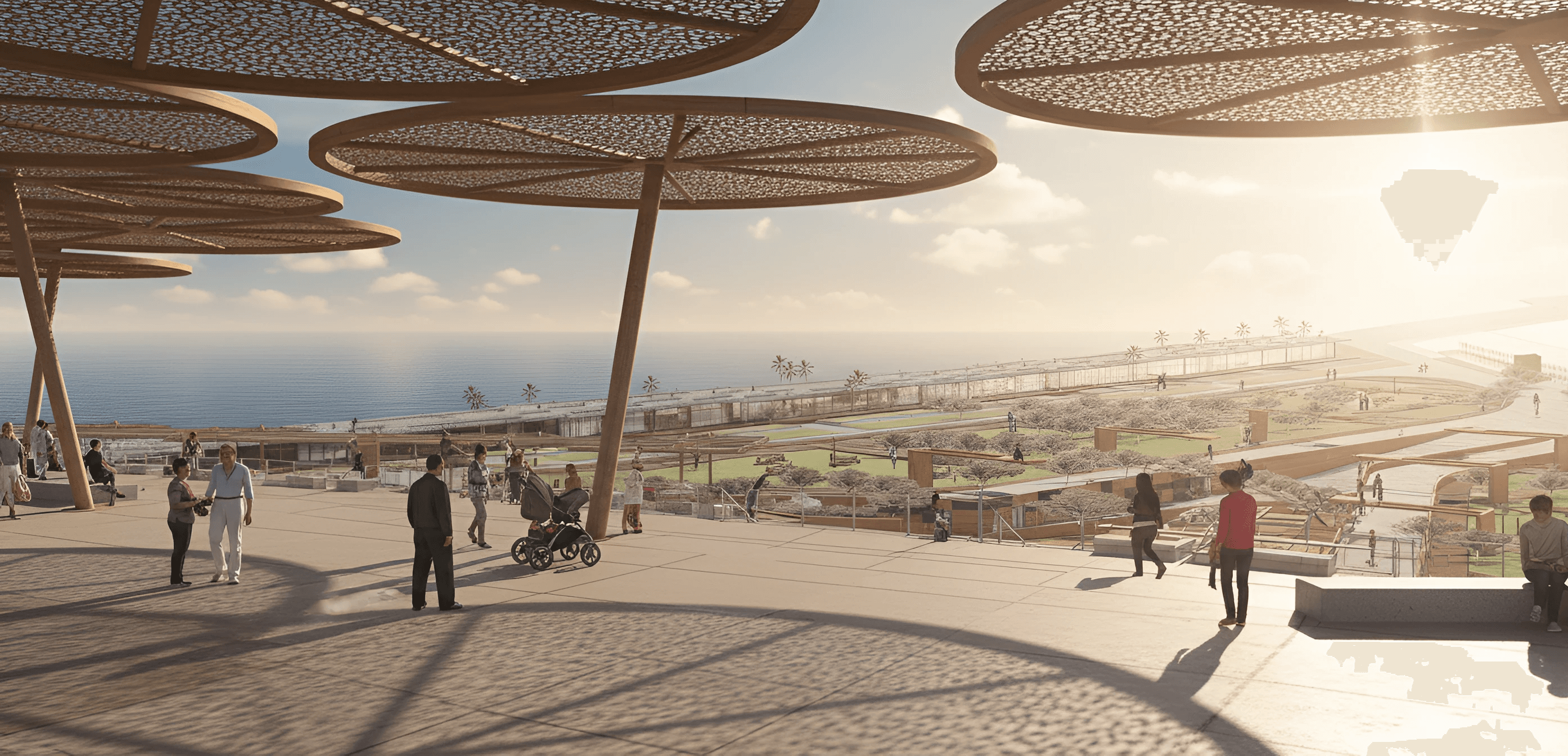
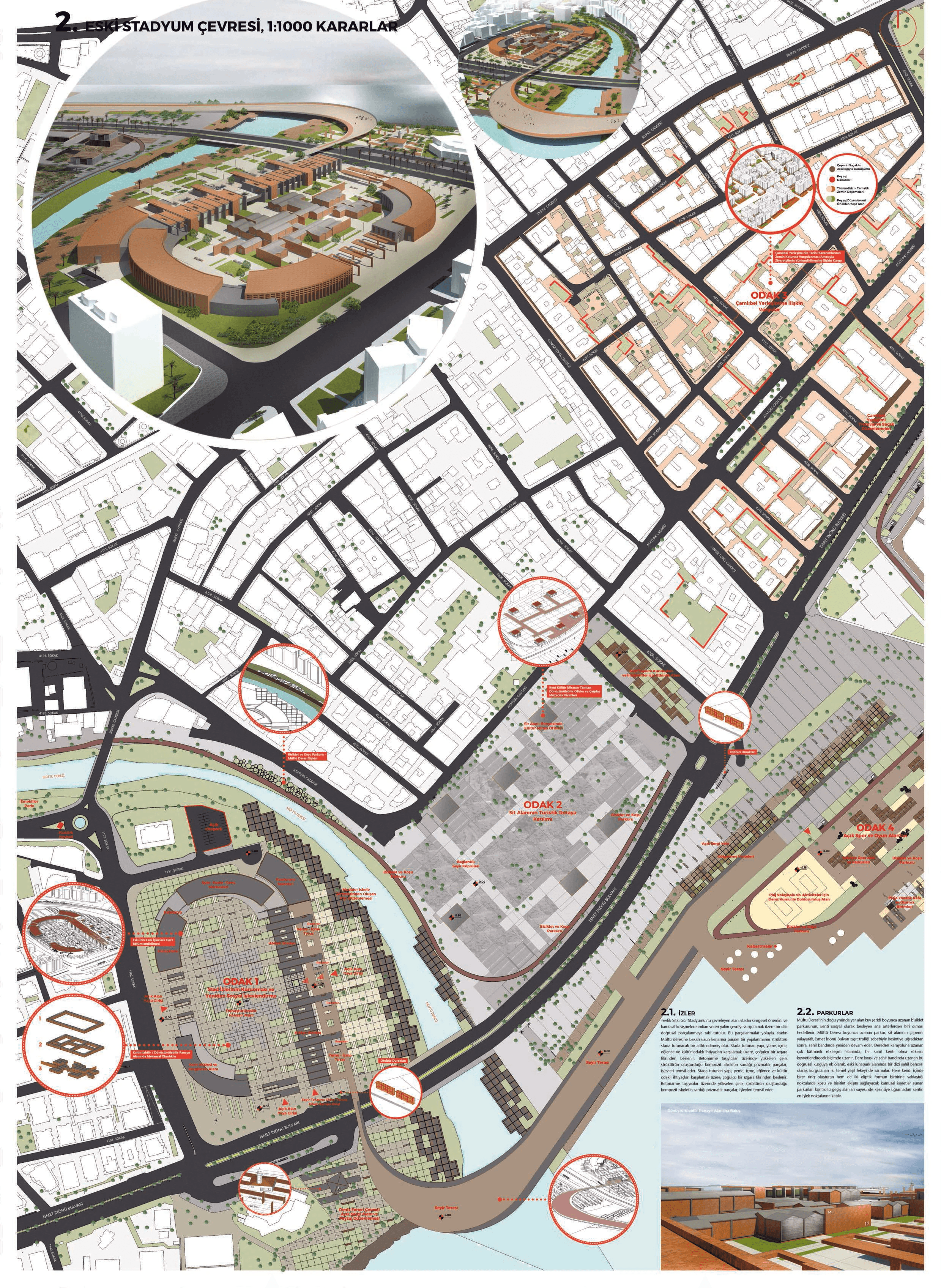
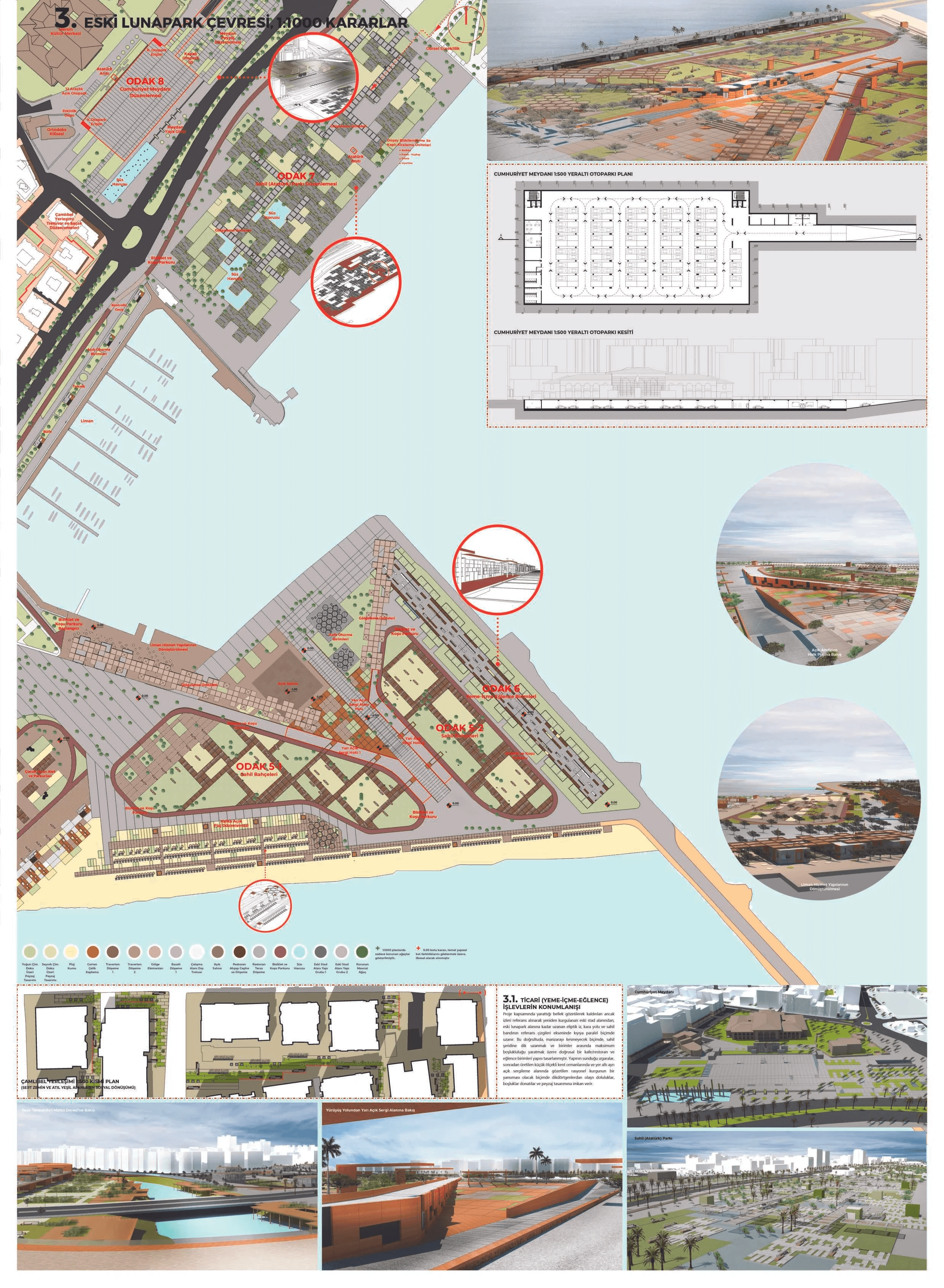
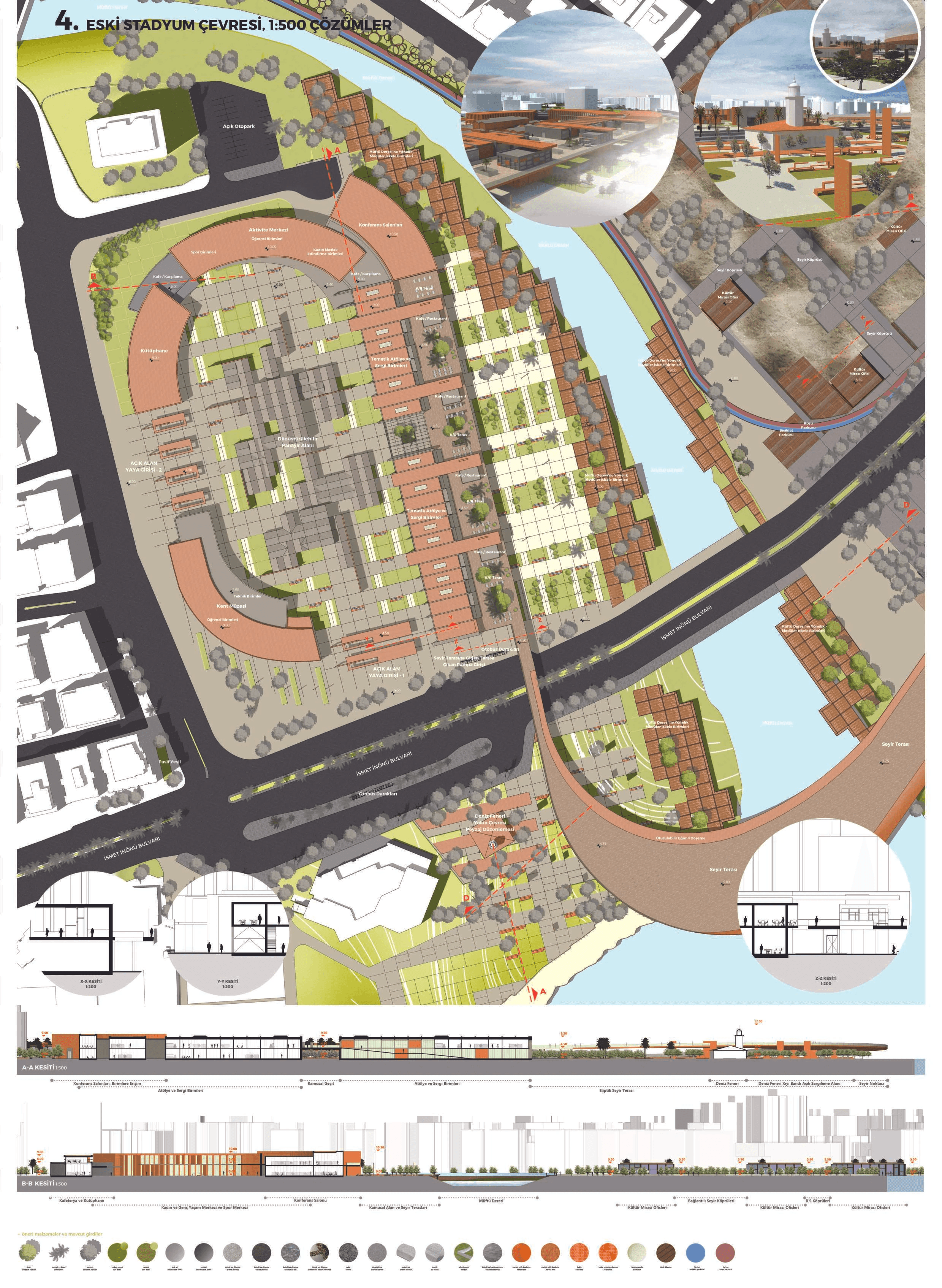
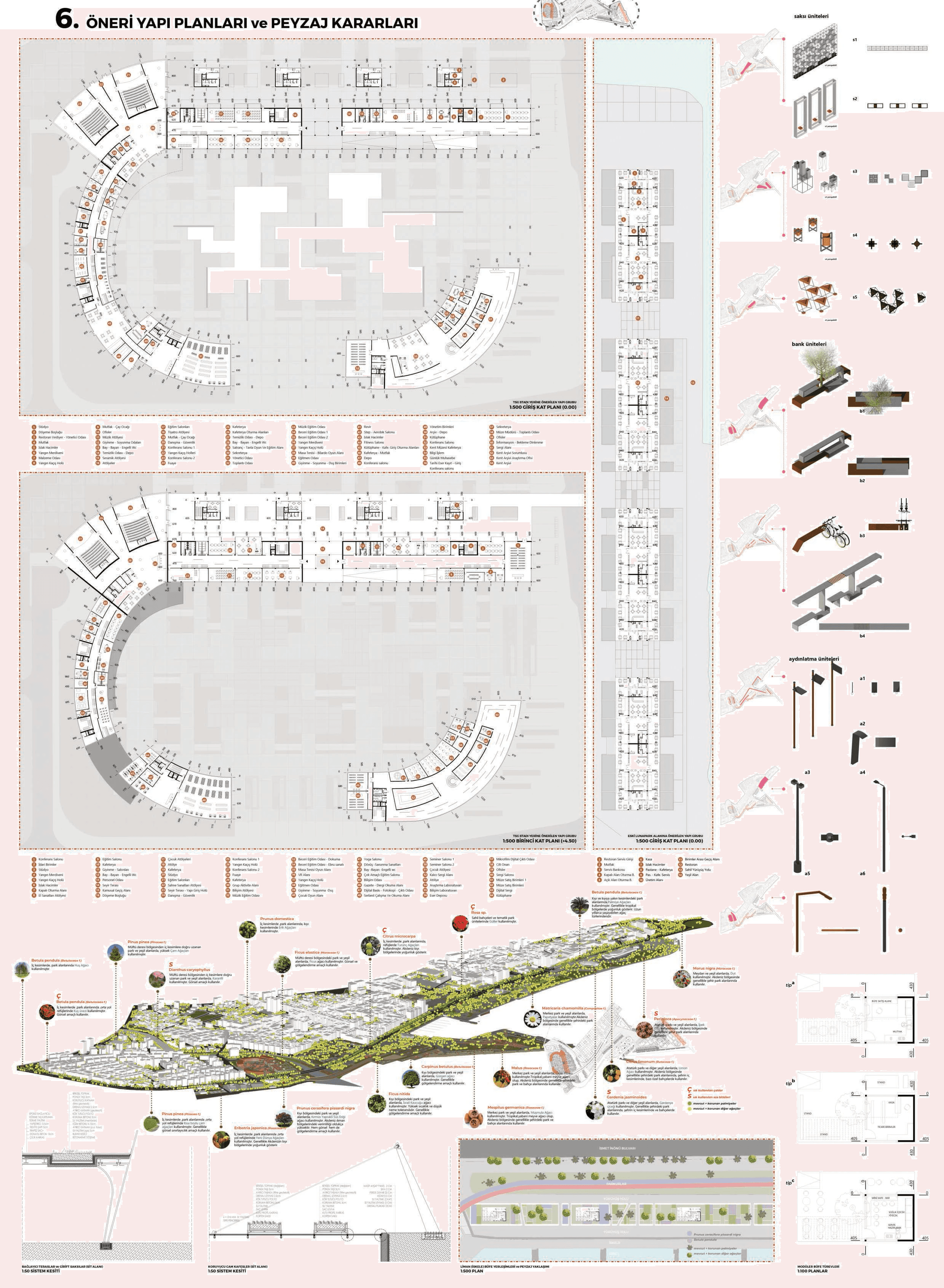
Rather than imposing object-like architectural gestures, the proposal prioritizes ground-based articulation. Low-rise structures, shaded platforms, and adaptable public programs are embedded within the landscape, dissolving conventional boundaries between built form and open space. Former mono-functional zones—such as the stadium and lunapark areas—are reconfigured as civic anchors hosting cultural, educational, and social uses, calibrated to daily urban life rather than episodic events.
Ecological performance is treated as an operative design layer rather than an additive strategy. Water-sensitive surfaces, native planting systems, and continuous green corridors enhance microclimatic comfort while reinforcing existing ecological traces along the coast. These systems function as spatial connectors, aligning environmental resilience with pedestrian experience.
Ultimately, the project frames the Mersin waterfront as an urban commons shaped by continuity, accessibility, and long-term adaptability. By privileging spatial coherence over fragmentation and public presence over privatization, the proposal establishes a resilient coastal infrastructure capable of accommodating evolving urban demands while maintaining a clear and disciplined spatial identity.
Beyond its spatial and ecological ambitions, the proposal consciously engages with questions of urban temporality and use. The waterfront is conceived not as a fixed composition, but as a framework capable of accommodating seasonal shifts, informal appropriation, and incremental transformation. Programmatic indeterminacy is therefore embraced as a design principle, allowing spaces to evolve through everyday practices rather than predetermined сценарios. This open-endedness ensures that the project remains responsive to social change, climatic variation, and future urban pressures, reinforcing the coastline’s role as a living urban structure rather than a finalized architectural statement.
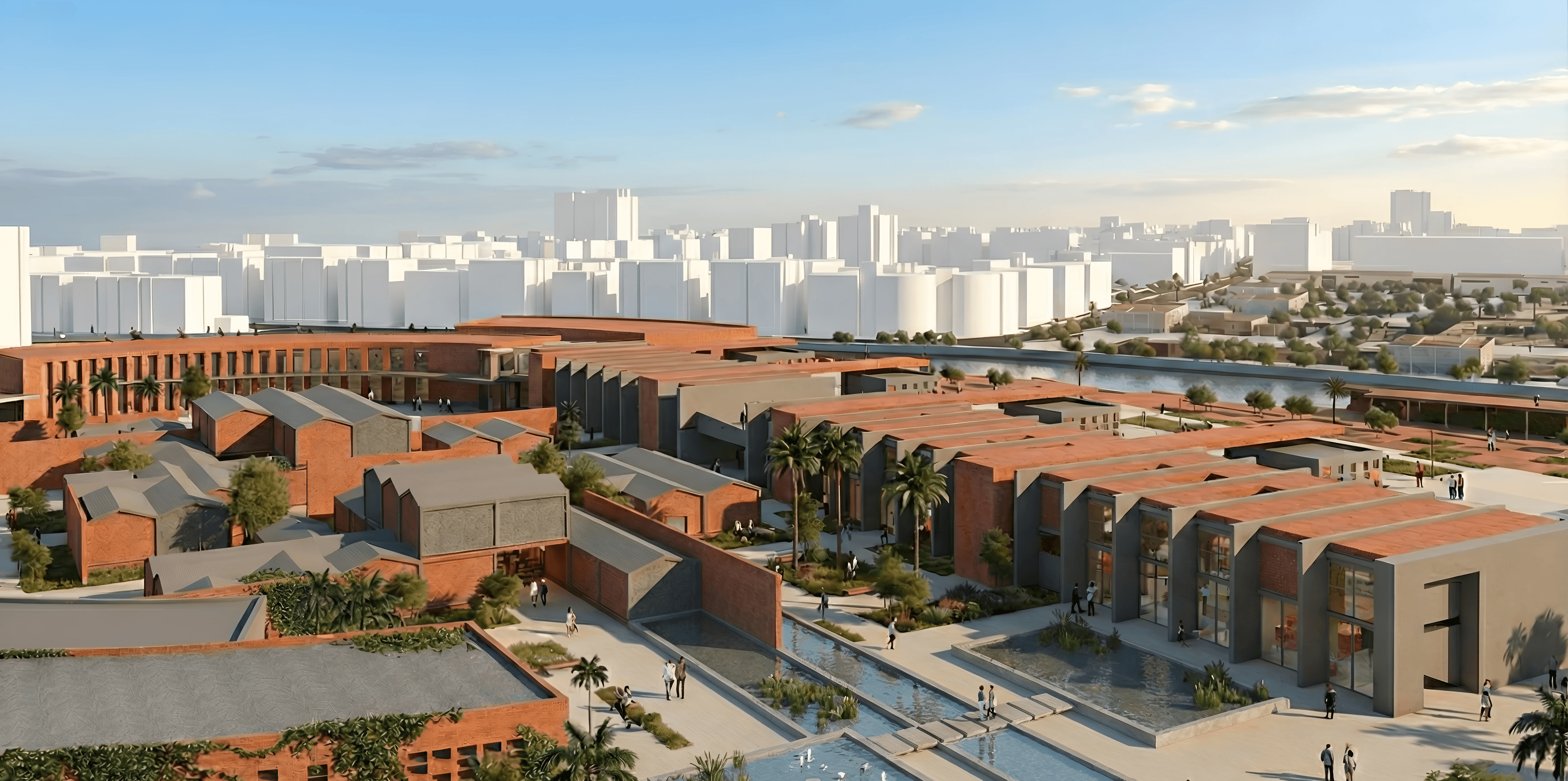


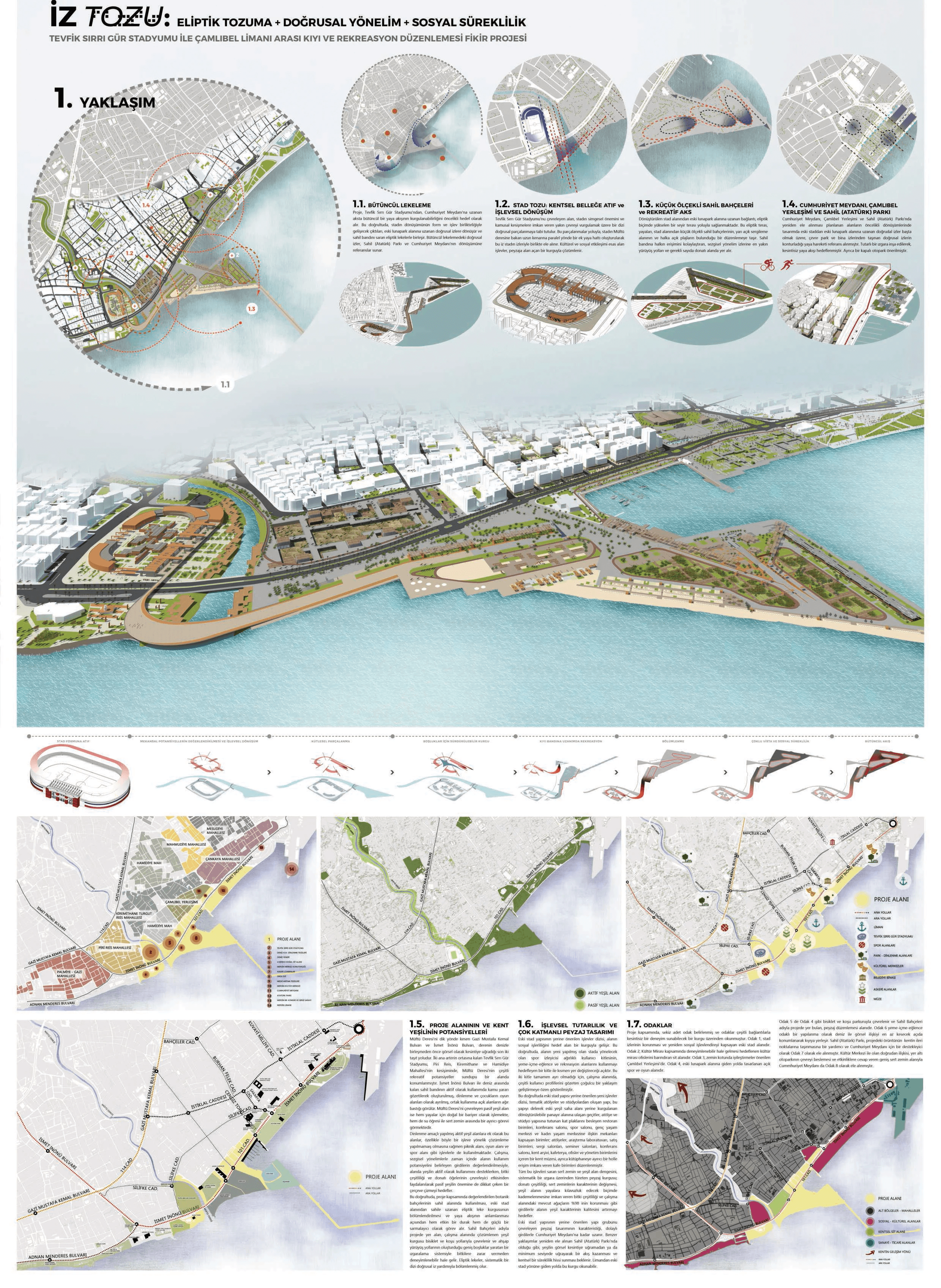
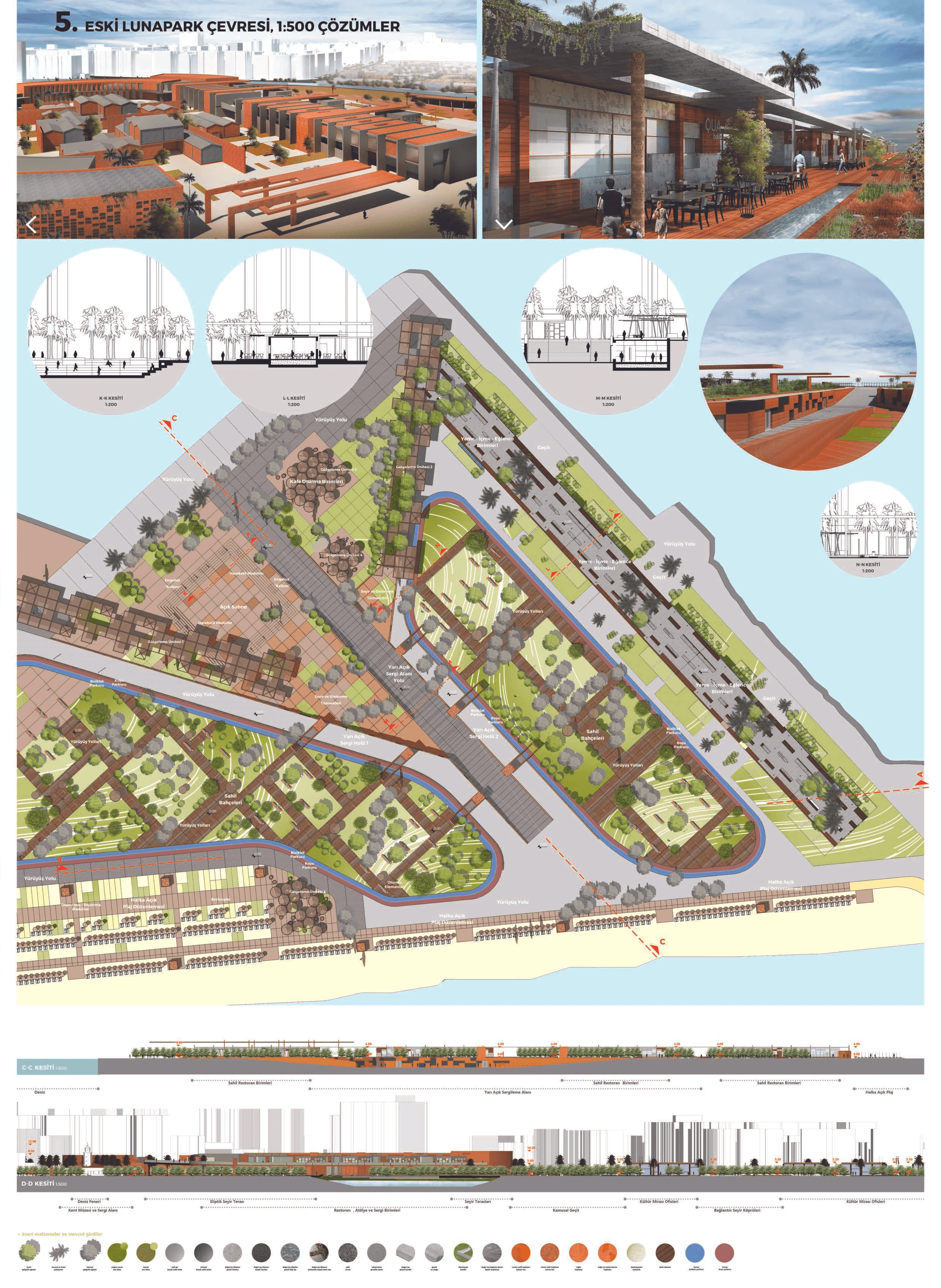
The proposal approaches the Mersin waterfront not as a singular recreational edge, but as a spatial continuum in which urban form, landscape systems, and collective life are gradually interwoven. Stretching between the former Tevfik Sırrı Gür Stadium, the disused lunapark grounds, and the port interface, the project reinterprets the coastline as a civic structure—one that mediates between infrastructure, ecology, and everyday urban rituals.
The design framework is guided by a dual logic of linear orientation and elliptical aggregation. Linear traces establish uninterrupted pedestrian and bicycle continuity along the coast, while elliptical spatial fields condense social activity into legible yet permeable urban rooms. This interplay produces a rhythm of compression and release, allowing the waterfront to operate simultaneously as a passage, a destination, and a lived landscape.
Rather than imposing object-like architectural gestures, the proposal prioritizes ground-based articulation. Low-rise structures, shaded platforms, and adaptable public programs are embedded within the landscape, dissolving conventional boundaries between built form and open space. Former mono-functional zones—such as the stadium and lunapark areas—are reconfigured as civic anchors hosting cultural, educational, and social uses, calibrated to daily urban life rather than episodic events.
Ecological performance is treated as an operative design layer rather than an additive strategy. Water-sensitive surfaces, native planting systems, and continuous green corridors enhance microclimatic comfort while reinforcing existing ecological traces along the coast. These systems function as spatial connectors, aligning environmental resilience with pedestrian experience.
Ultimately, the project frames the Mersin waterfront as an urban commons shaped by continuity, accessibility, and long-term adaptability. By privileging spatial coherence over fragmentation and public presence over privatization, the proposal establishes a resilient coastal infrastructure capable of accommodating evolving urban demands while maintaining a clear and disciplined spatial identity.
Beyond its spatial and ecological ambitions, the proposal consciously engages with questions of urban temporality and use. The waterfront is conceived not as a fixed composition, but as a framework capable of accommodating seasonal shifts, informal appropriation, and incremental transformation. Programmatic indeterminacy is therefore embraced as a design principle, allowing spaces to evolve through everyday practices rather than predetermined сценарios. This open-endedness ensures that the project remains responsive to social change, climatic variation, and future urban pressures, reinforcing the coastline’s role as a living urban structure rather than a finalized architectural statement.
Project team:
G. Cubuk, H. Urtekin
Building physics:
S&A BPC
(Other works)