Craco Archaeotour Heritage Route
Status:
R&D
Year:
2024-2025
Type:
Refurbishment
Size:
6250 m²
Client:
Matera Municipality
Location:
Craco, Matera, Italy
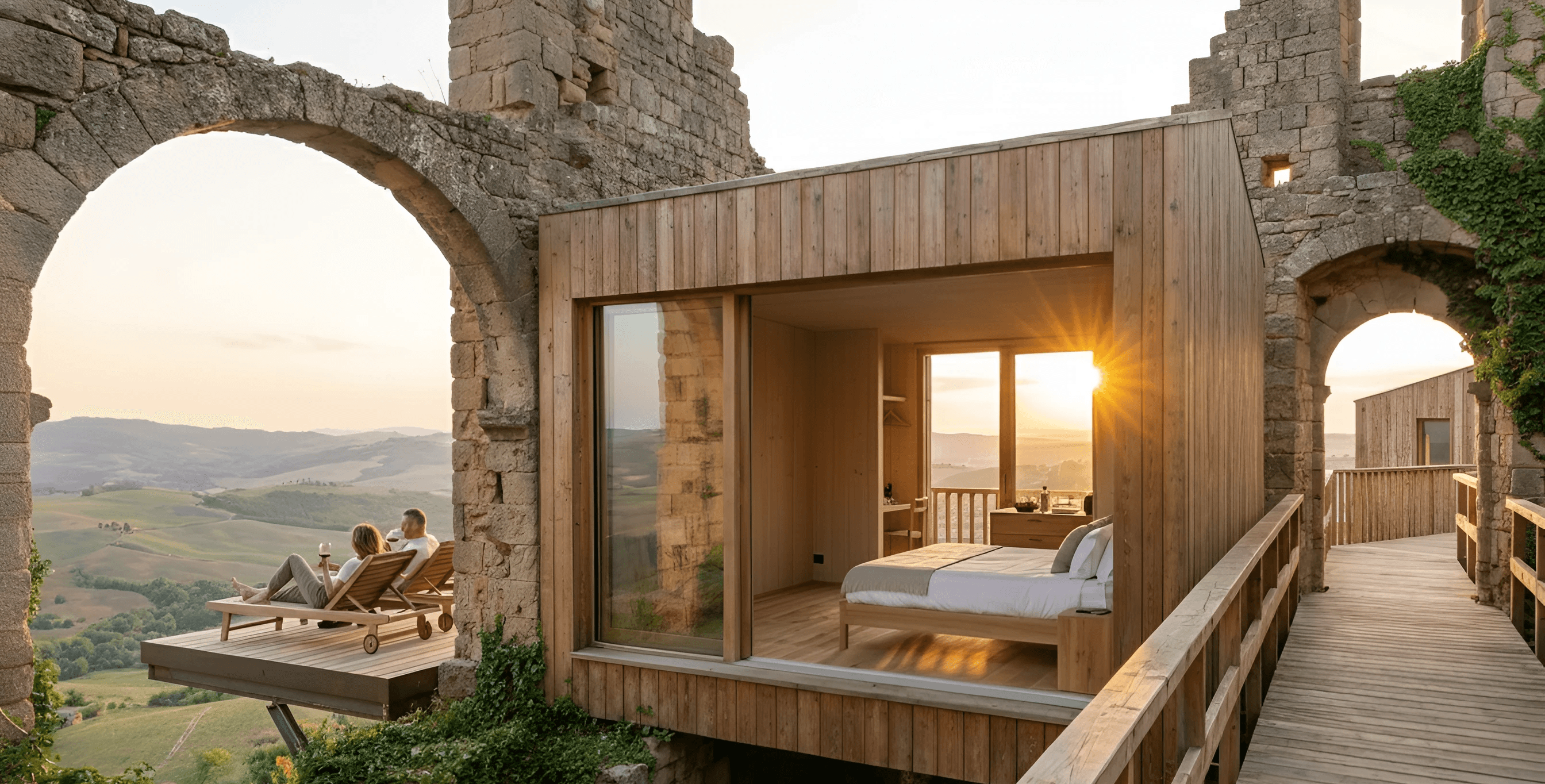
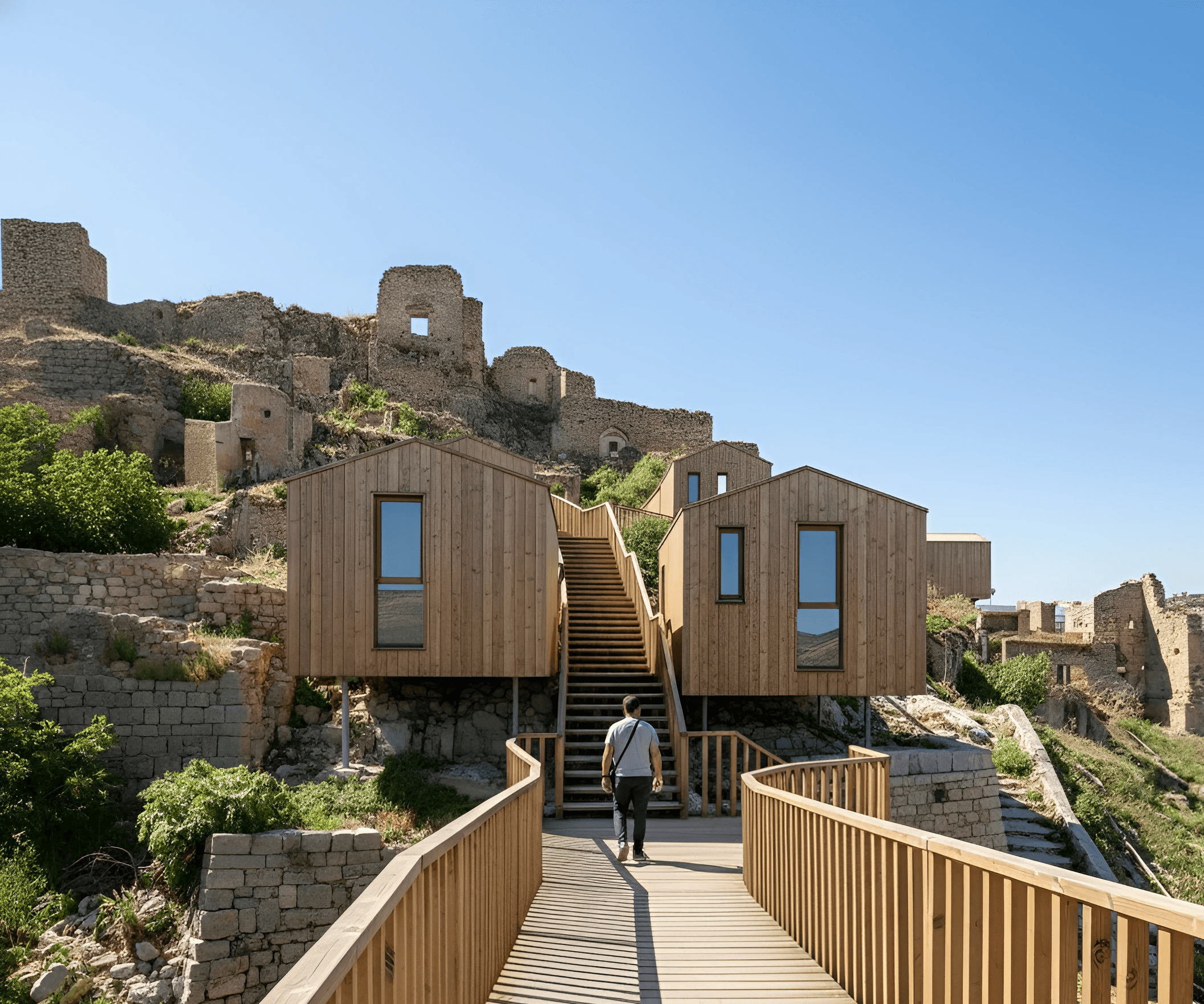
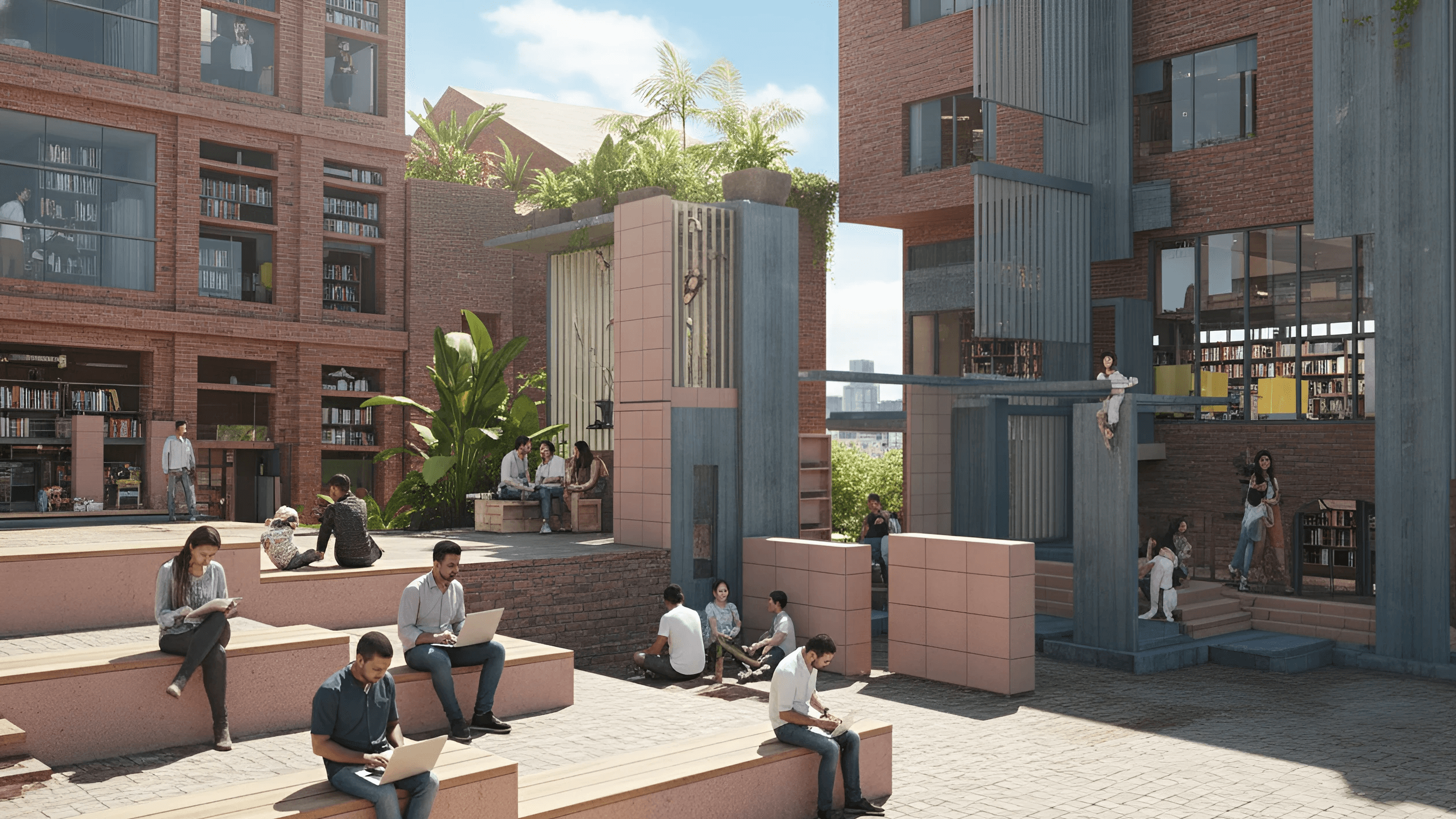
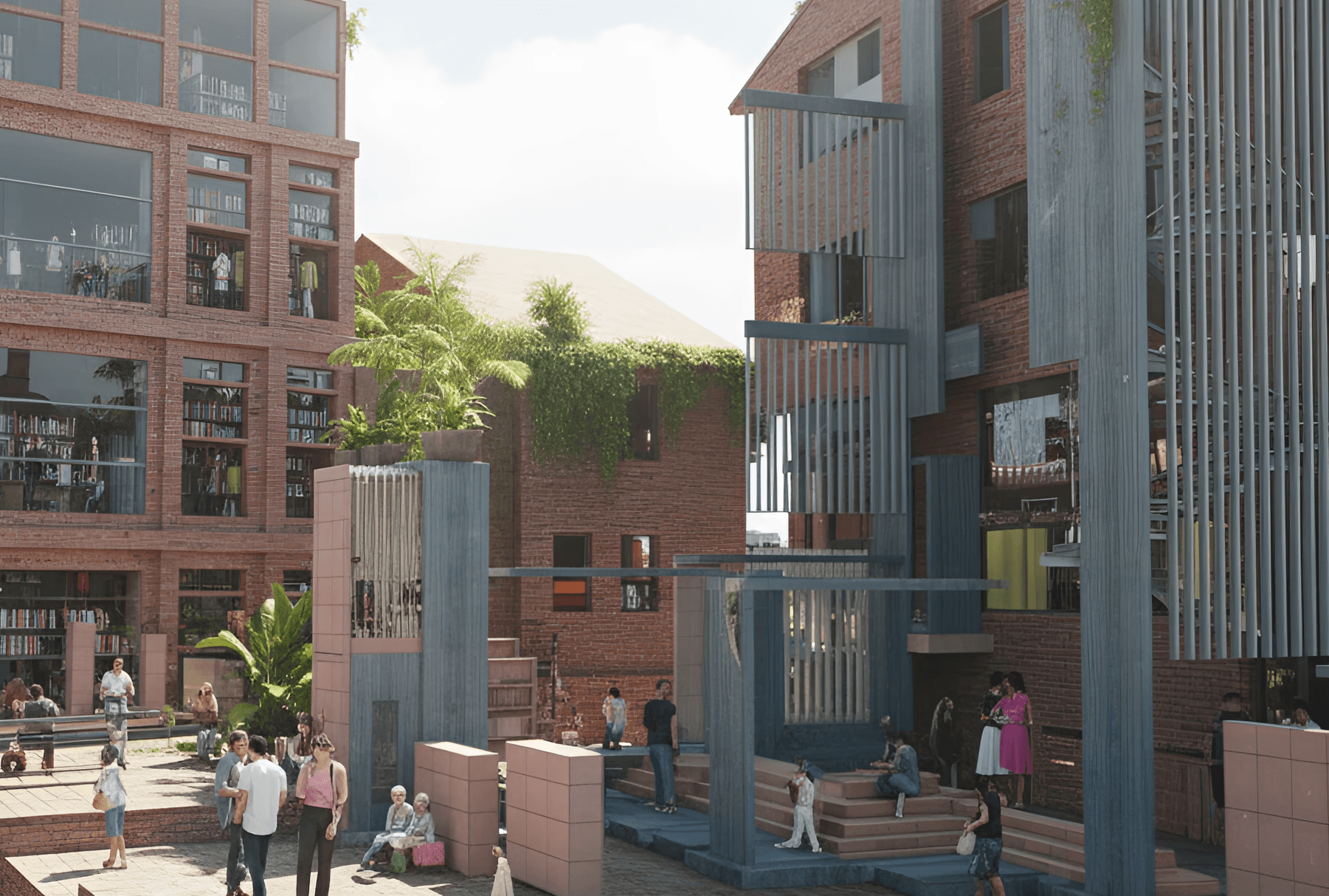
The Craco Archaeotour Heritage Route is conceived as a reversible architectural system embedded within the fragile topography and ruin fabric of the abandoned hill town of Craco. Rather than restoring the settlement as a static monument, the project reactivates it through a lightweight network of inhabitable insertions and pedestrian routes that allow visitors to experience the site as a lived landscape shaped by time, erosion, and memory.
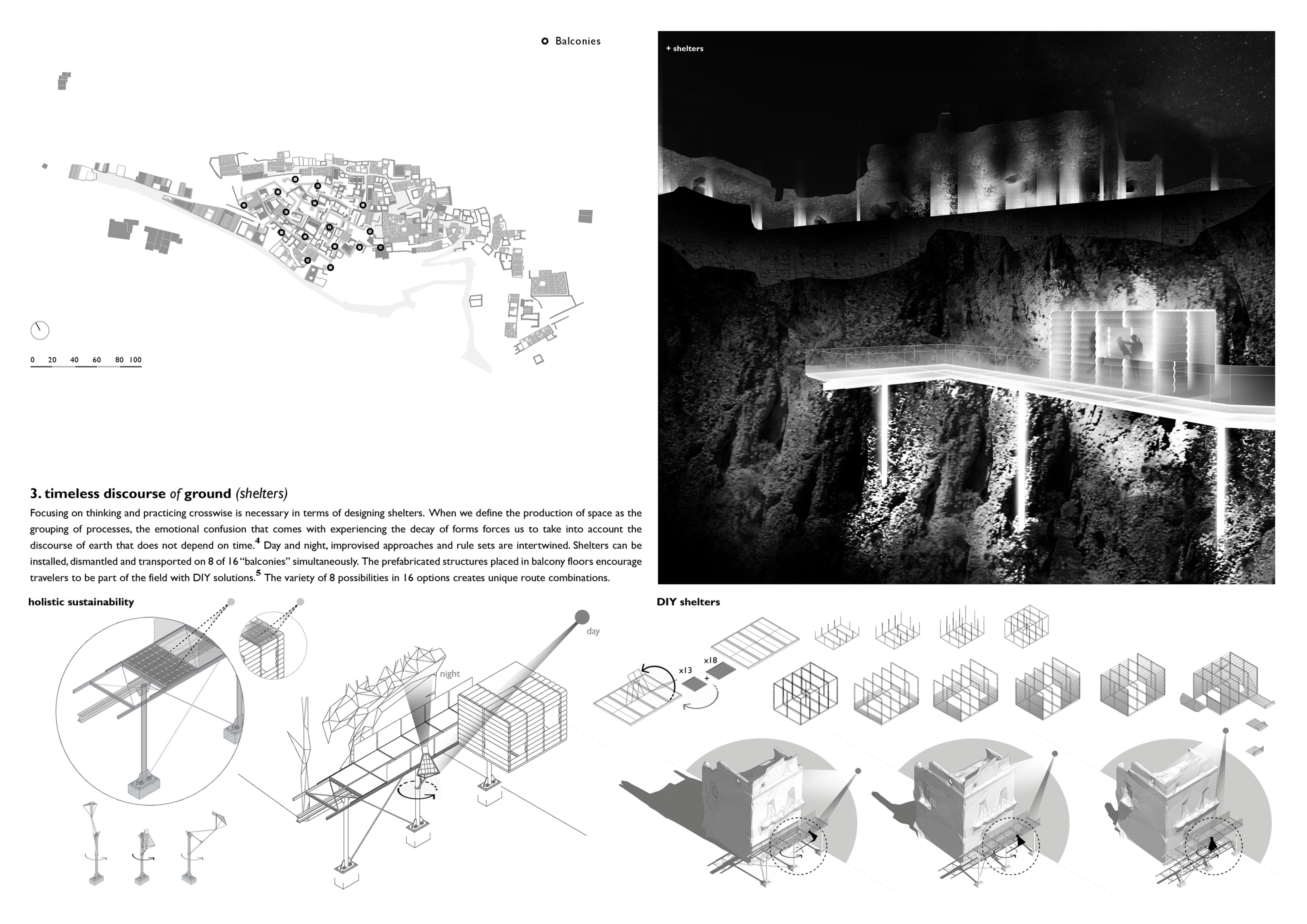
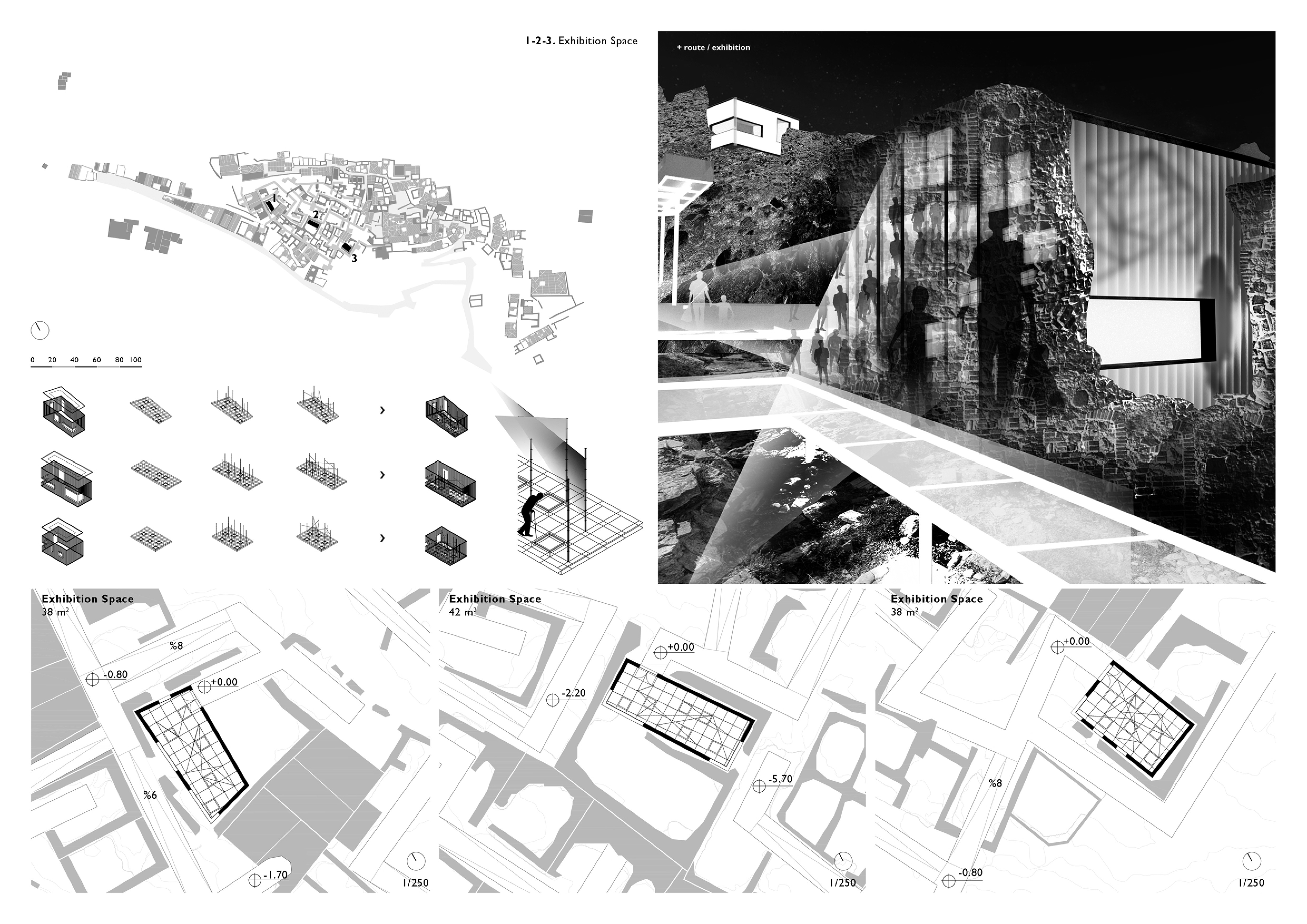
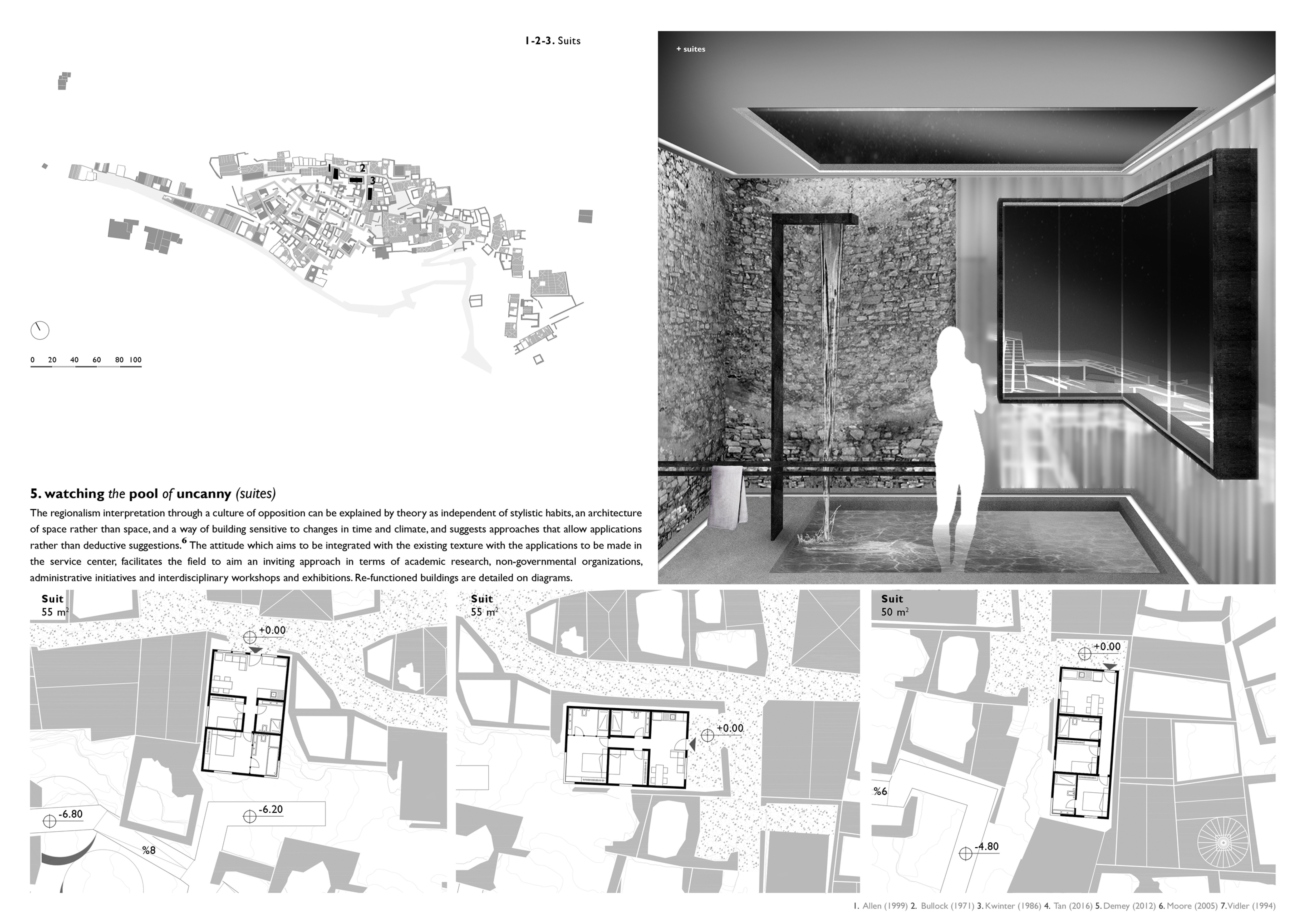
The intervention is structured around a series of compact timber accommodation units, strategically positioned within voids, collapsed plots, and residual terraces of the historic fabric. These volumes do not reconstruct lost buildings; instead, they occupy gaps left by abandonment, establishing a deliberate contrast between the permanence of stone ruins and the temporality of contemporary inhabitation. Their restrained geometry, vertical proportions, and muted material palette allow them to register as secondary layers, legible yet non-dominant within the overall silhouette of Craco.
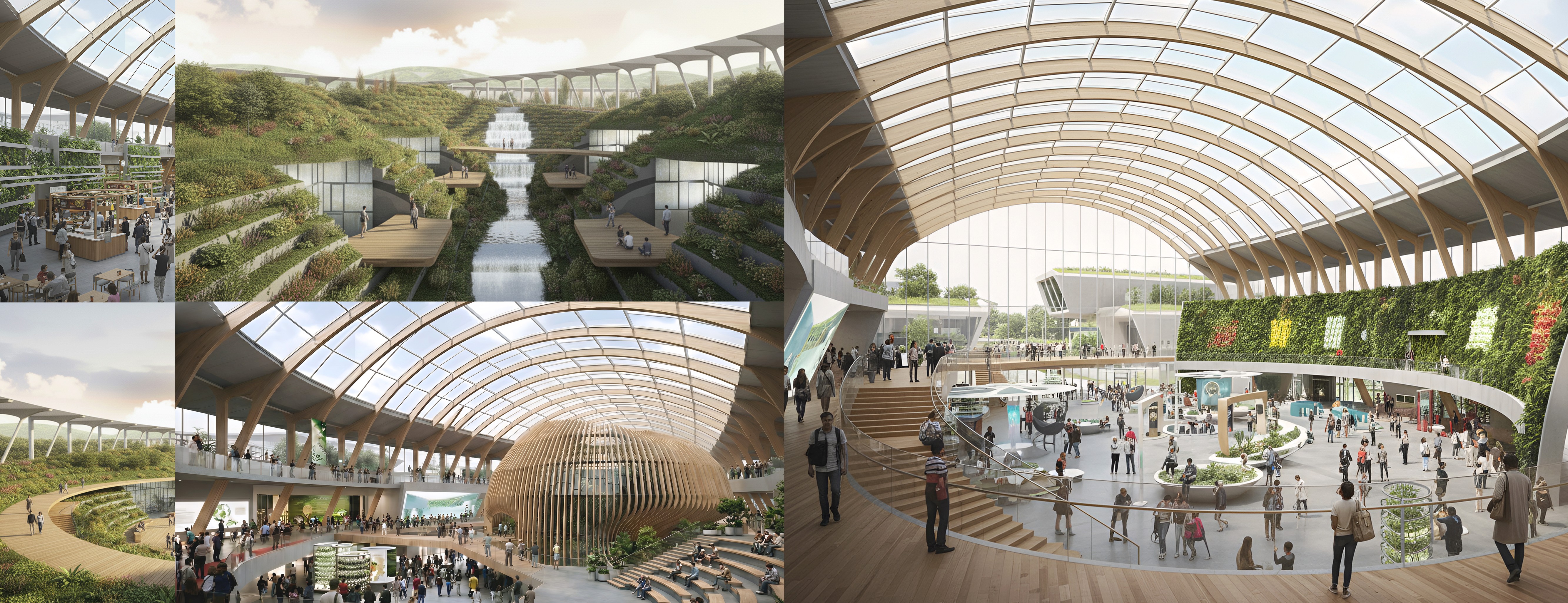
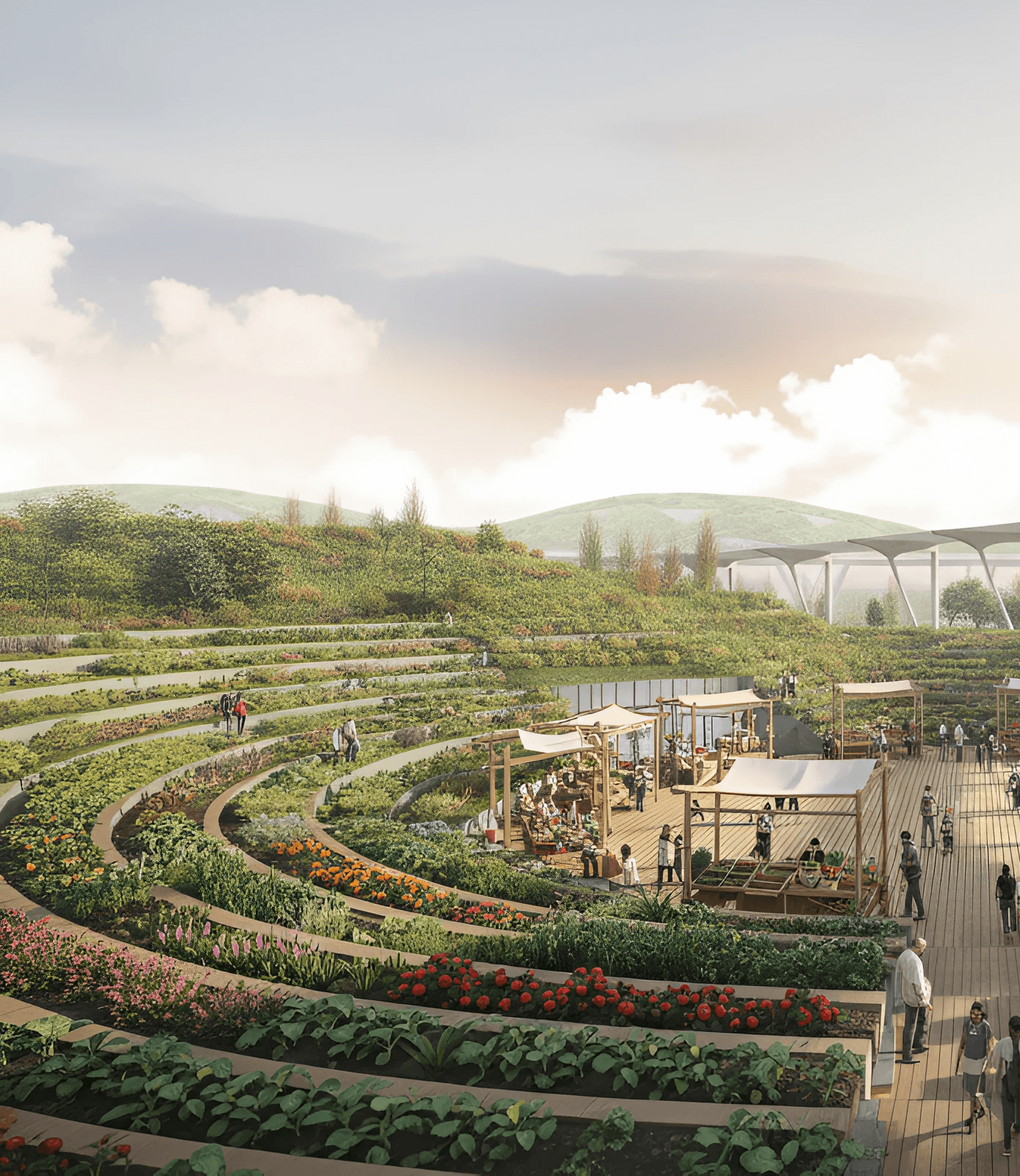
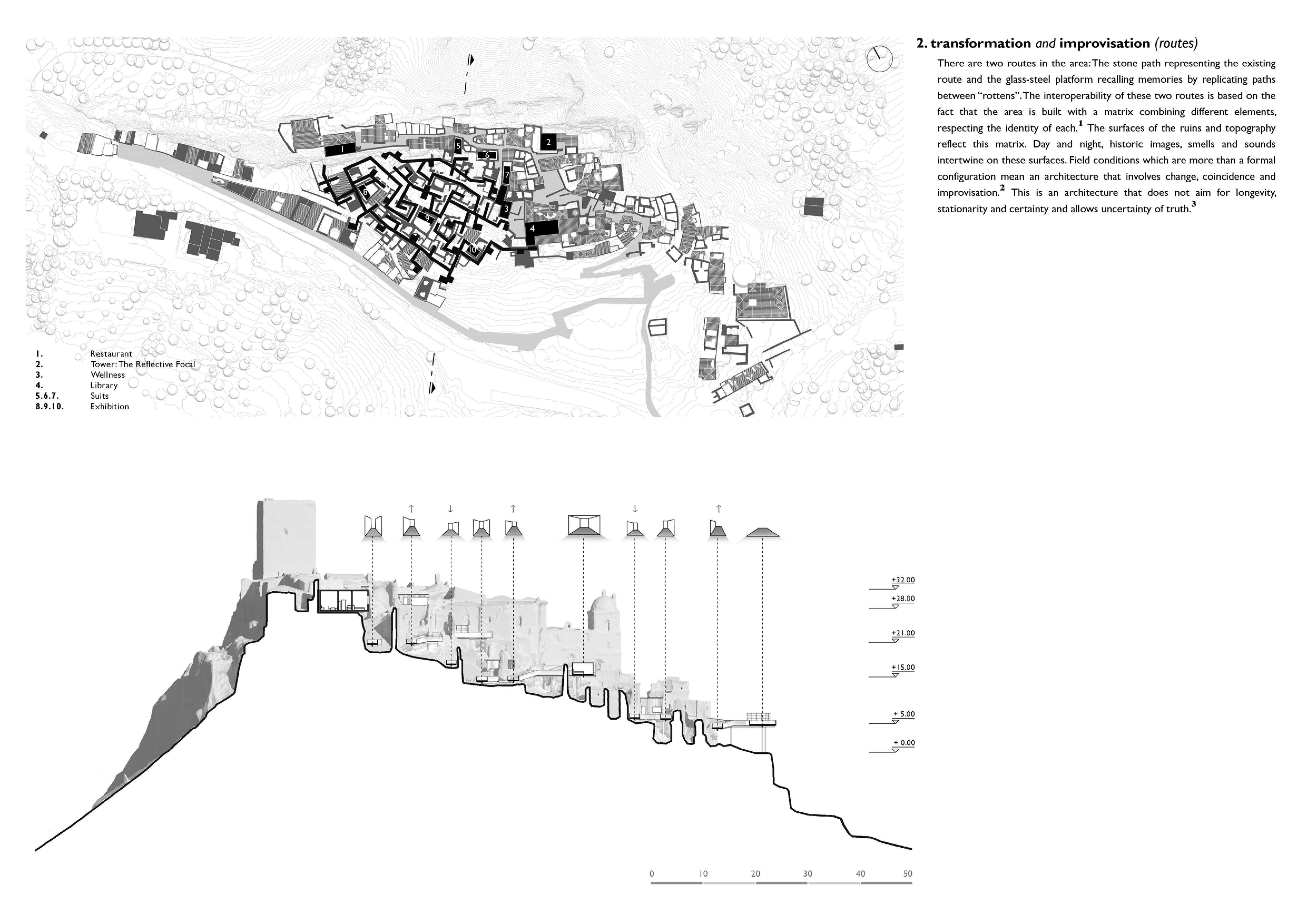
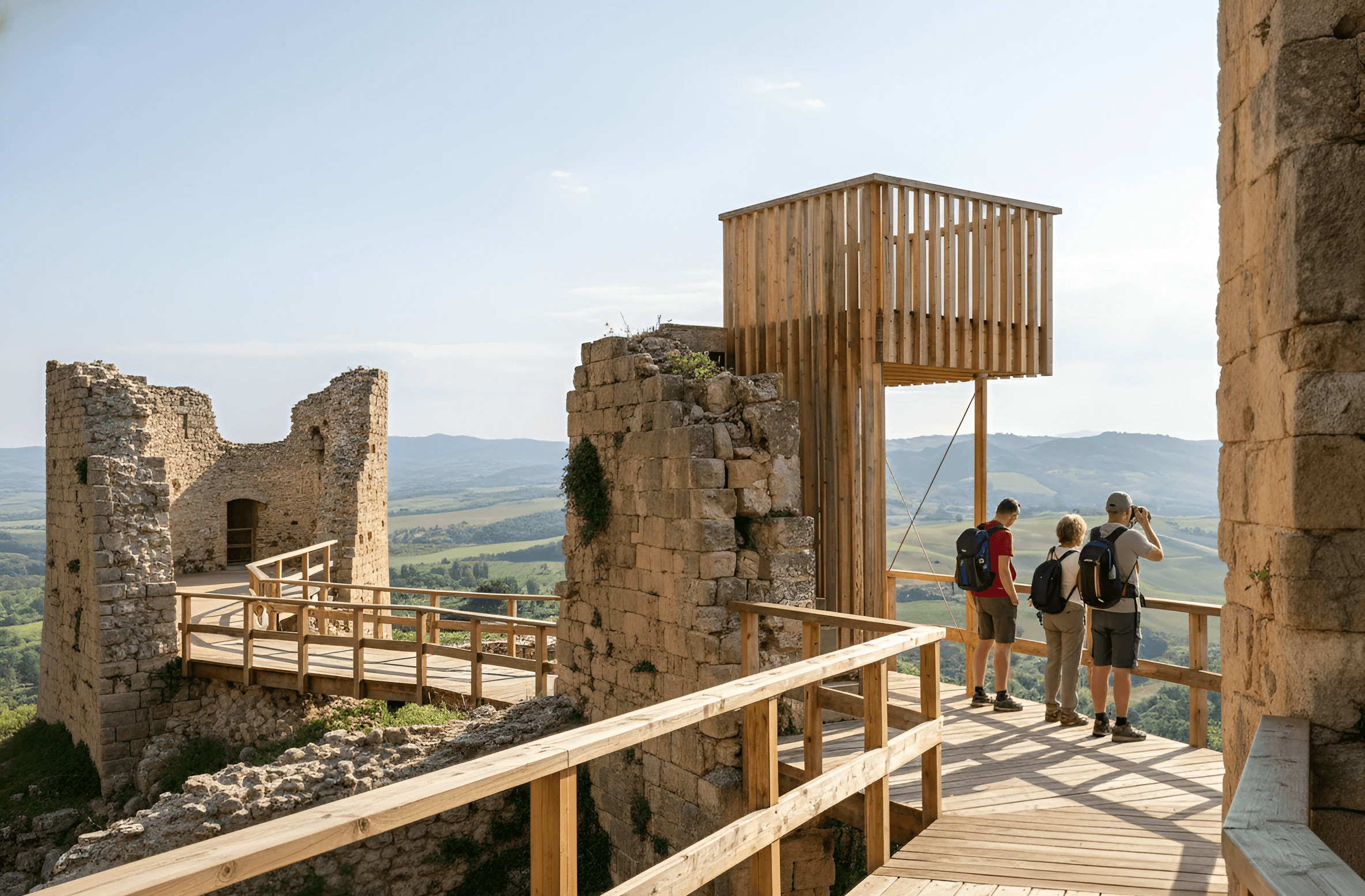
A continuous elevated walkway system forms the project’s primary spatial armature. Constructed as a timber structure lightly touching the ground, the route traces former circulation paths, cliff edges, and internal courtyards, reconnecting fragmented portions of the town without imposing new foundations into unstable terrain. This linear sequence operates simultaneously as an access system, an interpretive path, and a scenic promenade, offering controlled views across the Lucanian landscape while revealing the stratified remains of the settlement at close range.
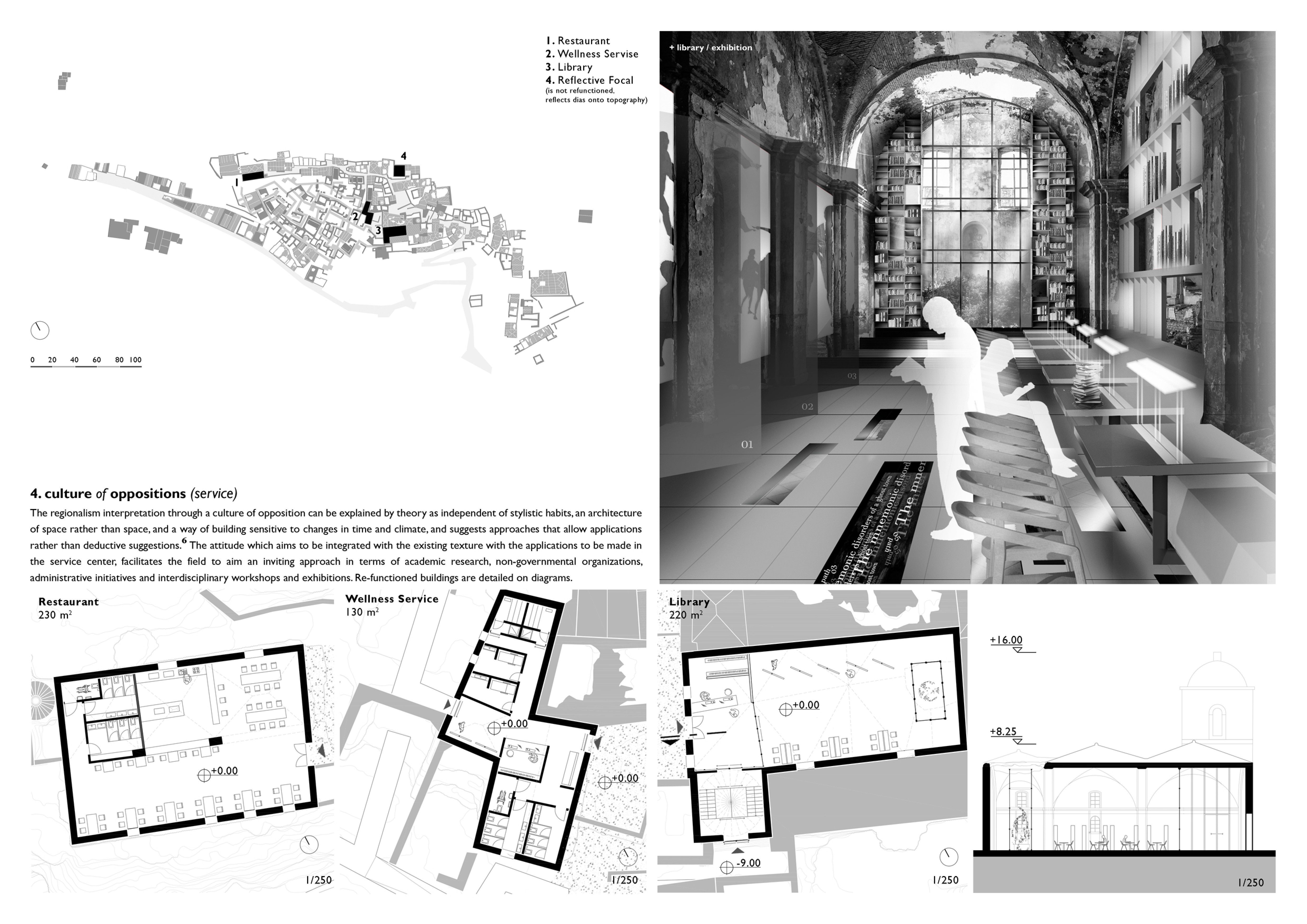
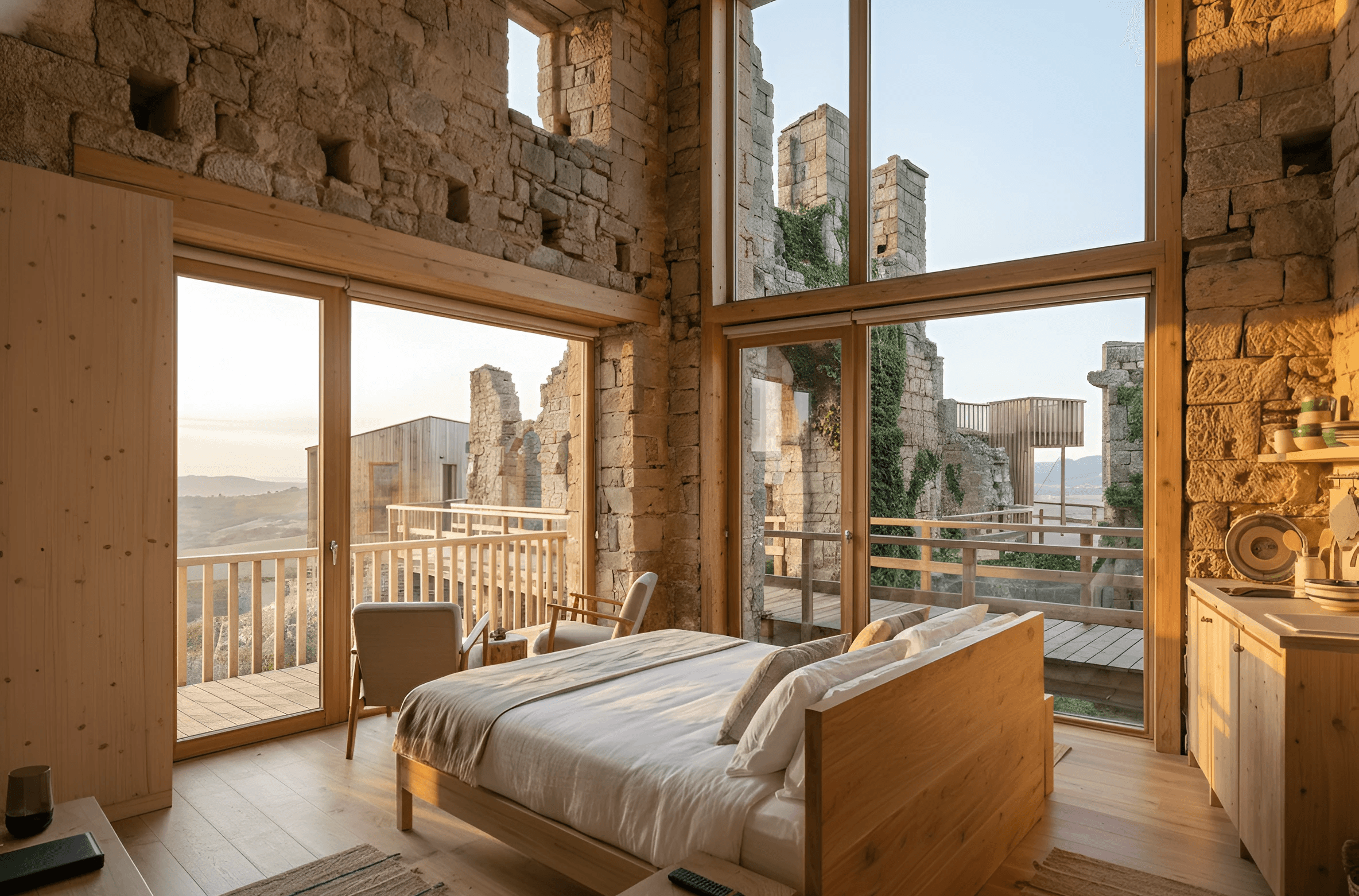
Interior spaces are defined by material continuity and calibrated openness. Timber-lined rooms frame views toward the valley and the ruins, while large openings and terraces extend living spaces outward, dissolving the boundary between shelter and landscape. Programmatically, the project balances tourism with contemplation, encouraging slow occupation rather than mass visitation.
Ultimately, the proposal positions architecture as an intermediary between ruin and landscape—an adaptive, reversible framework that enables habitation without consumption, and experience without erasure, allowing Craco to remain unfinished, inhabitable, and meaningfully open to the future.
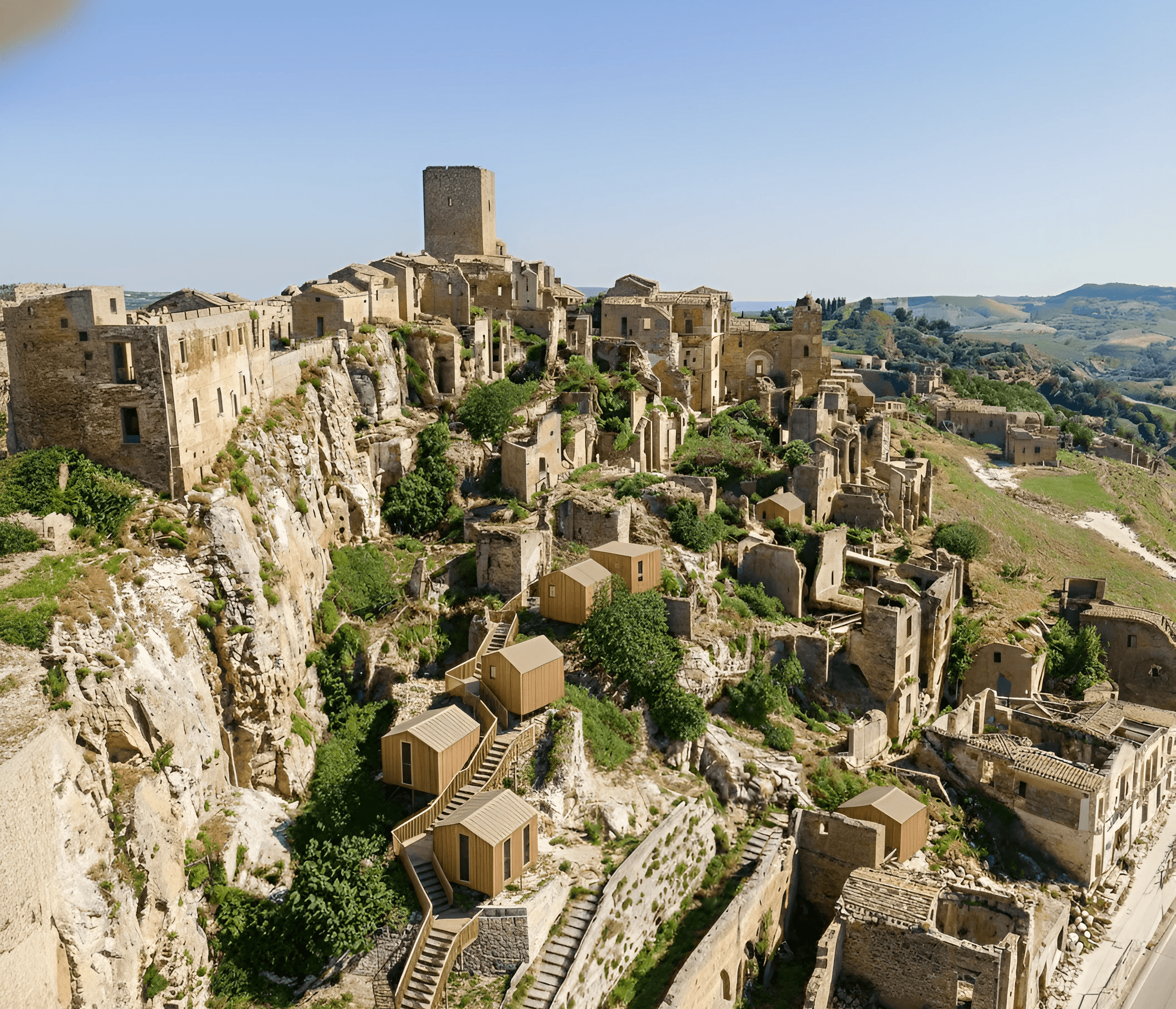
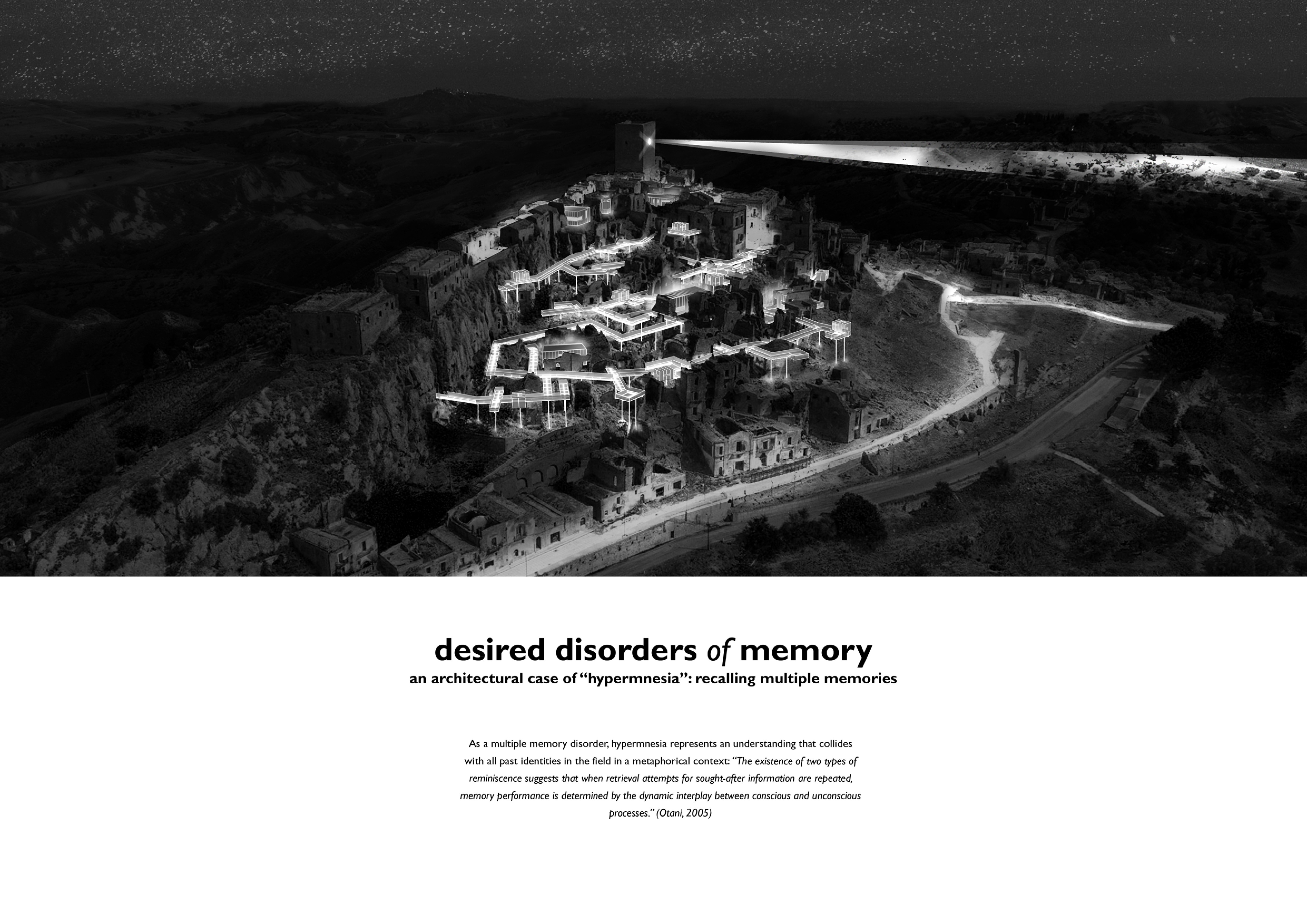
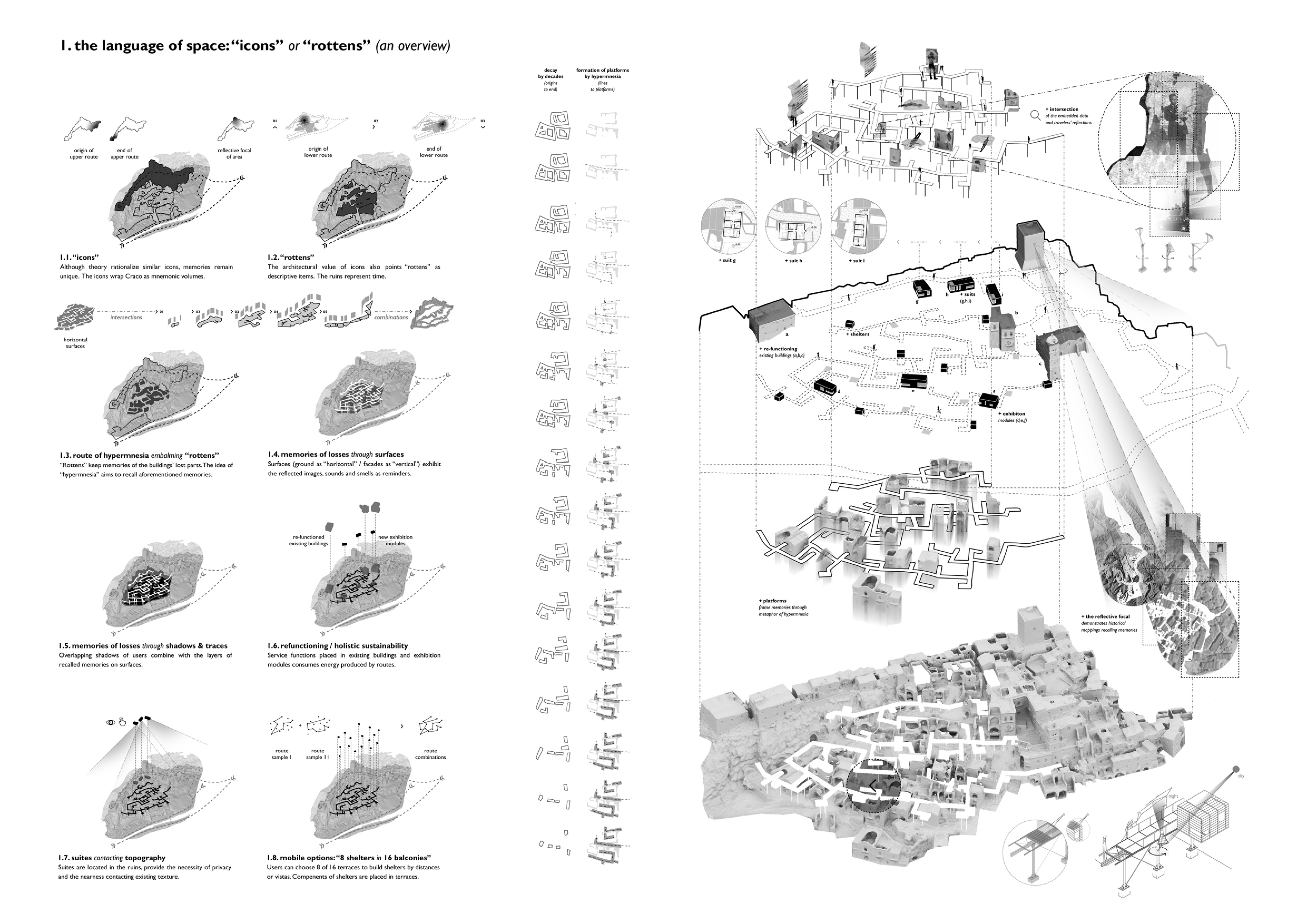
The Craco Archaeotour Heritage Route is conceived as a reversible architectural system embedded within the fragile topography and ruin fabric of the abandoned hill town of Craco. Rather than restoring the settlement as a static monument, the project reactivates it through a lightweight network of inhabitable insertions and pedestrian routes that allow visitors to experience the site as a lived landscape shaped by time, erosion, and memory.
The intervention is structured around a series of compact timber accommodation units, strategically positioned within voids, collapsed plots, and residual terraces of the historic fabric. These volumes do not reconstruct lost buildings; instead, they occupy gaps left by abandonment, establishing a deliberate contrast between the permanence of stone ruins and the temporality of contemporary inhabitation. Their restrained geometry, vertical proportions, and muted material palette allow them to register as secondary layers, legible yet non-dominant within the overall silhouette of Craco.
A continuous elevated walkway system forms the project’s primary spatial armature. Constructed as a timber structure lightly touching the ground, the route traces former circulation paths, cliff edges, and internal courtyards, reconnecting fragmented portions of the town without imposing new foundations into unstable terrain. This linear sequence operates simultaneously as an access system, an interpretive path, and a scenic promenade, offering controlled views across the Lucanian landscape while revealing the stratified remains of the settlement at close range.
Interior spaces are defined by material continuity and calibrated openness. Timber-lined rooms frame views toward the valley and the ruins, while large openings and terraces extend living spaces outward, dissolving the boundary between shelter and landscape. Programmatically, the project balances tourism with contemplation, encouraging slow occupation rather than mass visitation.
Ultimately, the proposal positions architecture as an intermediary between ruin and landscape—an adaptive, reversible framework that enables habitation without consumption, and experience without erasure, allowing Craco to remain unfinished, inhabitable, and meaningfully open to the future.
Project team:
G.Cubuk, M.Kaymaz
Building physics:
S&A BPC
(Other works)