Oren Productive Commons
Status:
R&D
Year:
2022-2025
Type:
Applied Ecology & Production Campus
Size:
18400 m²
Client:
Sibel Kizilay
Location:
Oren, Milas, Mugla, Turkey


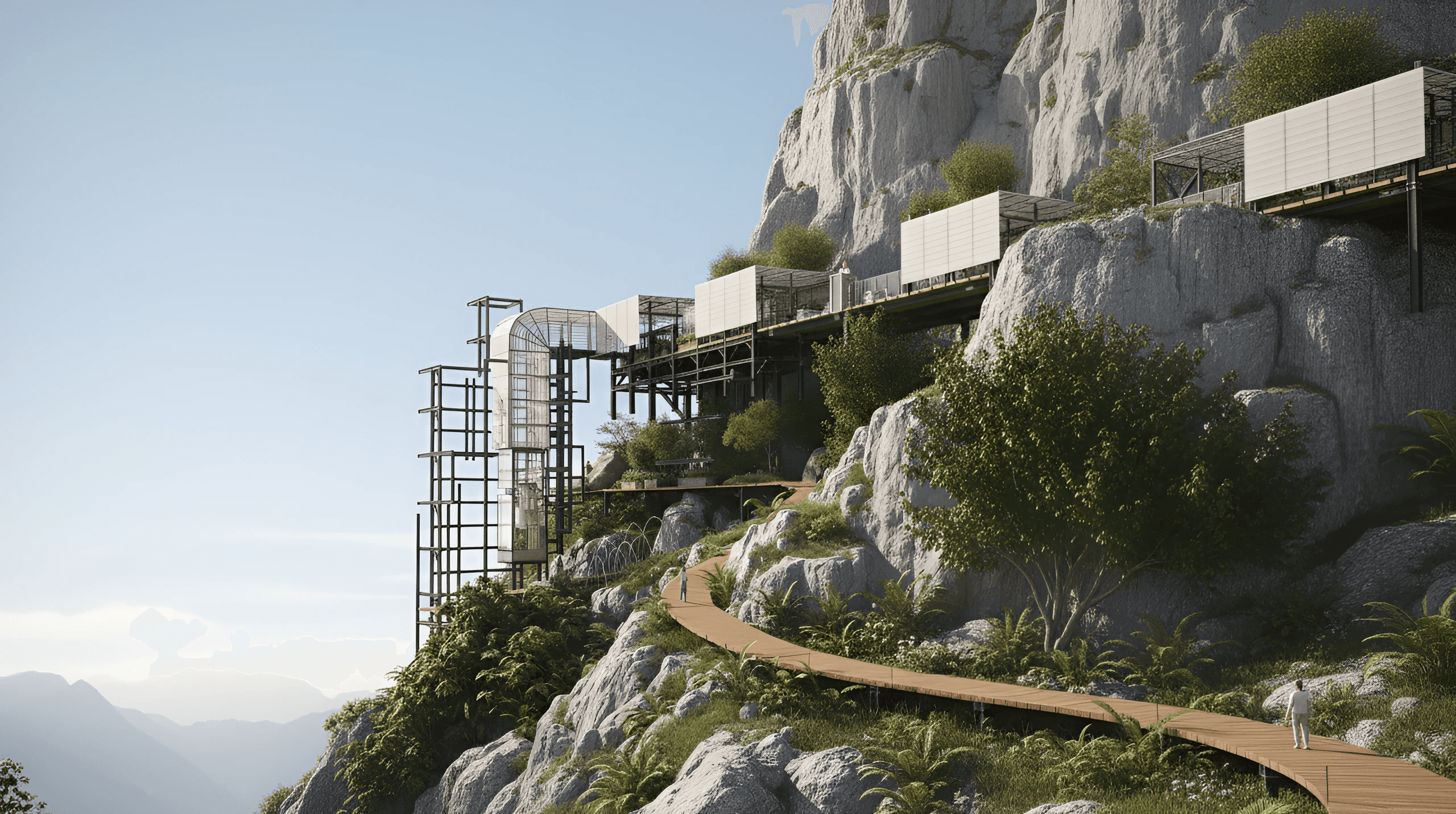
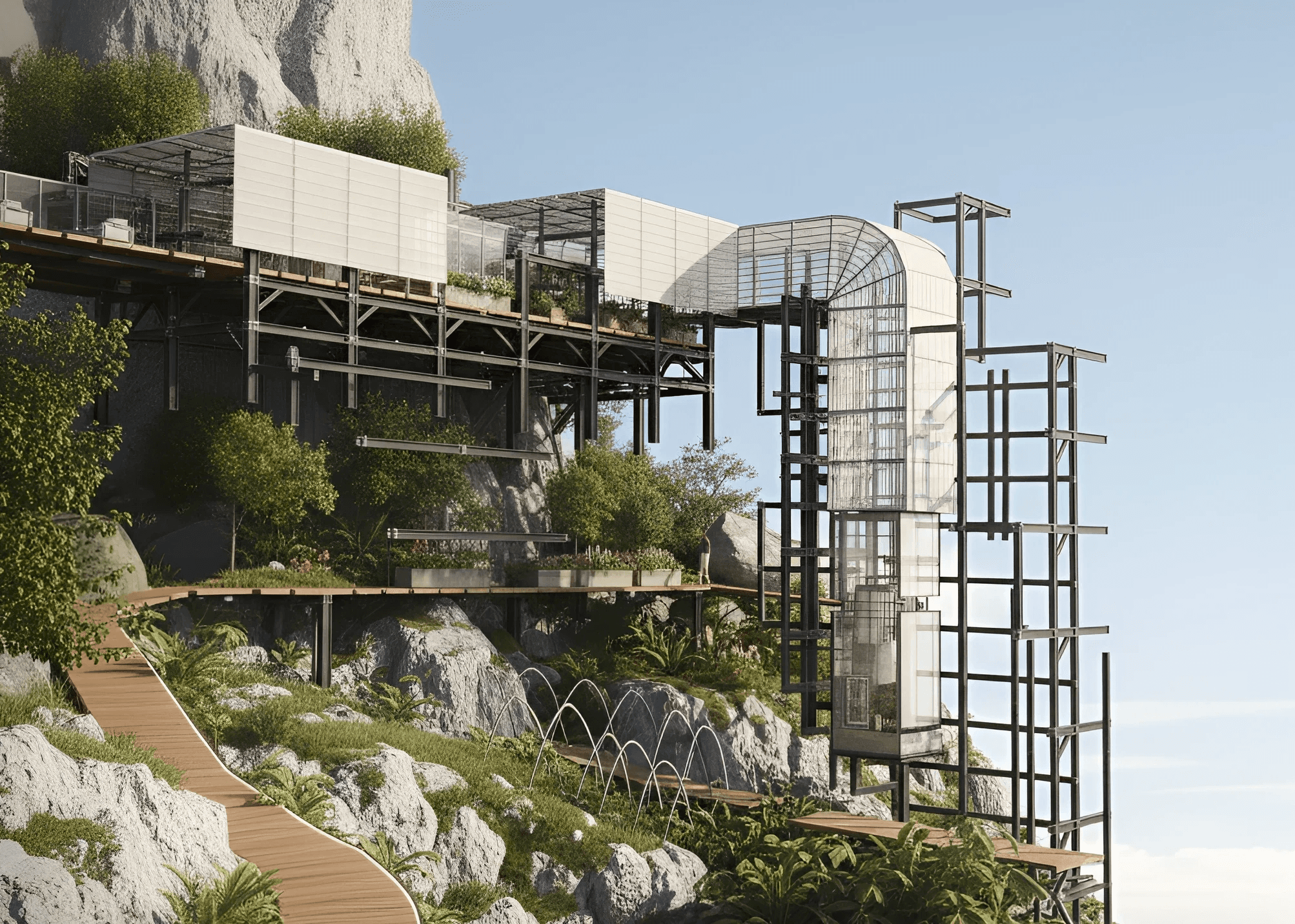
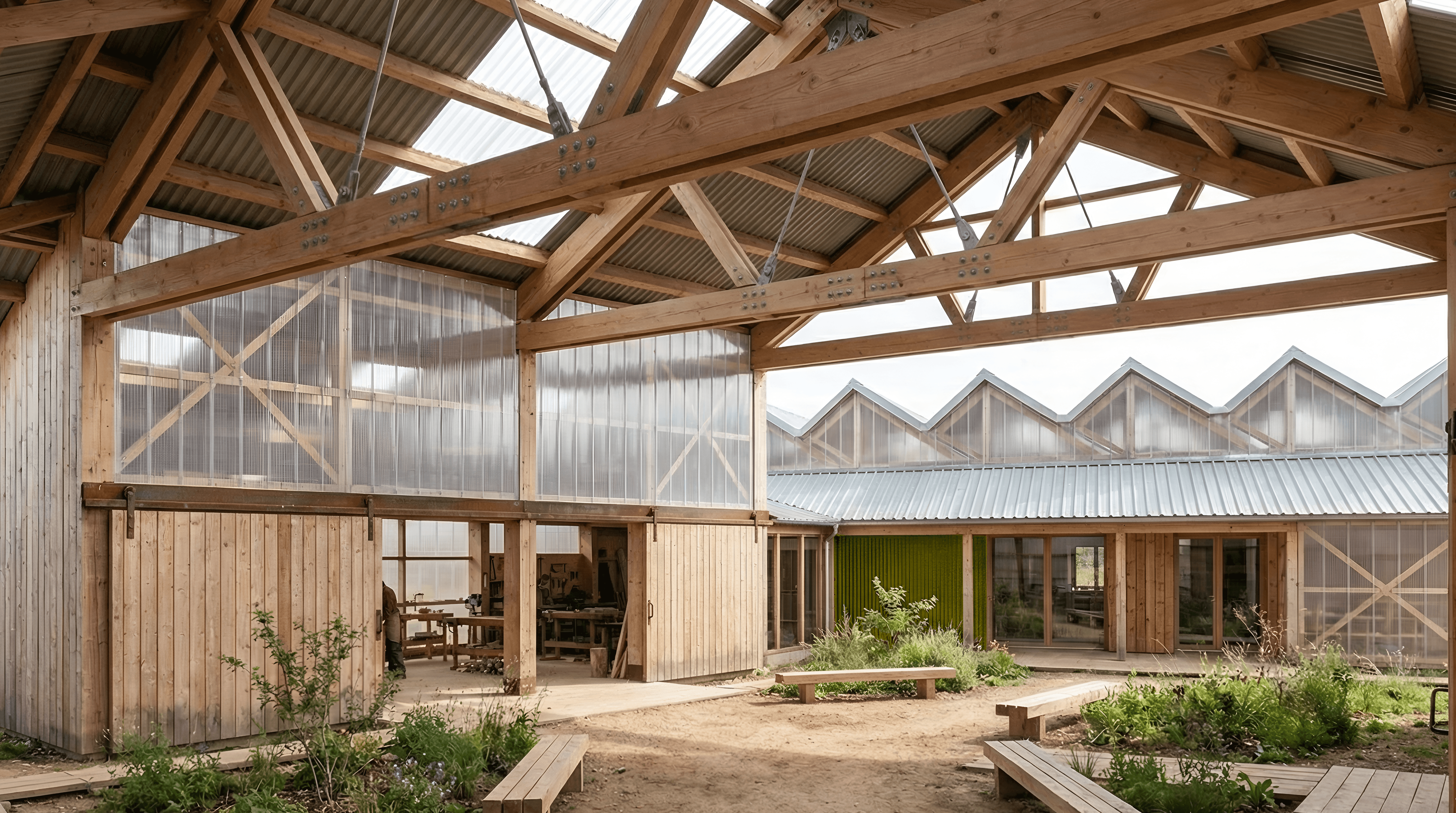
Productive Commons Campus is re-situated in Ören, Milas, along the transitional edge where the fertile alluvial plains of the former Keramos Gulf meet the layered rural settlements of inland Muğla. The site occupies a territory shaped simultaneously by agricultural production, seasonal labor, and the long sedimentation of cultural landscapes—from olive groves and small-scale cultivation fields to traces of ancient harbor infrastructures embedded within the deltaic terrain. Within this context, the project understands land not as a neutral surface but as an accumulated working ground, continuously transformed through cultivation, extraction, and reuse. The campus is organized as a dispersed network of lightweight, modular structures positioned within existing productive patterns rather than imposed upon them. Timber-framed pavilions, semi-open work halls, and shaded courts are embedded between olive terraces, cultivation plots, and irrigation channels, allowing agricultural routines to directly inform spatial organization. Architectural envelopes remain permeable and climate-responsive, calibrated to the Mediterranean conditions of Ören—filtered sunlight, prevailing coastal breezes, and seasonal humidity. Translucent surfaces and adjustable shading elements mediate between interior and exterior, enabling year-round use while preserving visual continuity with the surrounding landscape.
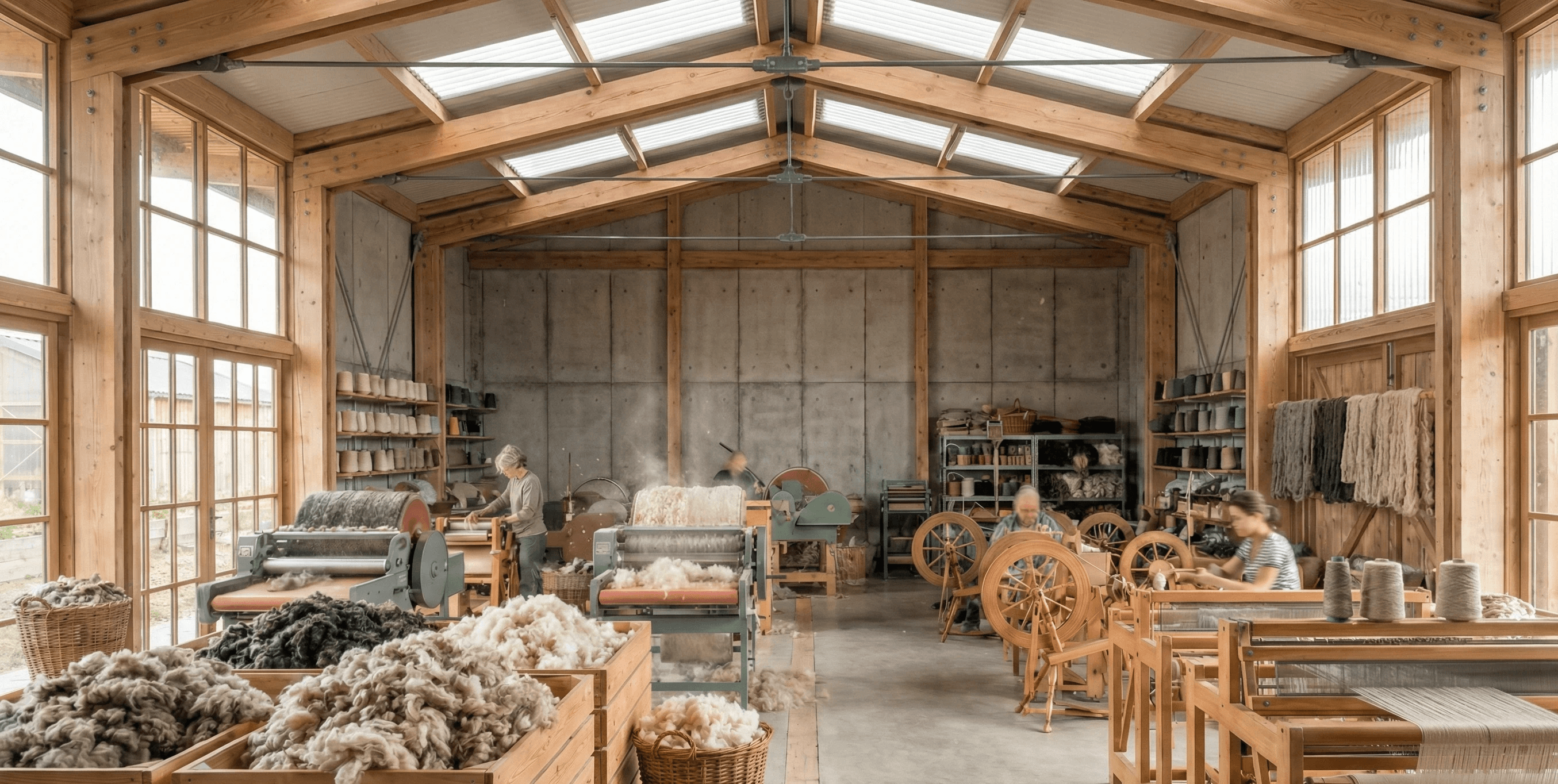
Programmatically, Productive Commons Campus brings together cultivation, material experimentation, and collective learning within a shared spatial framework. Spaces for olive processing, soil preparation, small-scale fabrication, and communal work are interwoven with areas for observation, instruction, and informal exchange. Rather than separating production from education, the project allows knowledge to emerge through proximity, repetition, and shared labor, reinforcing long-established practices of collective work in the Milas countryside. Circulation is conceived as a productive act in itself, unfolding through working paths, courtyards, and thresholds that align with existing agricultural movements and daily routines. Material strategies draw from the constructive logic of the region without resorting to literal imitation. Timber structures are combined with locally sourced stone plinths and earth-based surfaces, anchoring lightweight assemblies to the ground while allowing for incremental modification over time. The campus is designed to expand, contract, or adapt in response to changing patterns of use, seasonal production cycles, and evolving community needs. In this sense, architecture functions less as a fixed artifact and more as a durable support system for ongoing collective activity.
Productive Commons Campus proposes an alternative rural model for Ören, one that resists both touristic abstraction and nostalgic representation. By framing production, cultivation, and learning as shared spatial practices, the project positions architecture as an active participant in the contemporary transformation of the Milas landscape—operating across agricultural, ecological, and social layers to sustain a living commons grounded in place, labor, and time. In parallel, the project acknowledges Ören’s proximity to the Aegean coastline and its long-standing relationship with maritime exchange, seasonal migration, and fluctuating population dynamics. Rather than foregrounding coastal leisure, the campus subtly engages this condition by accommodating periods of intensified use and dormancy, allowing production and learning to adapt to temporal shifts throughout the year. Open working grounds and communal spaces are dimensioned to host collective harvests, workshops, and shared meals, while quieter intervals are absorbed through maintenance, repair, and incremental reconfiguration. Through this temporal elasticity, Productive Commons Campus extends beyond a site-specific intervention to operate as a resilient rural infrastructure—capable of absorbing change without losing its productive and communal coherence.


Productive Commons Campus is re-situated in Ören, Milas, along the transitional edge where the fertile alluvial plains of the former Keramos Gulf meet the layered rural settlements of inland Muğla. The site occupies a territory shaped simultaneously by agricultural production, seasonal labor, and the long sedimentation of cultural landscapes—from olive groves and small-scale cultivation fields to traces of ancient harbor infrastructures embedded within the deltaic terrain. Within this context, the project understands land not as a neutral surface but as an accumulated working ground, continuously transformed through cultivation, extraction, and reuse. The campus is organized as a dispersed network of lightweight, modular structures positioned within existing productive patterns rather than imposed upon them. Timber-framed pavilions, semi-open work halls, and shaded courts are embedded between olive terraces, cultivation plots, and irrigation channels, allowing agricultural routines to directly inform spatial organization. Architectural envelopes remain permeable and climate-responsive, calibrated to the Mediterranean conditions of Ören—filtered sunlight, prevailing coastal breezes, and seasonal humidity. Translucent surfaces and adjustable shading elements mediate between interior and exterior, enabling year-round use while preserving visual continuity with the surrounding landscape.
Programmatically, Productive Commons Campus brings together cultivation, material experimentation, and collective learning within a shared spatial framework. Spaces for olive processing, soil preparation, small-scale fabrication, and communal work are interwoven with areas for observation, instruction, and informal exchange. Rather than separating production from education, the project allows knowledge to emerge through proximity, repetition, and shared labor, reinforcing long-established practices of collective work in the Milas countryside. Circulation is conceived as a productive act in itself, unfolding through working paths, courtyards, and thresholds that align with existing agricultural movements and daily routines. Material strategies draw from the constructive logic of the region without resorting to literal imitation. Timber structures are combined with locally sourced stone plinths and earth-based surfaces, anchoring lightweight assemblies to the ground while allowing for incremental modification over time. The campus is designed to expand, contract, or adapt in response to changing patterns of use, seasonal production cycles, and evolving community needs. In this sense, architecture functions less as a fixed artifact and more as a durable support system for ongoing collective activity.
Productive Commons Campus proposes an alternative rural model for Ören, one that resists both touristic abstraction and nostalgic representation. By framing production, cultivation, and learning as shared spatial practices, the project positions architecture as an active participant in the contemporary transformation of the Milas landscape—operating across agricultural, ecological, and social layers to sustain a living commons grounded in place, labor, and time. In parallel, the project acknowledges Ören’s proximity to the Aegean coastline and its long-standing relationship with maritime exchange, seasonal migration, and fluctuating population dynamics. Rather than foregrounding coastal leisure, the campus subtly engages this condition by accommodating periods of intensified use and dormancy, allowing production and learning to adapt to temporal shifts throughout the year. Open working grounds and communal spaces are dimensioned to host collective harvests, workshops, and shared meals, while quieter intervals are absorbed through maintenance, repair, and incremental reconfiguration. Through this temporal elasticity, Productive Commons Campus extends beyond a site-specific intervention to operate as a resilient rural infrastructure—capable of absorbing change without losing its productive and communal coherence.
Project team:
S&A
Building physics:
S&A BPC
(Other works)