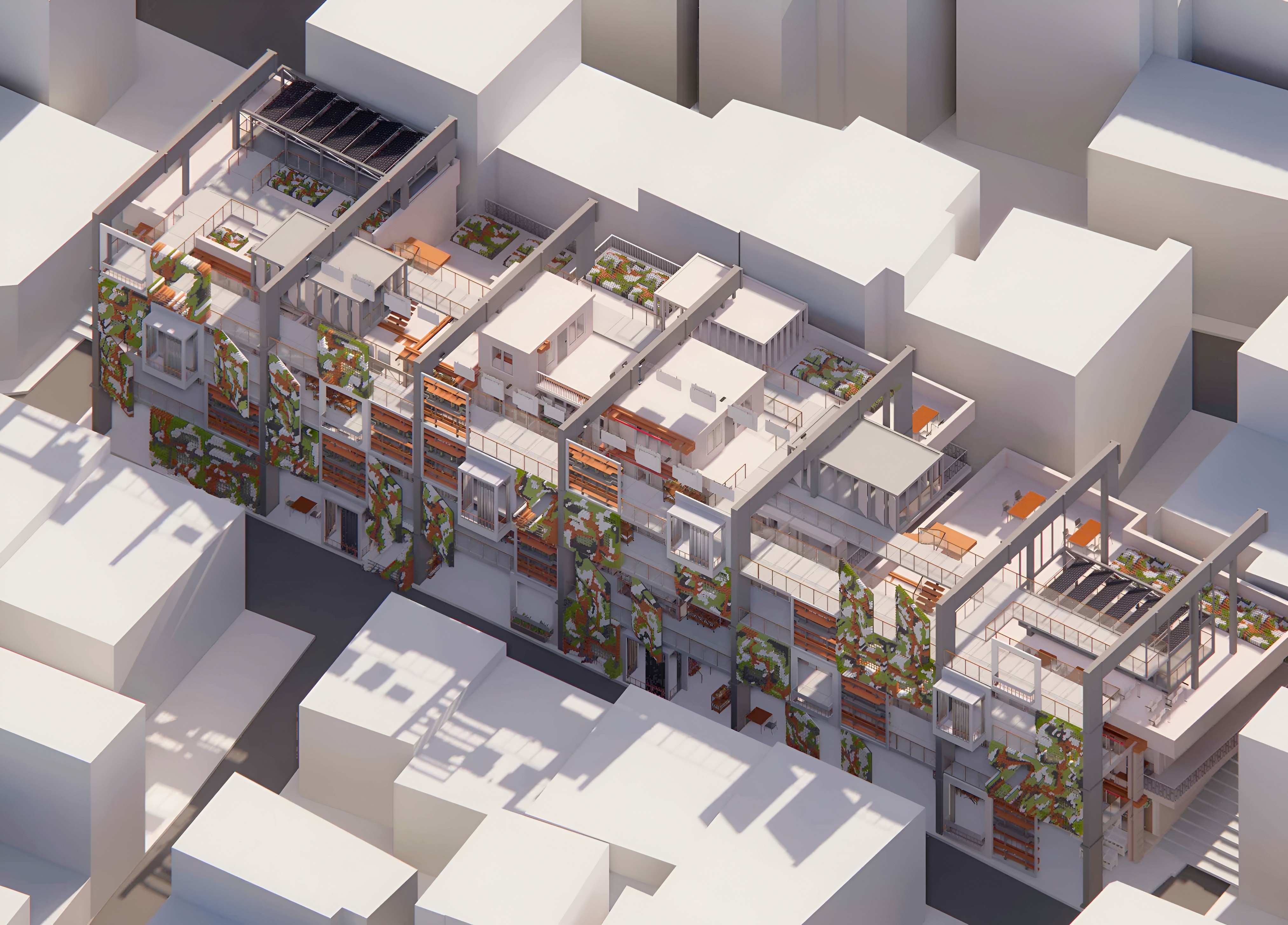
Kadifekale Social Housing
Status:
R&D
Year:
2025
Type:
Social Housing
Size:
1,200 m²
Client:
CEIS
Location:
Kadifekale, İzmir, Turkey
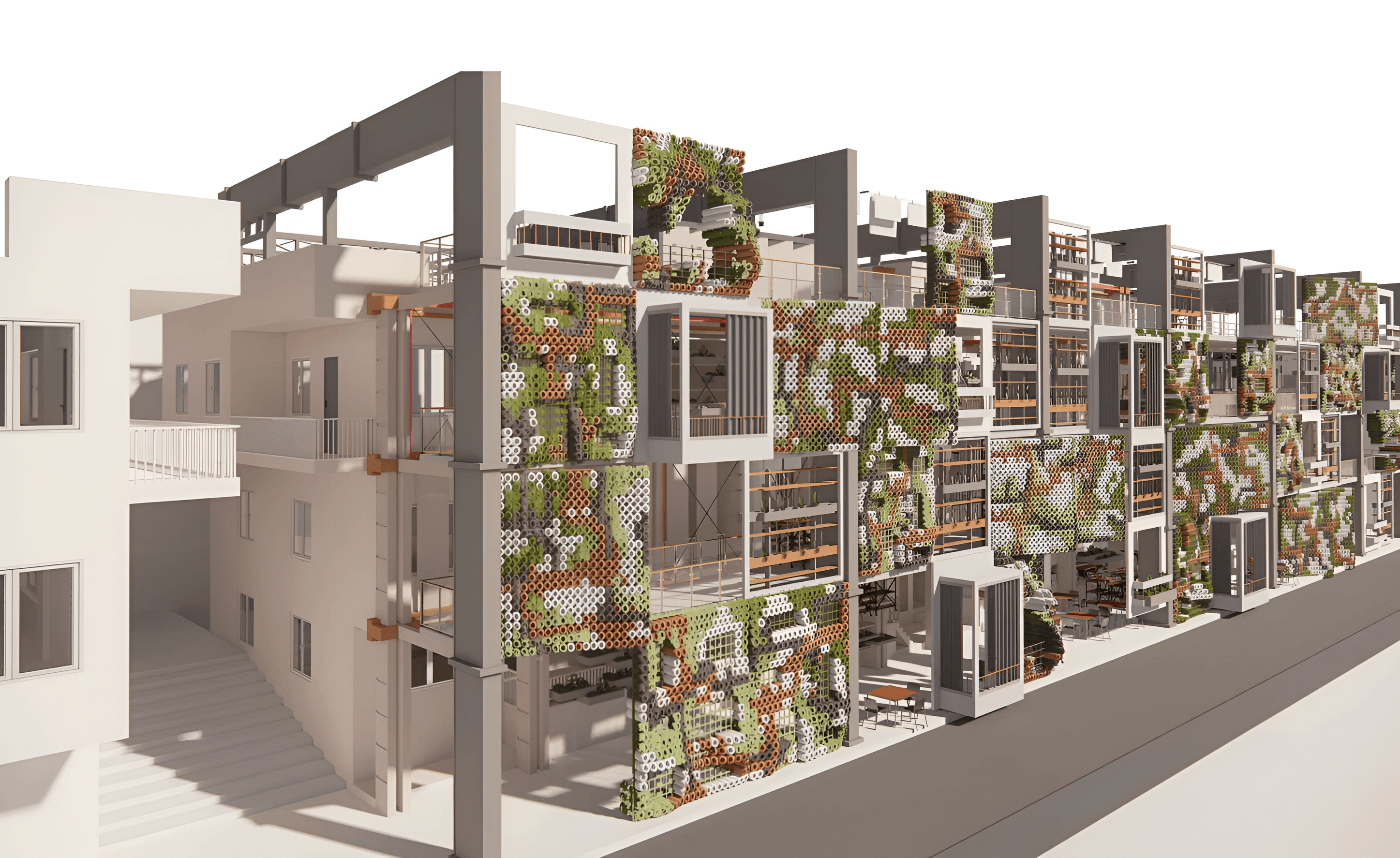
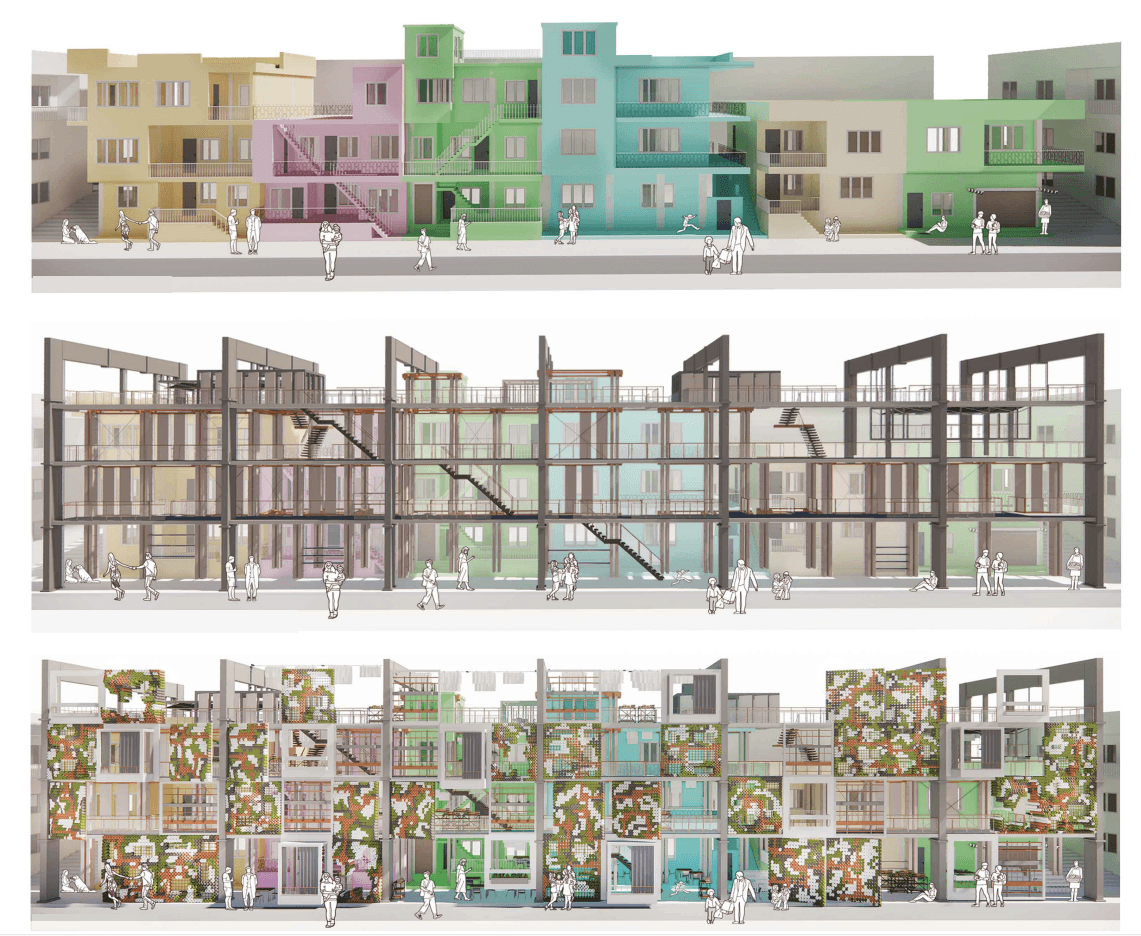
Set on the dramatic hillside rising above İzmir, Kadifekale embodies a unique hybrid condition: an apartment-like informal housing fabric that has emerged through decades of self-organization, incremental construction, and adaptive survival strategies. This layered urban morphology — dense yet porous, improvised yet socially cohesive — carries the memory of a community that has learned to negotiate steep terrain, economic precarity, and infrastructural absence with remarkable ingenuity.
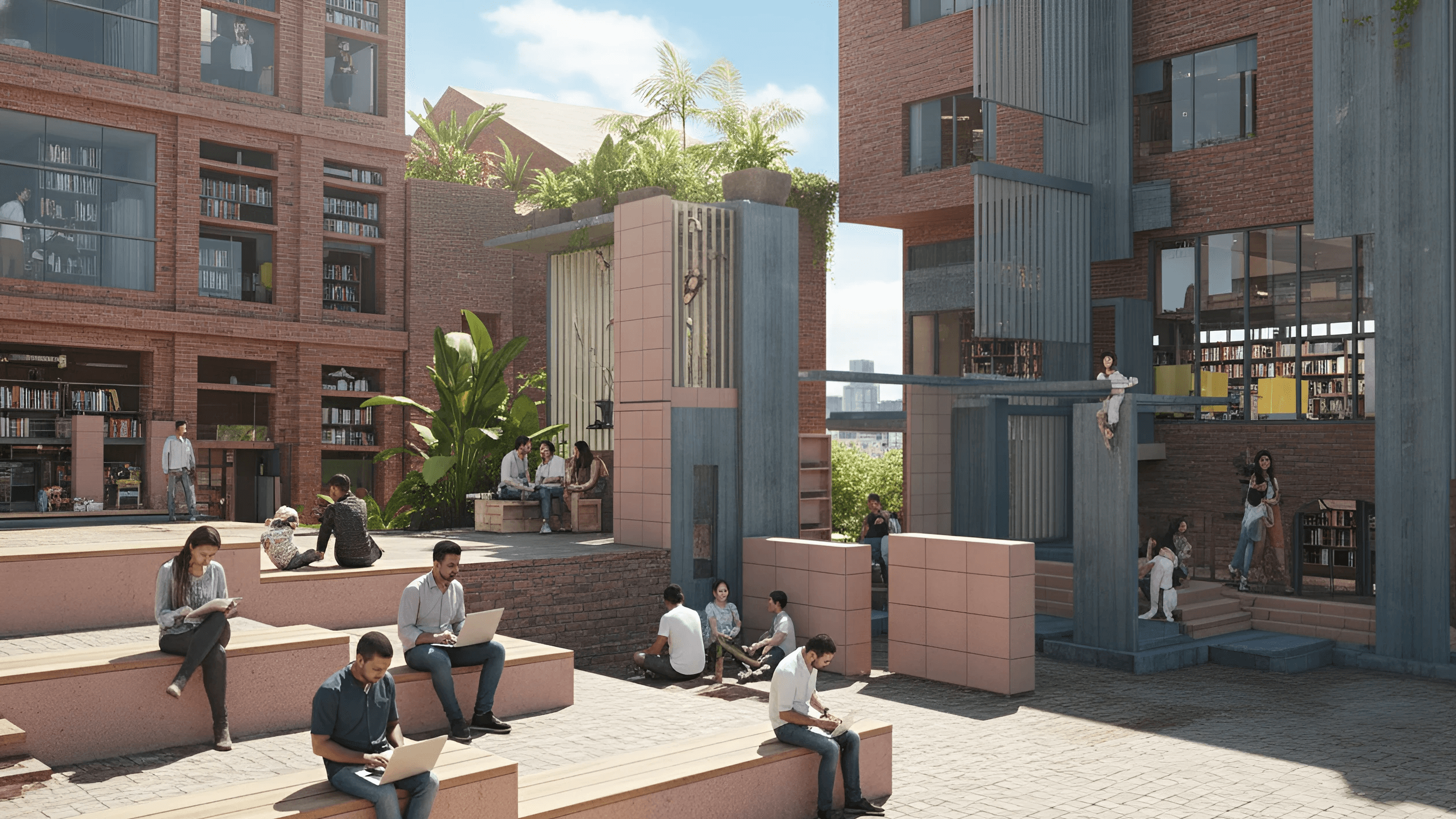
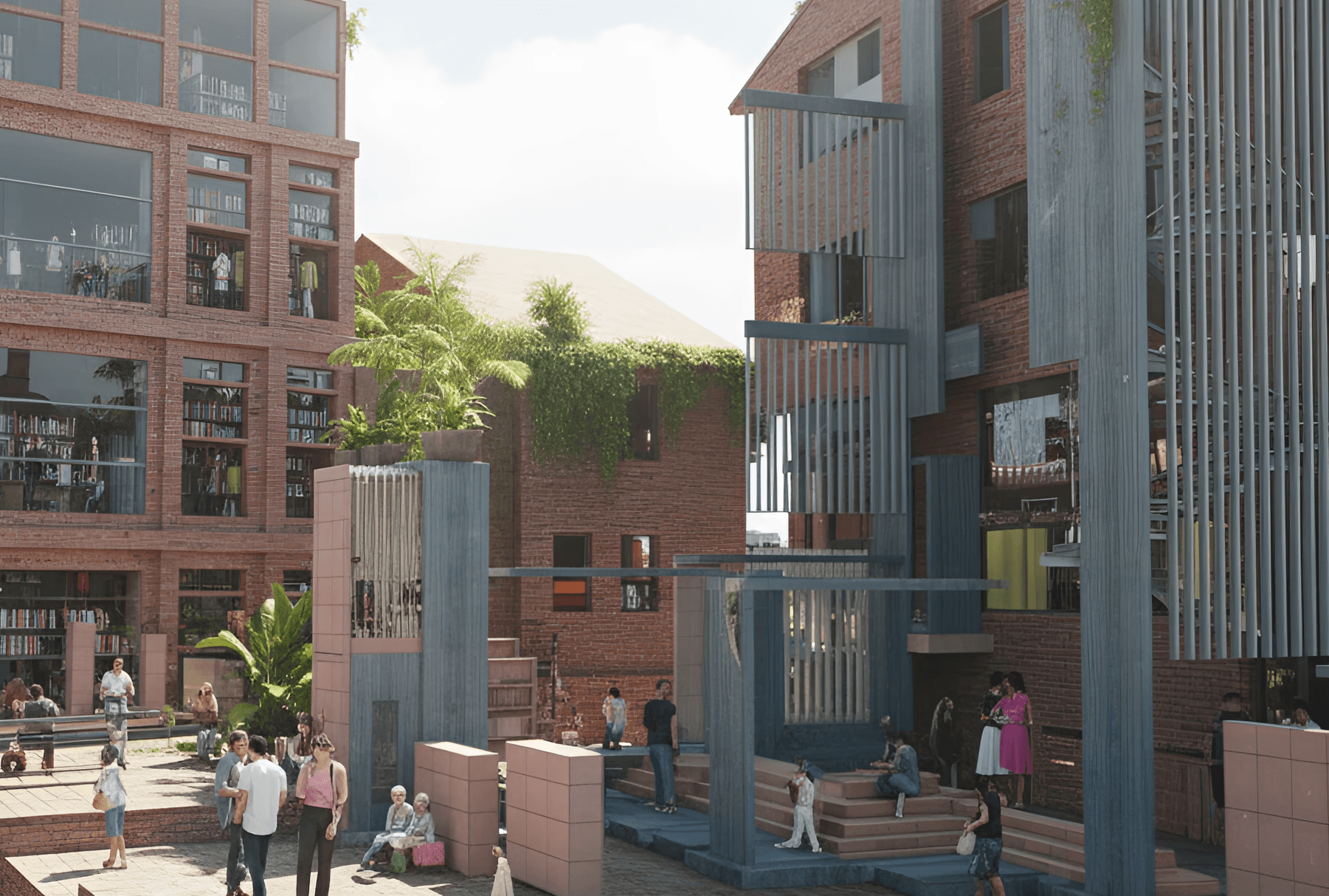
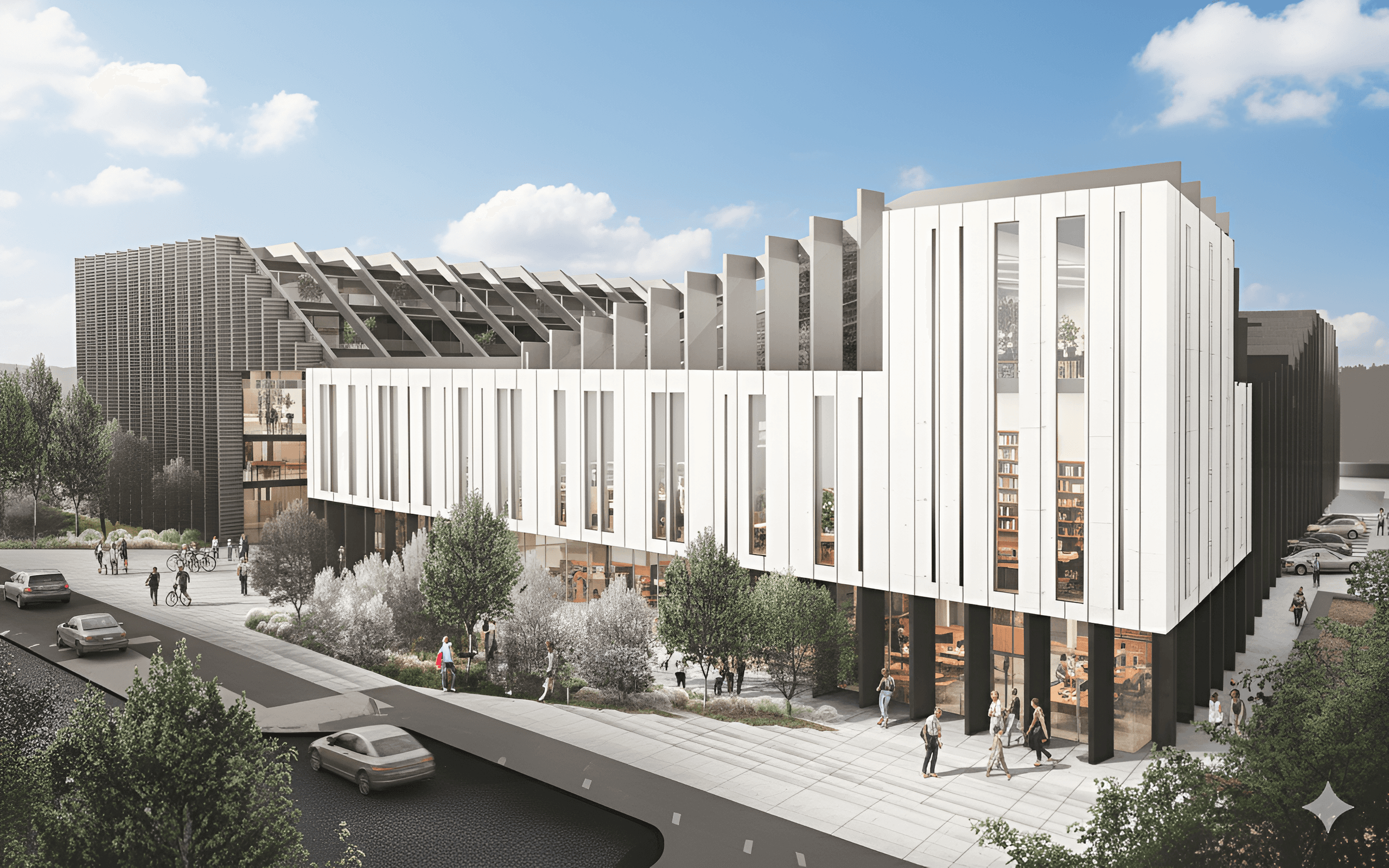
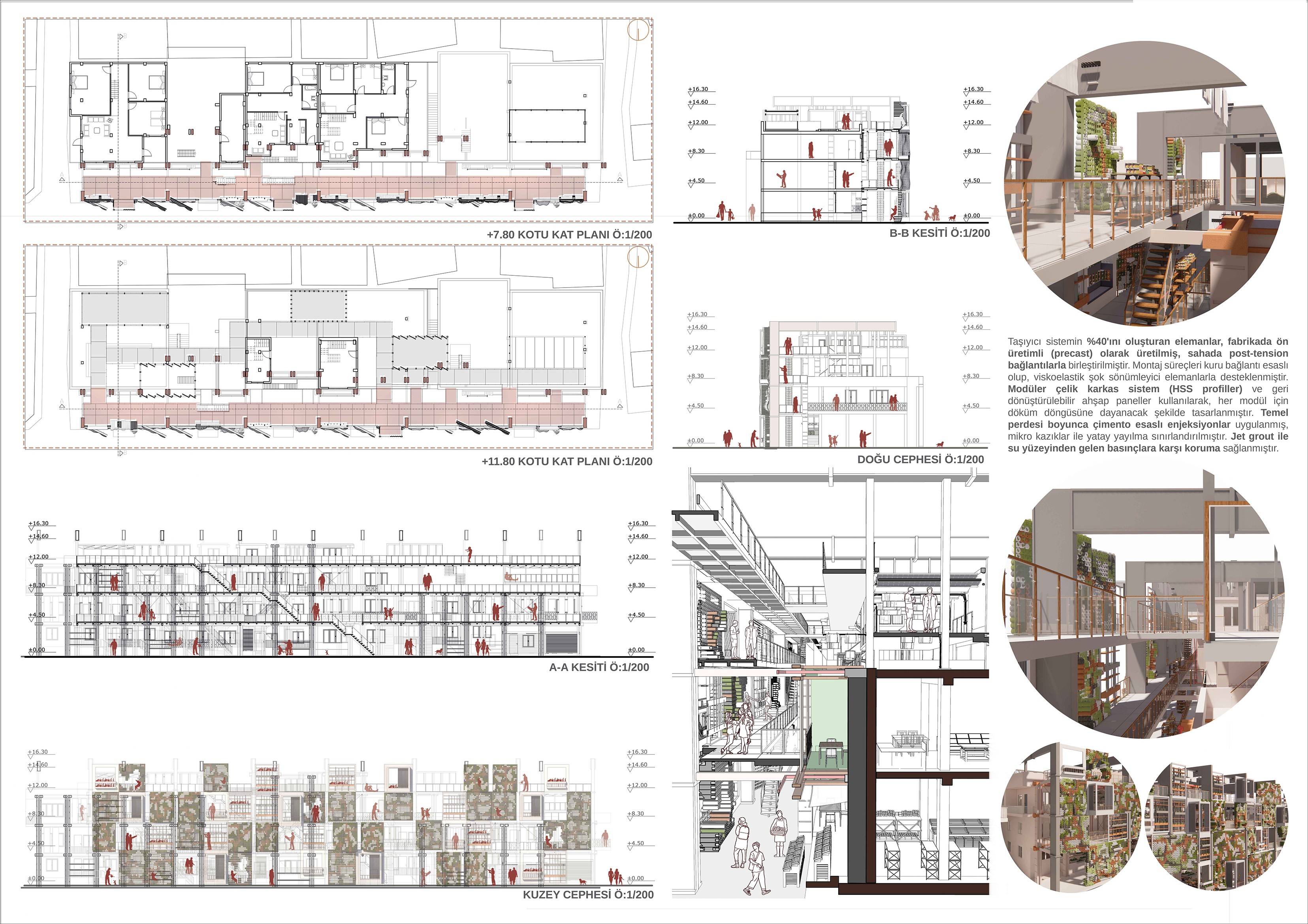
The project approaches Kadifekale not as a void to be replaced, but as a living urban organism whose spatial intelligence must be read, interpreted, and carefully reinforced. Rather than erasing the existing informal apartment clusters, the proposal reorganizes them into a system of terraced, low-rise regenerative compounds. These new structures follow the micro-topographies and sightlines of the hillside, allowing dwellings to step with the slope while optimizing daylight, ventilation, and environmental performance.
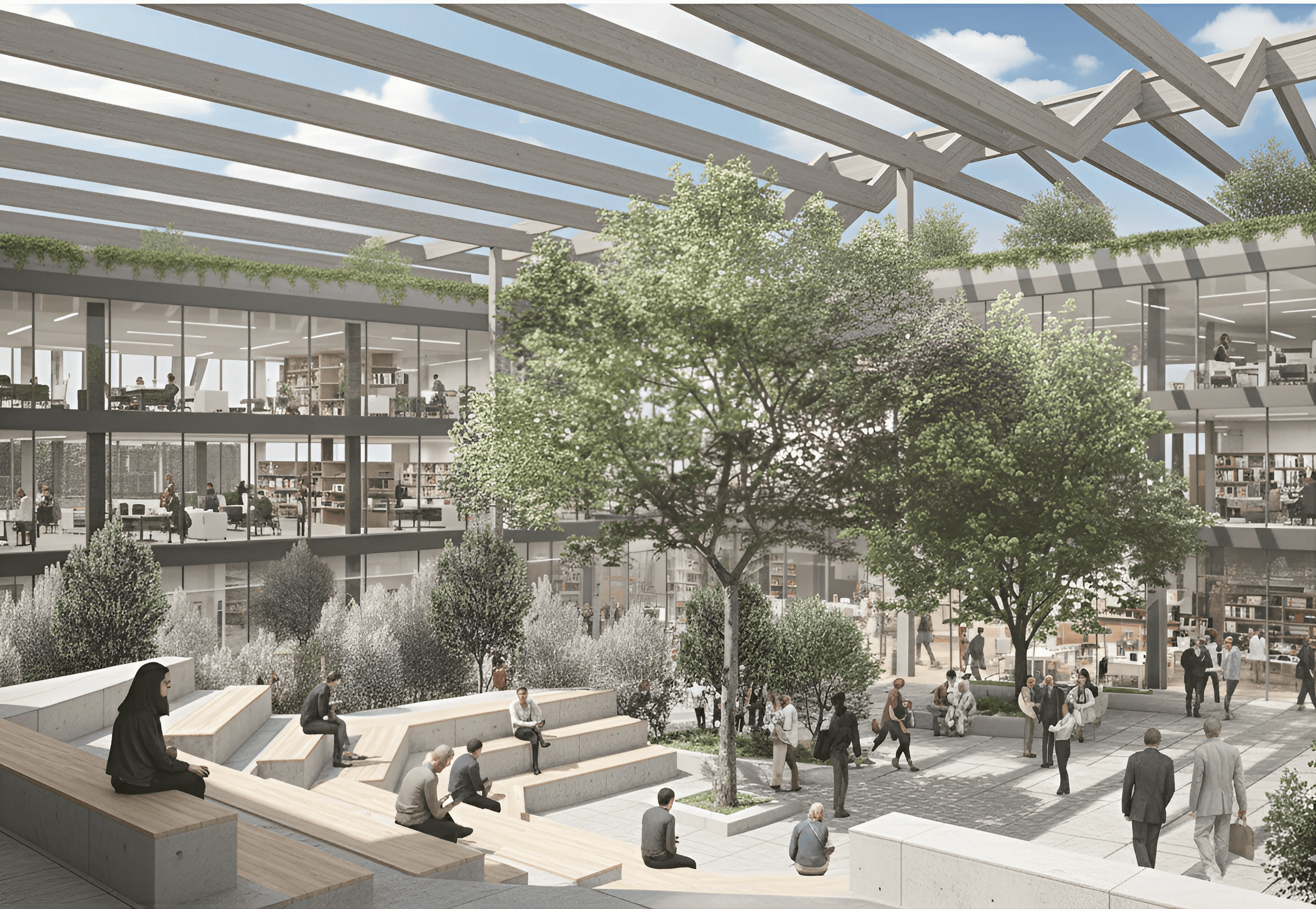
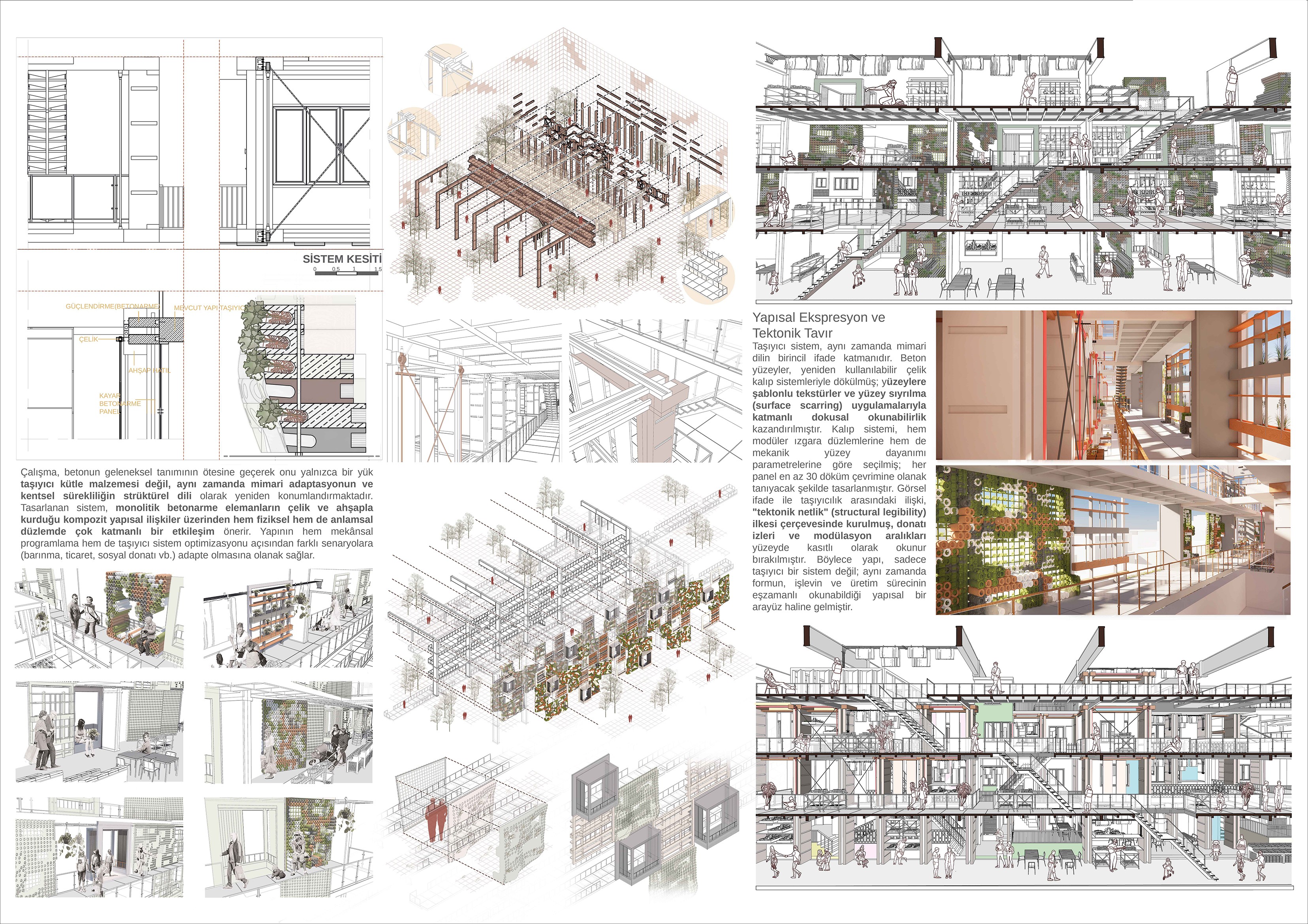
Shared terraces, linear courtyards, and multi-level communal platforms act as social condensers, enabling the continuity of neighborhood relations while elevating daily living conditions. Small-scale workshops, home-based commercial units, and shaded public passages cultivate an economy of proximity that supports residents without displacement.
Mobility is reconceived through a vertical-horizontal connective network combining pedestrian spines, stepped streets, accessible lifts, and belvedere nodes that open to panoramic views of the city and coastline. Green infrastructure — rainwater terraces, erosion-control planting, and microclimate-enhancing vegetation — anchors the settlement within an environmentally resilient framework.
Ultimately, the project envisions a culturally grounded, socially durable, and ecologically attuned transformation of Kadifekale’s informal apartment fabric. It demonstrates that renewal in marginalized urban hillsides can be achieved not through removal, but through patient stitching, re-territorialization, and architectural empathy.
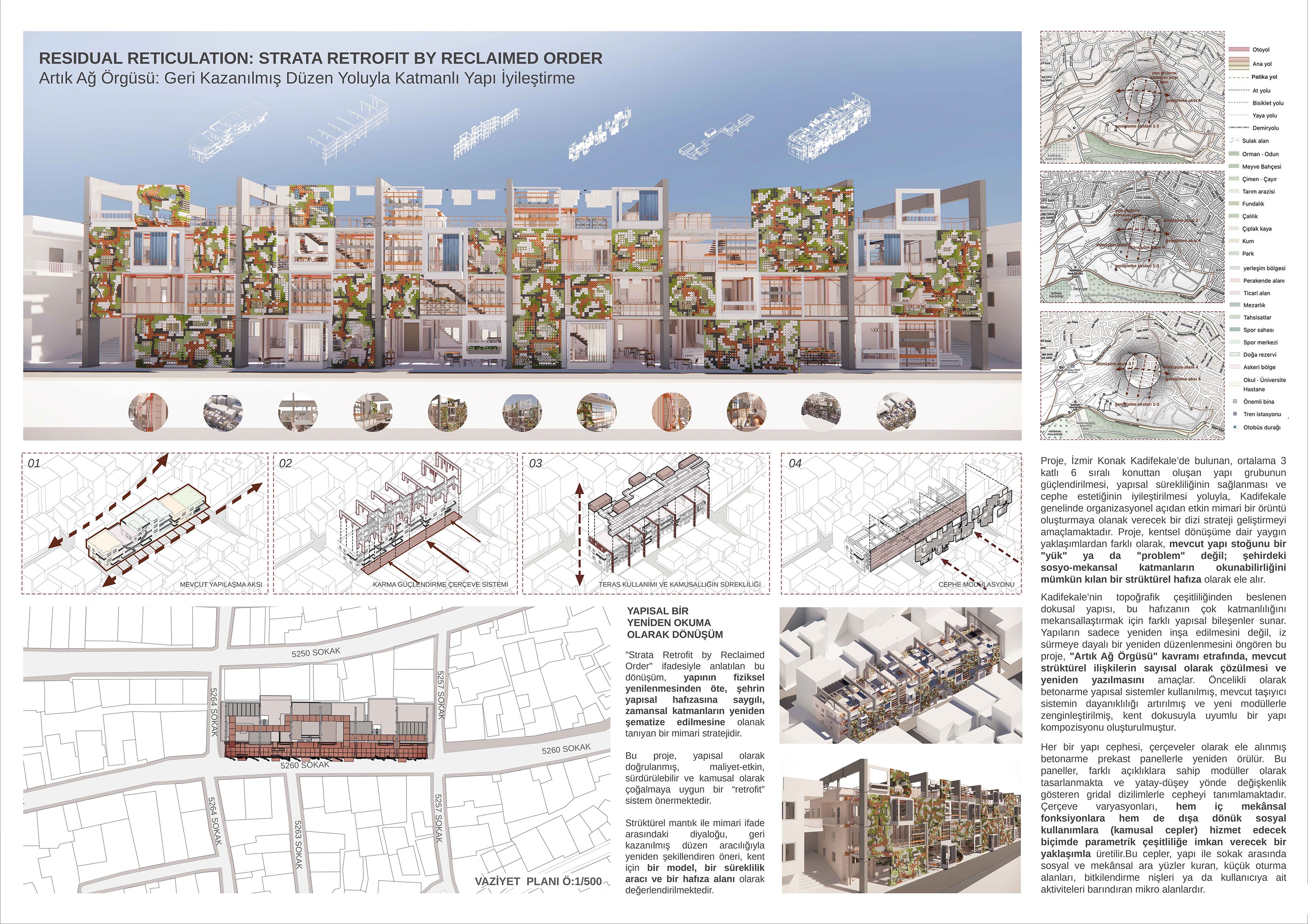
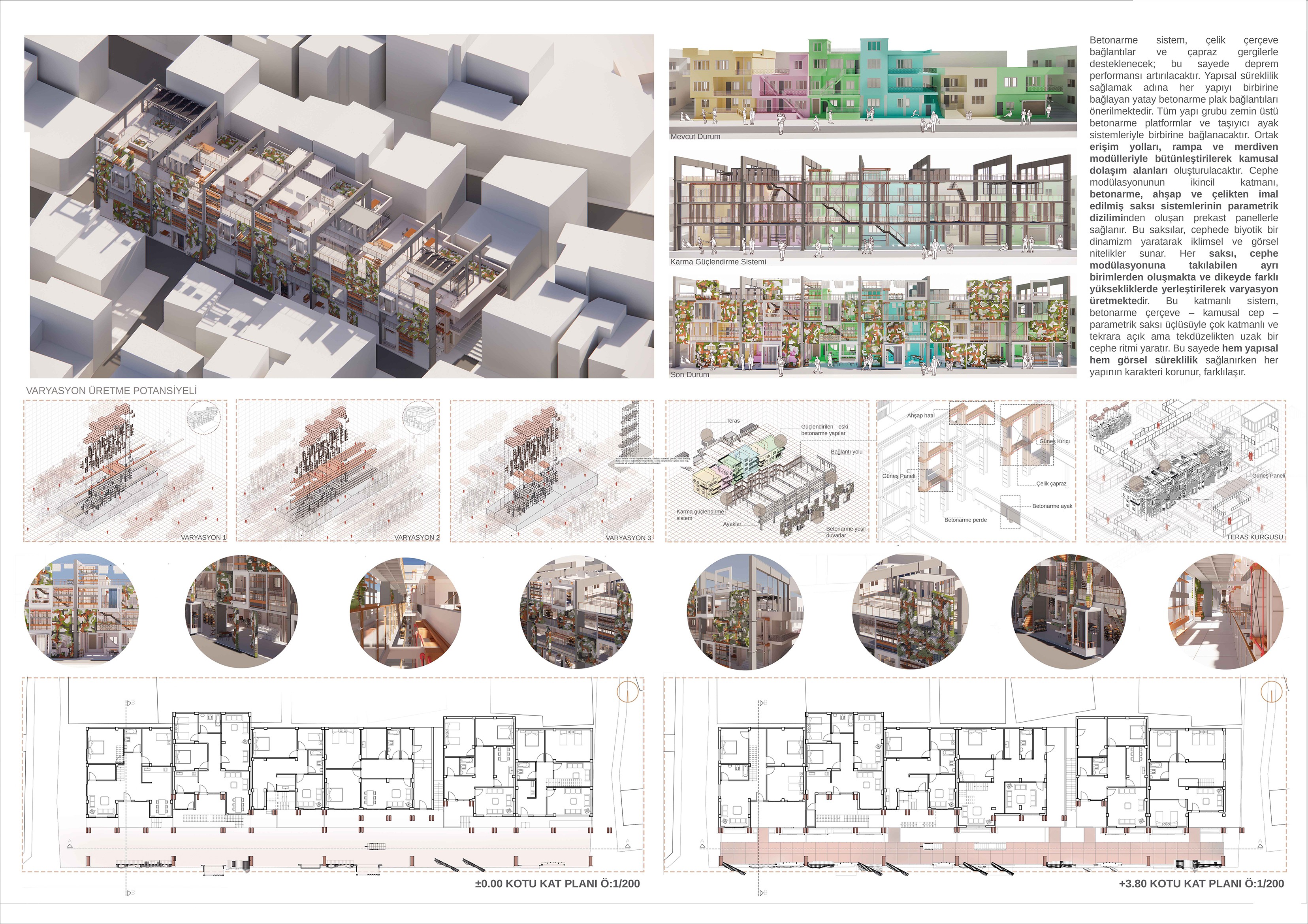
Set on the dramatic hillside rising above İzmir, Kadifekale embodies a unique hybrid condition: an apartment-like informal housing fabric that has emerged through decades of self-organization, incremental construction, and adaptive survival strategies. This layered urban morphology — dense yet porous, improvised yet socially cohesive — carries the memory of a community that has learned to negotiate steep terrain, economic precarity, and infrastructural absence with remarkable ingenuity.
The project approaches Kadifekale not as a void to be replaced, but as a living urban organism whose spatial intelligence must be read, interpreted, and carefully reinforced. Rather than erasing the existing informal apartment clusters, the proposal reorganizes them into a system of terraced, low-rise regenerative compounds. These new structures follow the micro-topographies and sightlines of the hillside, allowing dwellings to step with the slope while optimizing daylight, ventilation, and environmental performance.
Shared terraces, linear courtyards, and multi-level communal platforms act as social condensers, enabling the continuity of neighborhood relations while elevating daily living conditions. Small-scale workshops, home-based commercial units, and shaded public passages cultivate an economy of proximity that supports residents without displacement.
Mobility is reconceived through a vertical-horizontal connective network combining pedestrian spines, stepped streets, accessible lifts, and belvedere nodes that open to panoramic views of the city and coastline. Green infrastructure — rainwater terraces, erosion-control planting, and microclimate-enhancing vegetation — anchors the settlement within an environmentally resilient framework.
Ultimately, the project envisions a culturally grounded, socially durable, and ecologically attuned transformation of Kadifekale’s informal apartment fabric. It demonstrates that renewal in marginalized urban hillsides can be achieved not through removal, but through patient stitching, re-territorialization, and architectural empathy.
Project team:
S&A
Building physics:
S&A
Honors:
CEIS, Building Design Competition, 1st Prize
(Other works)