Çukurova Municipal Services
Status:
R&D
Year:
2013-2015
Type:
Municipality Building
Size:
22,000 m²
Client:
Institutional Proposal
Location:
Cukurova, Adana, Turkey
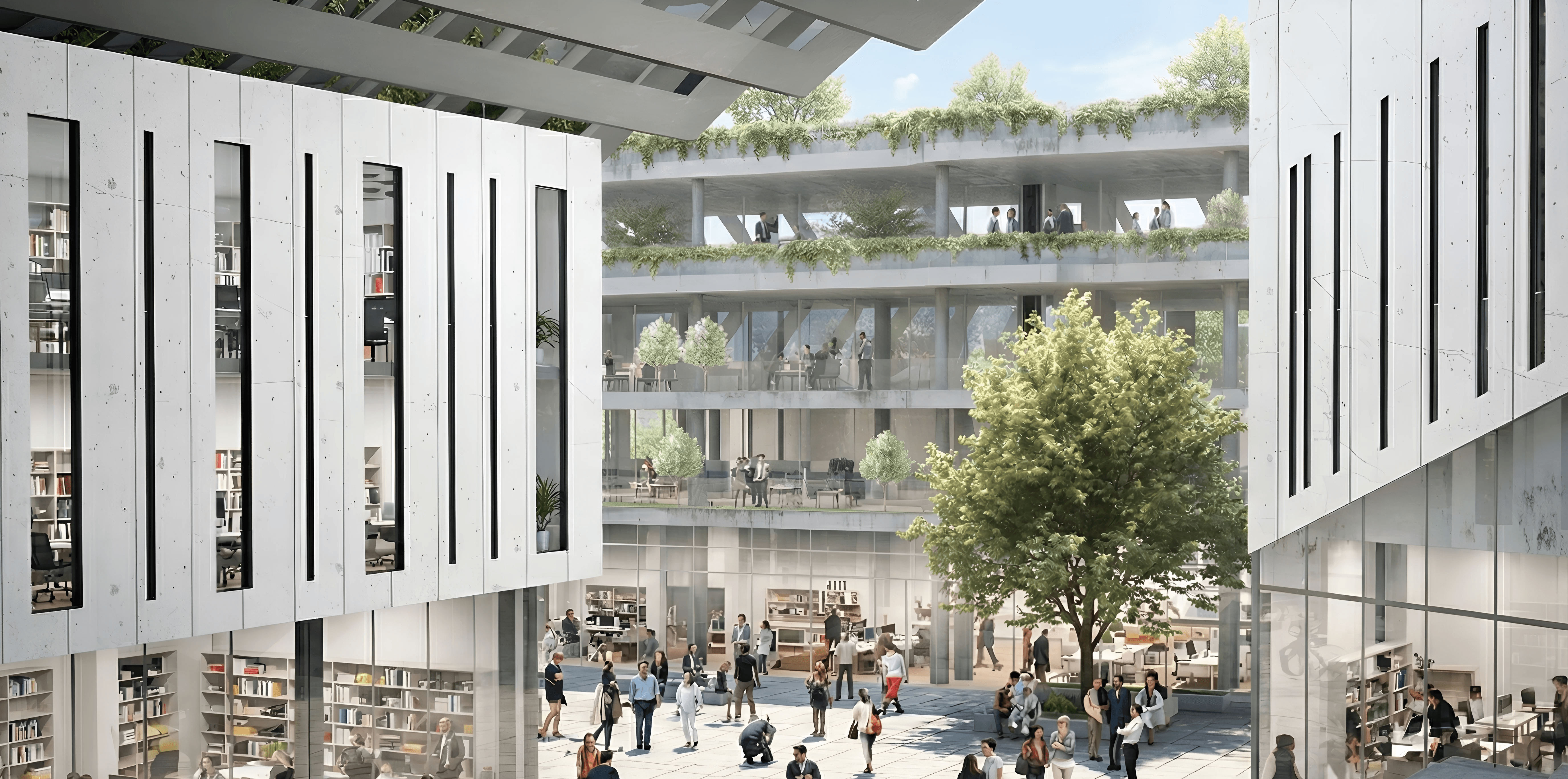
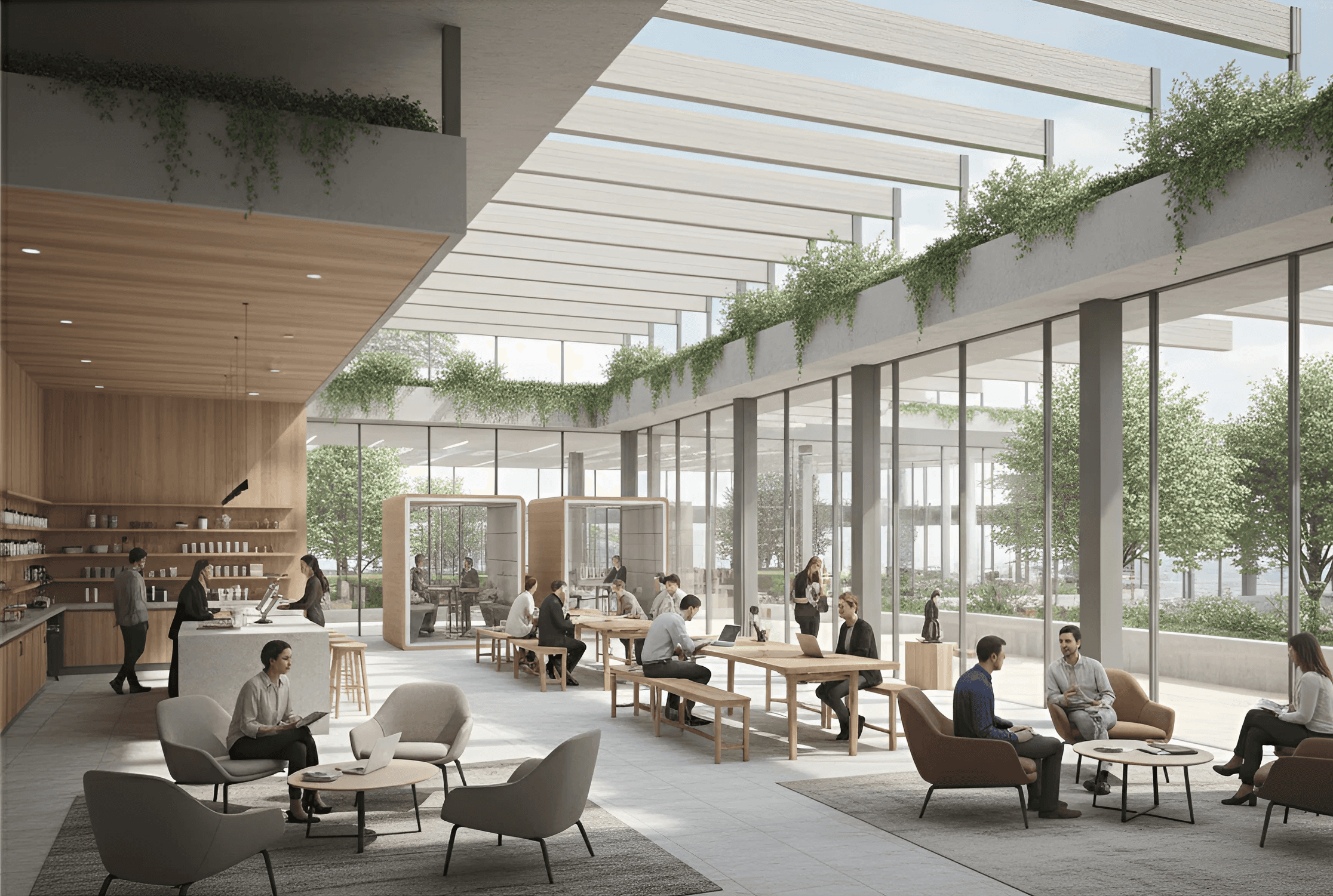
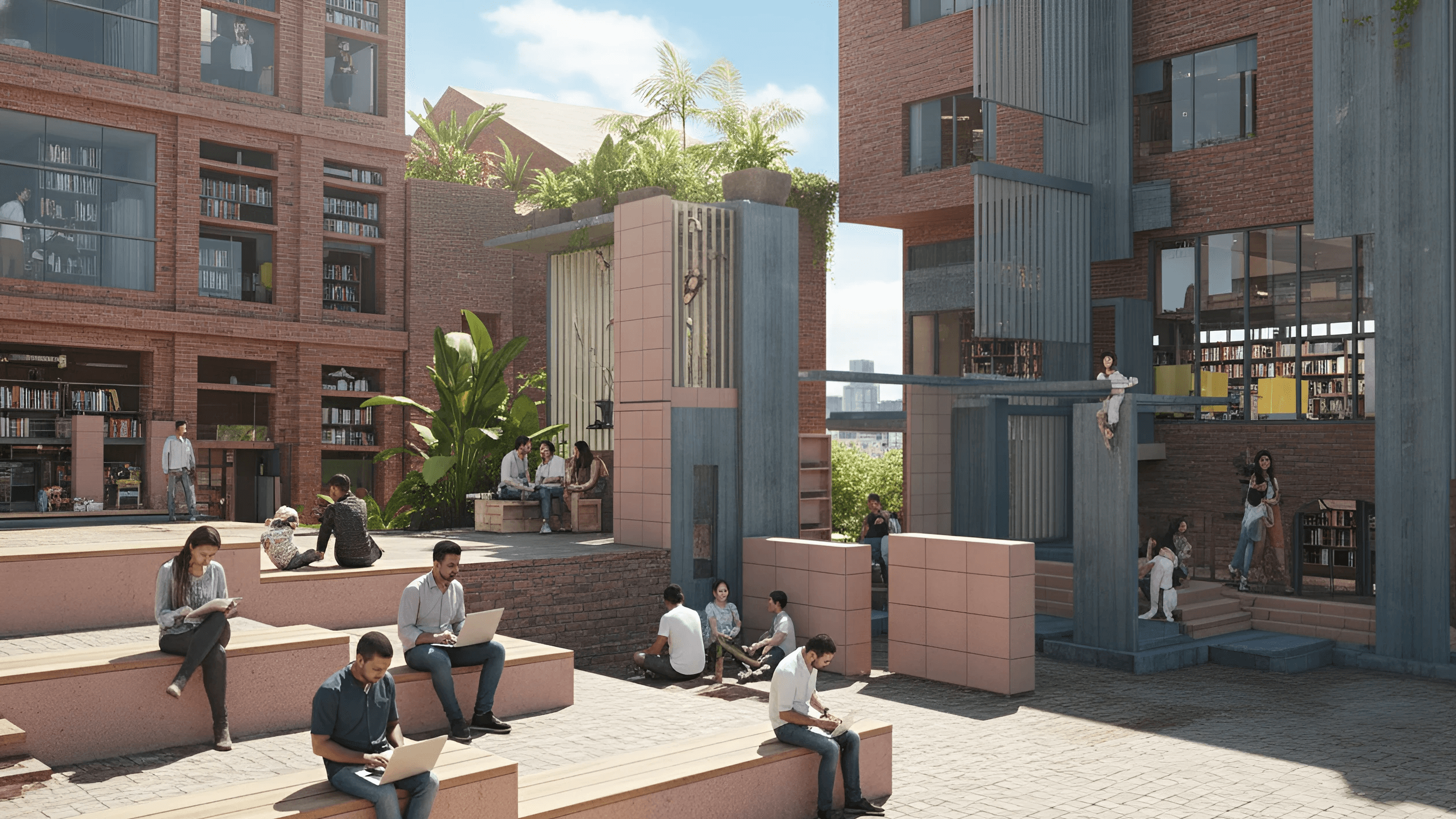
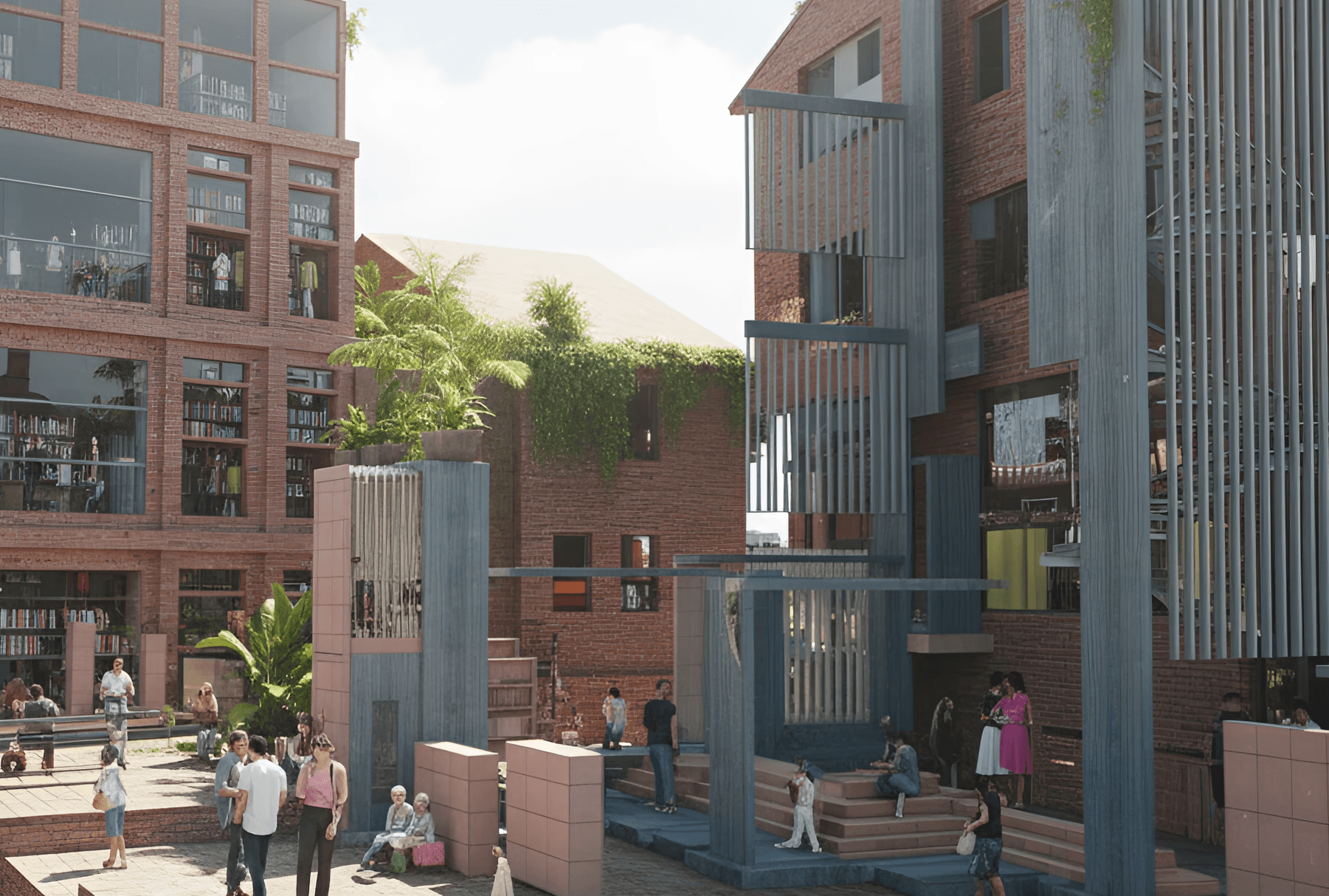
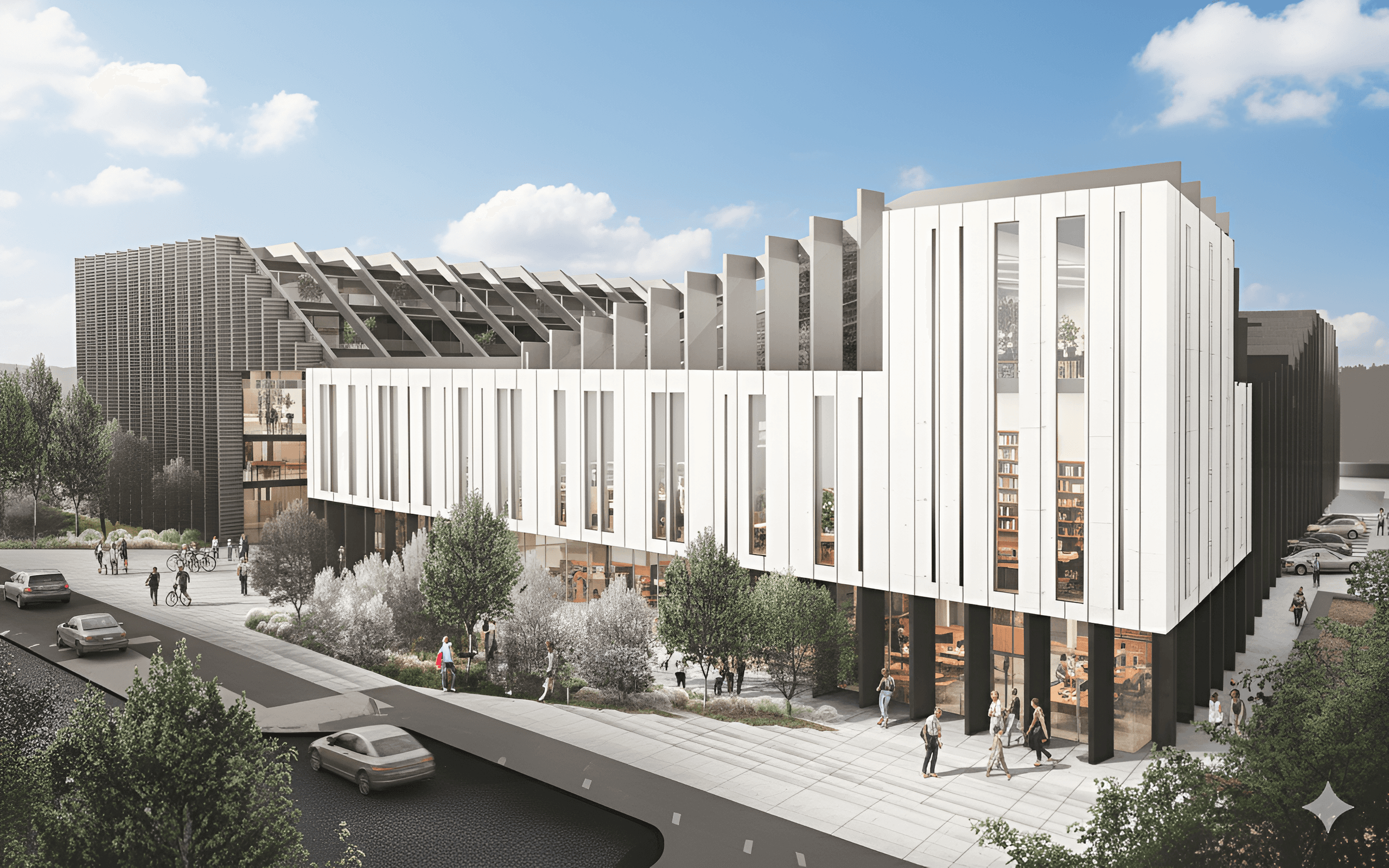
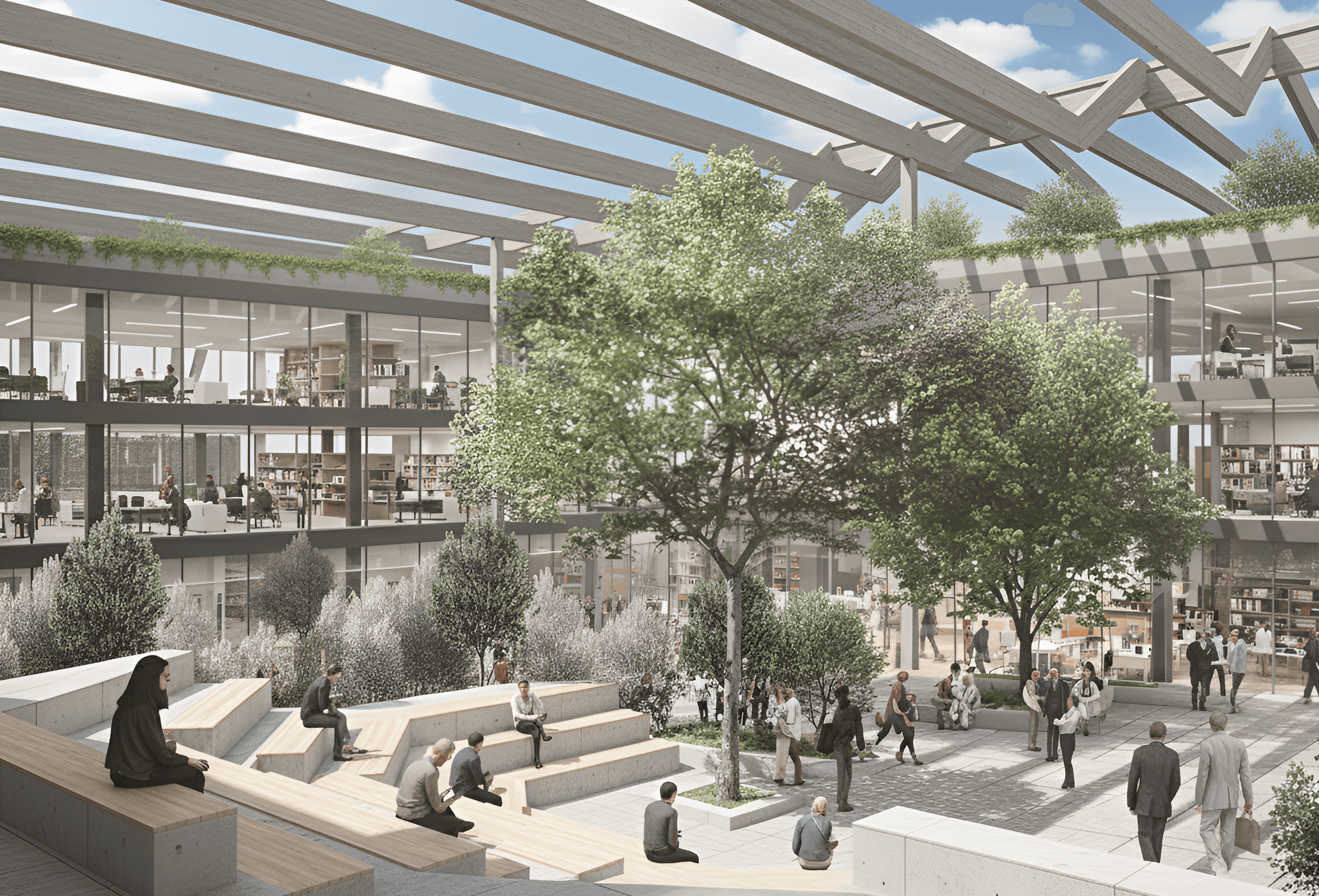
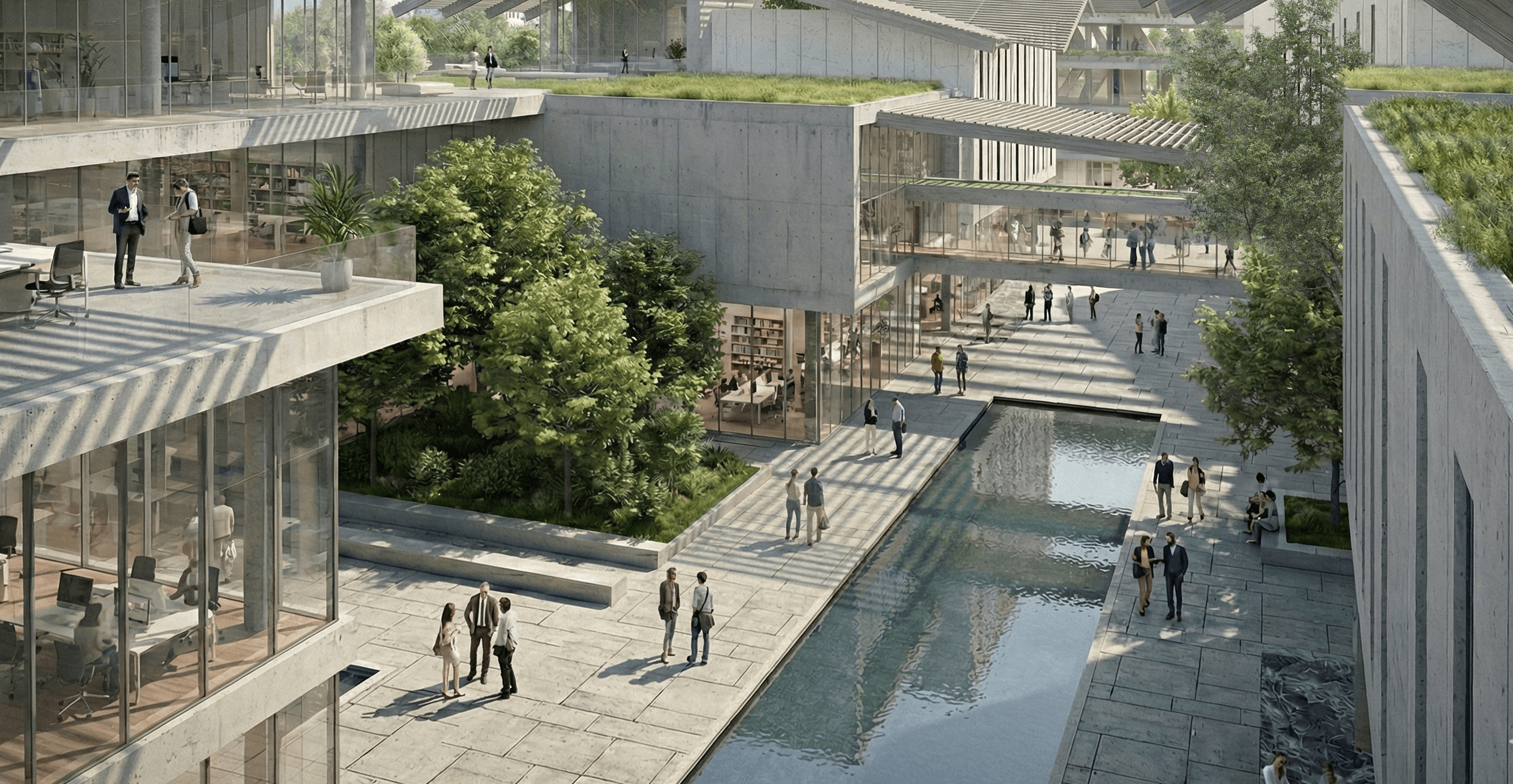
The Çukurova Municipal Service & Culture Center is envisioned as a new civic organism that reorganizes the relationship between governance, culture, and everyday public life. The architectural proposal avoids the conventional image of a municipal complex; instead, it operates as a layered urban interior—an open framework of shaded courtyards, permeable ground floors, and elevated terraces that behave like extensions of the city rather than discrete architectural objects. The ensemble is defined by a precise tectonic rhythm: slender vertical fins marking the institutional edge, deep structural frames regulating light, and a continuous field of greenery that occupies balconies, pergolas, and roof layers. These elements come together to create an atmosphere that is simultaneously civic, contemplative, and socially vibrant. The central courtyard becomes the project’s spatial and symbolic core. Rather than acting as an enclosed void, it is conceived as a civic topography—a landscape of stepped seating, trees, and porous thresholds that guide movement between the administrative and cultural wings. The courtyard is framed by transparent façades that reveal the daily work of municipal administration and library life, creating a visual dialogue between public service and public culture. This transparency is not merely visual; the ground floor is fully permeable, allowing citizens to move unhindered between interior and exterior, dissolving the traditional threshold of authority. In this way, the building embodies an administrative ethic based on openness and shared space.
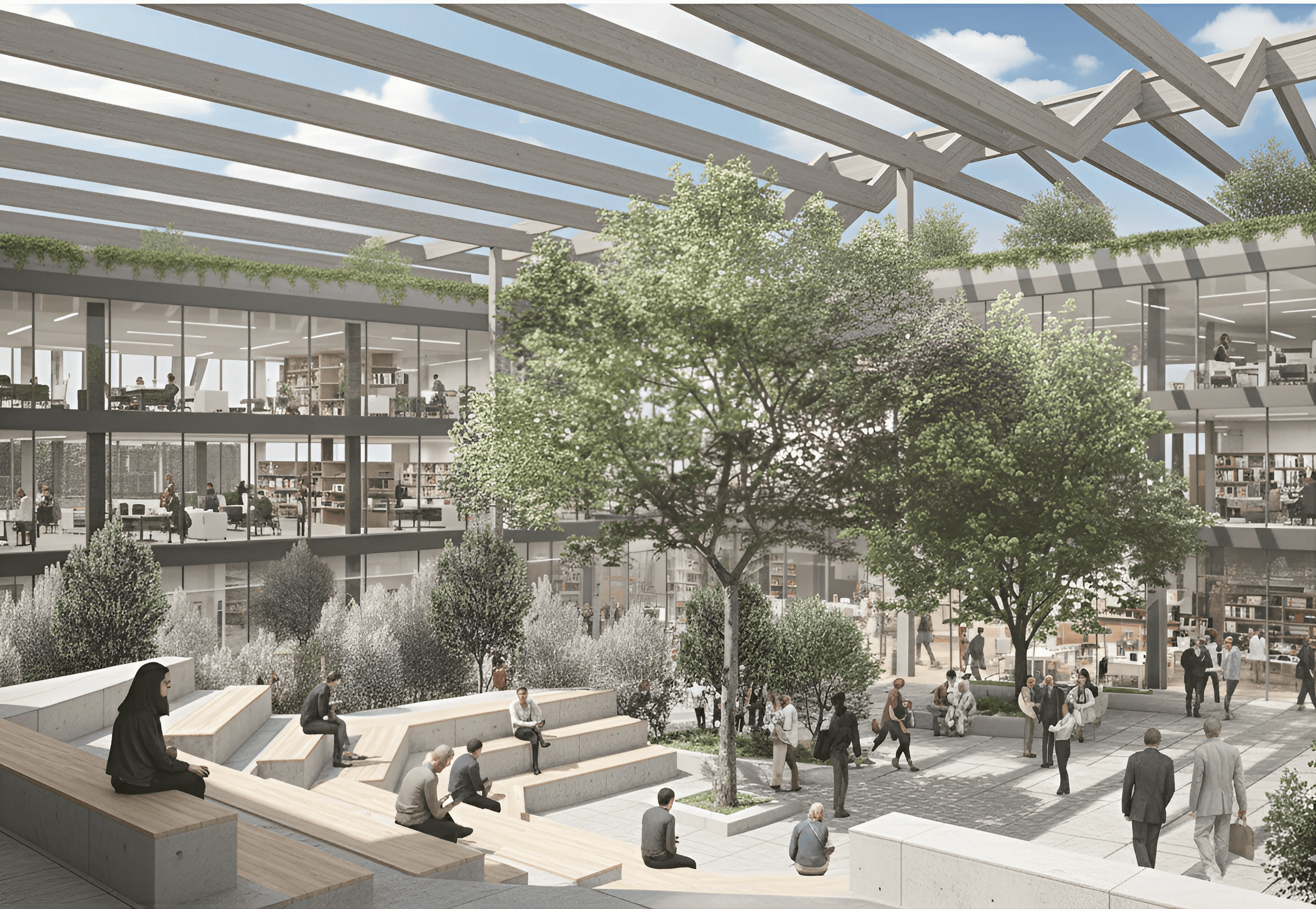
Inside, the cultural programs unfold around an atrium flooded with controlled daylight, filtered through a canopy of structural beams and greenery. The atrium acts as an interior plaza—part library, part co-working environment, part civic salon—where informal encounters and collaborative work generate new forms of public engagement. The material palette, defined by concrete, glass, and warm timber insertions, reinforces an atmosphere of institutional calm while supporting multiple modes of occupation. Lightweight enclosures, acoustic pods, open reading rooms, and generous stair-landings produce a gradient of spatial intensities, allowing citizens to choose how closely they wish to participate in the social life of the center. Inside, the cultural programs unfold around an atrium flooded with controlled daylight, filtered through a canopy of structural beams and greenery. The atrium acts as an interior plaza—part library, part co-working environment, part civic salon—where informal encounters and collaborative work generate new forms of public engagement. The material palette, defined by concrete, glass, and warm timber insertions, reinforces an atmosphere of institutional calm while supporting multiple modes of occupation. Lightweight enclosures, acoustic pods, open reading rooms, and generous stair-landings produce a gradient of spatial intensities, allowing citizens to choose how closely they wish to participate in the social life of the center.
The administrative floors are arranged with similar openness. Rather than creating a hierarchy of offices hidden behind corridors, the proposal introduces a system of terraces and interconnected workspaces that overlook the courtyards and city beyond. This spatial porosity reflects a contemporary understanding of civic work—collaborative, visible, and tied to the rhythms of the community. At the upper levels, outdoor meeting terraces and linear gardens merge professional environments with the climate of Çukurova, transforming typically introverted administrations into outward-facing civic platforms. Environmental intention underpins the entire project. The deep overhangs and vertical louvers carefully modulate sunlight in Adana’s intense climate, while cross-ventilation pathways and shaded terraces reduce reliance on mechanical systems. The landscape strategy introduces resilient, drought-tolerant species that echo the region’s ecological character while softening the building’s edges. Roof structures, conceived as a continuous pergola-like field, incorporate opportunities for photovoltaic integration, passive shading, and green corridors. These technical systems remain discreet, reinforcing an architectural language that prioritizes spatial generosity over overt technological expression. As a whole, the Çukurova Municipal Service & Culture Center presents a new model of municipal architecture—one in which administrative authority is made legible through openness, where cultural life unfolds as part of daily governance, and where the built environment cultivates a sense of collective ownership. The design creates an urban interior that is neither plaza nor building but a hybrid civic landscape, shaped by light, vegetation, and the social choreography of its users. In doing so, it offers Çukurova a sophisticated and enduring civic identity, grounded in spatial clarity, environmental intelligence, and an inclusive vision of public life.
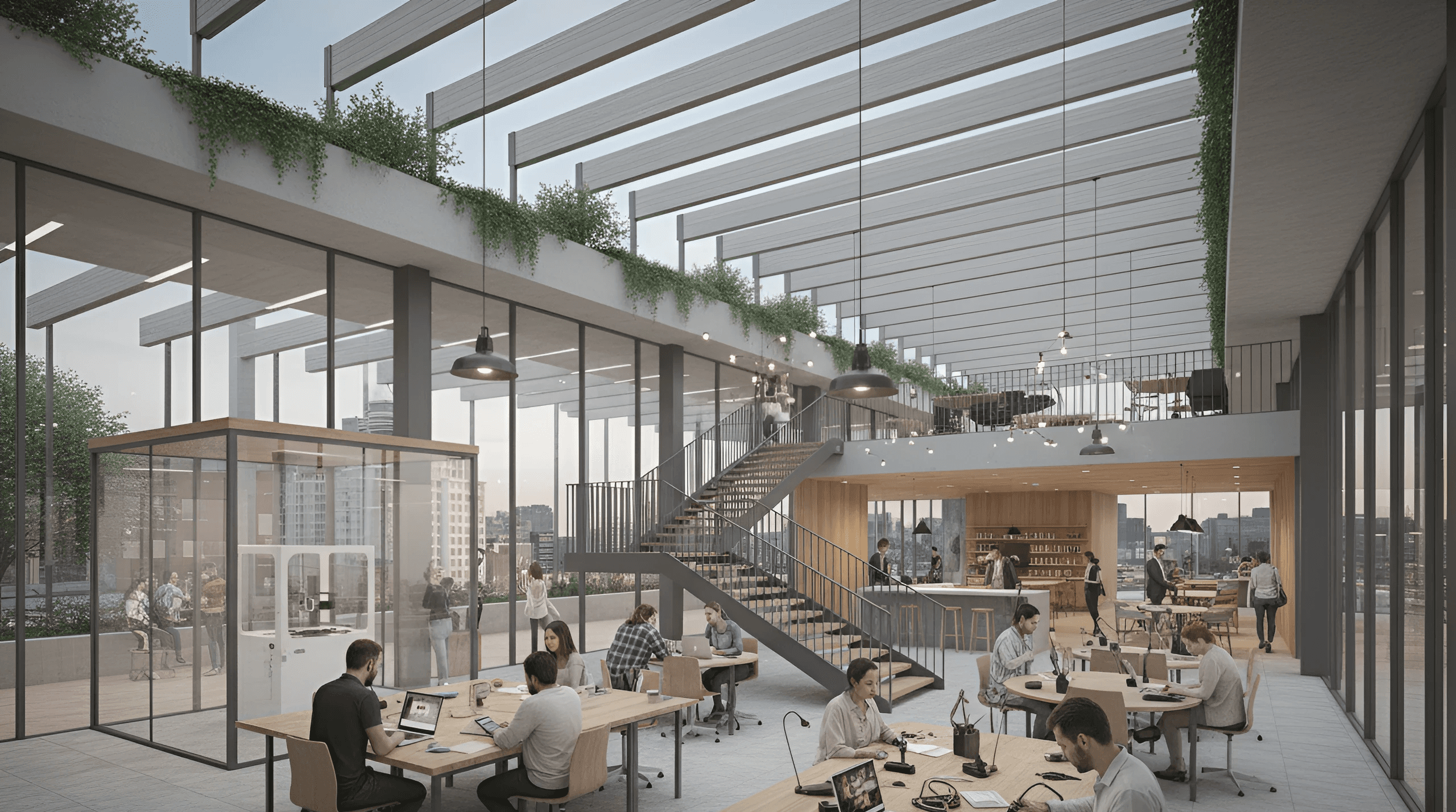
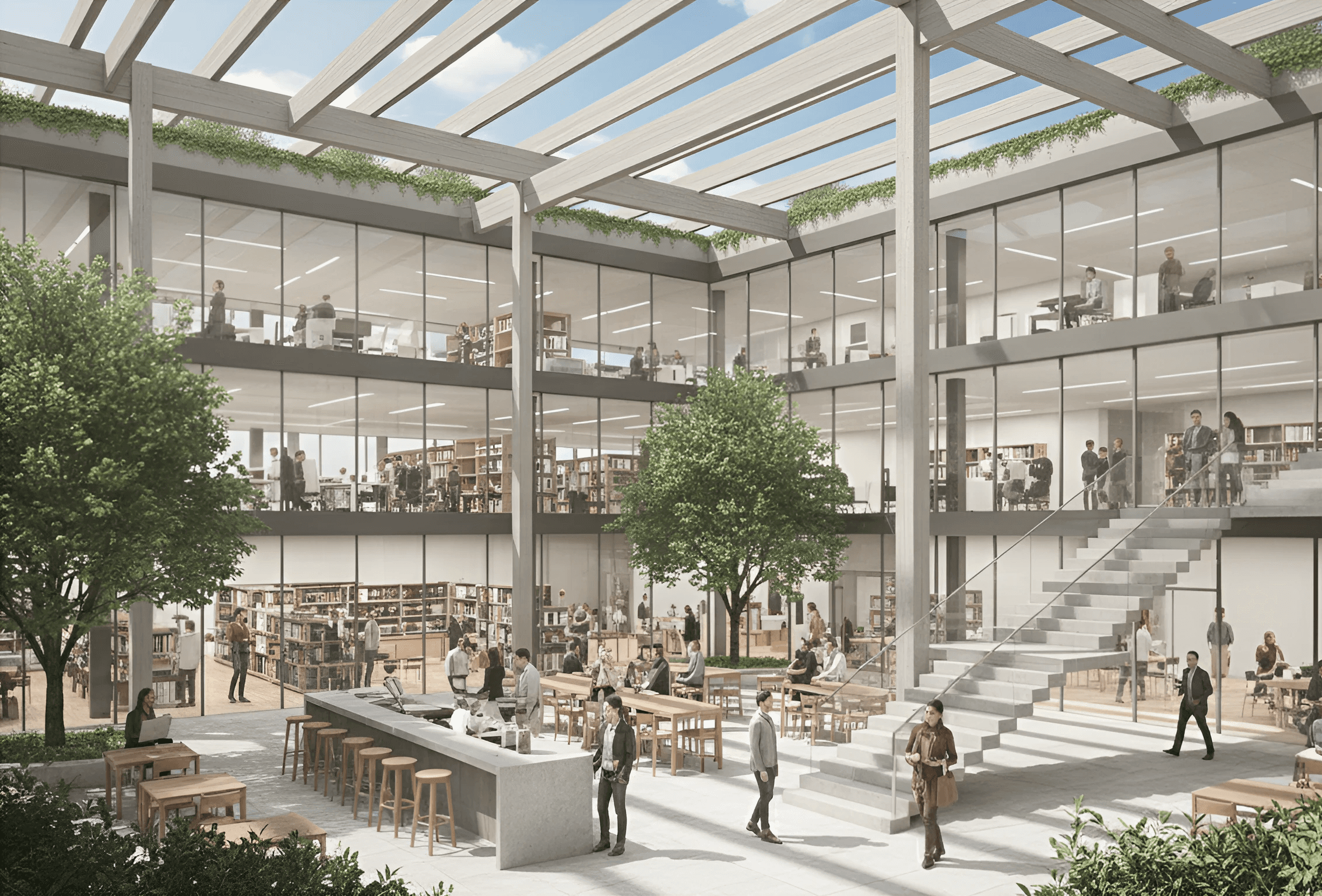
The Çukurova Municipal Service & Culture Center is envisioned as a new civic organism that reorganizes the relationship between governance, culture, and everyday public life. The architectural proposal avoids the conventional image of a municipal complex; instead, it operates as a layered urban interior—an open framework of shaded courtyards, permeable ground floors, and elevated terraces that behave like extensions of the city rather than discrete architectural objects. The ensemble is defined by a precise tectonic rhythm: slender vertical fins marking the institutional edge, deep structural frames regulating light, and a continuous field of greenery that occupies balconies, pergolas, and roof layers. These elements come together to create an atmosphere that is simultaneously civic, contemplative, and socially vibrant. The central courtyard becomes the project’s spatial and symbolic core. Rather than acting as an enclosed void, it is conceived as a civic topography—a landscape of stepped seating, trees, and porous thresholds that guide movement between the administrative and cultural wings. The courtyard is framed by transparent façades that reveal the daily work of municipal administration and library life, creating a visual dialogue between public service and public culture. This transparency is not merely visual; the ground floor is fully permeable, allowing citizens to move unhindered between interior and exterior, dissolving the traditional threshold of authority. In this way, the building embodies an administrative ethic based on openness and shared space.
Inside, the cultural programs unfold around an atrium flooded with controlled daylight, filtered through a canopy of structural beams and greenery. The atrium acts as an interior plaza—part library, part co-working environment, part civic salon—where informal encounters and collaborative work generate new forms of public engagement. The material palette, defined by concrete, glass, and warm timber insertions, reinforces an atmosphere of institutional calm while supporting multiple modes of occupation. Lightweight enclosures, acoustic pods, open reading rooms, and generous stair-landings produce a gradient of spatial intensities, allowing citizens to choose how closely they wish to participate in the social life of the center. Inside, the cultural programs unfold around an atrium flooded with controlled daylight, filtered through a canopy of structural beams and greenery. The atrium acts as an interior plaza—part library, part co-working environment, part civic salon—where informal encounters and collaborative work generate new forms of public engagement. The material palette, defined by concrete, glass, and warm timber insertions, reinforces an atmosphere of institutional calm while supporting multiple modes of occupation. Lightweight enclosures, acoustic pods, open reading rooms, and generous stair-landings produce a gradient of spatial intensities, allowing citizens to choose how closely they wish to participate in the social life of the center.
The administrative floors are arranged with similar openness. Rather than creating a hierarchy of offices hidden behind corridors, the proposal introduces a system of terraces and interconnected workspaces that overlook the courtyards and city beyond. This spatial porosity reflects a contemporary understanding of civic work—collaborative, visible, and tied to the rhythms of the community. At the upper levels, outdoor meeting terraces and linear gardens merge professional environments with the climate of Çukurova, transforming typically introverted administrations into outward-facing civic platforms. Environmental intention underpins the entire project. The deep overhangs and vertical louvers carefully modulate sunlight in Adana’s intense climate, while cross-ventilation pathways and shaded terraces reduce reliance on mechanical systems. The landscape strategy introduces resilient, drought-tolerant species that echo the region’s ecological character while softening the building’s edges. Roof structures, conceived as a continuous pergola-like field, incorporate opportunities for photovoltaic integration, passive shading, and green corridors. These technical systems remain discreet, reinforcing an architectural language that prioritizes spatial generosity over overt technological expression. As a whole, the Çukurova Municipal Service & Culture Center presents a new model of municipal architecture—one in which administrative authority is made legible through openness, where cultural life unfolds as part of daily governance, and where the built environment cultivates a sense of collective ownership. The design creates an urban interior that is neither plaza nor building but a hybrid civic landscape, shaped by light, vegetation, and the social choreography of its users. In doing so, it offers Çukurova a sophisticated and enduring civic identity, grounded in spatial clarity, environmental intelligence, and an inclusive vision of public life.
Project team:
S&A
Building physics:
S&A BPC
(Other works)