KU Leuven Arenberg Extension
Status:
R&D
Year:
2021-2024
Type:
Campus Extension
Size:
8700 m²
Client:
Institutional Context–Based Proposal
Location:
Arenberg, Leuven, Belgium
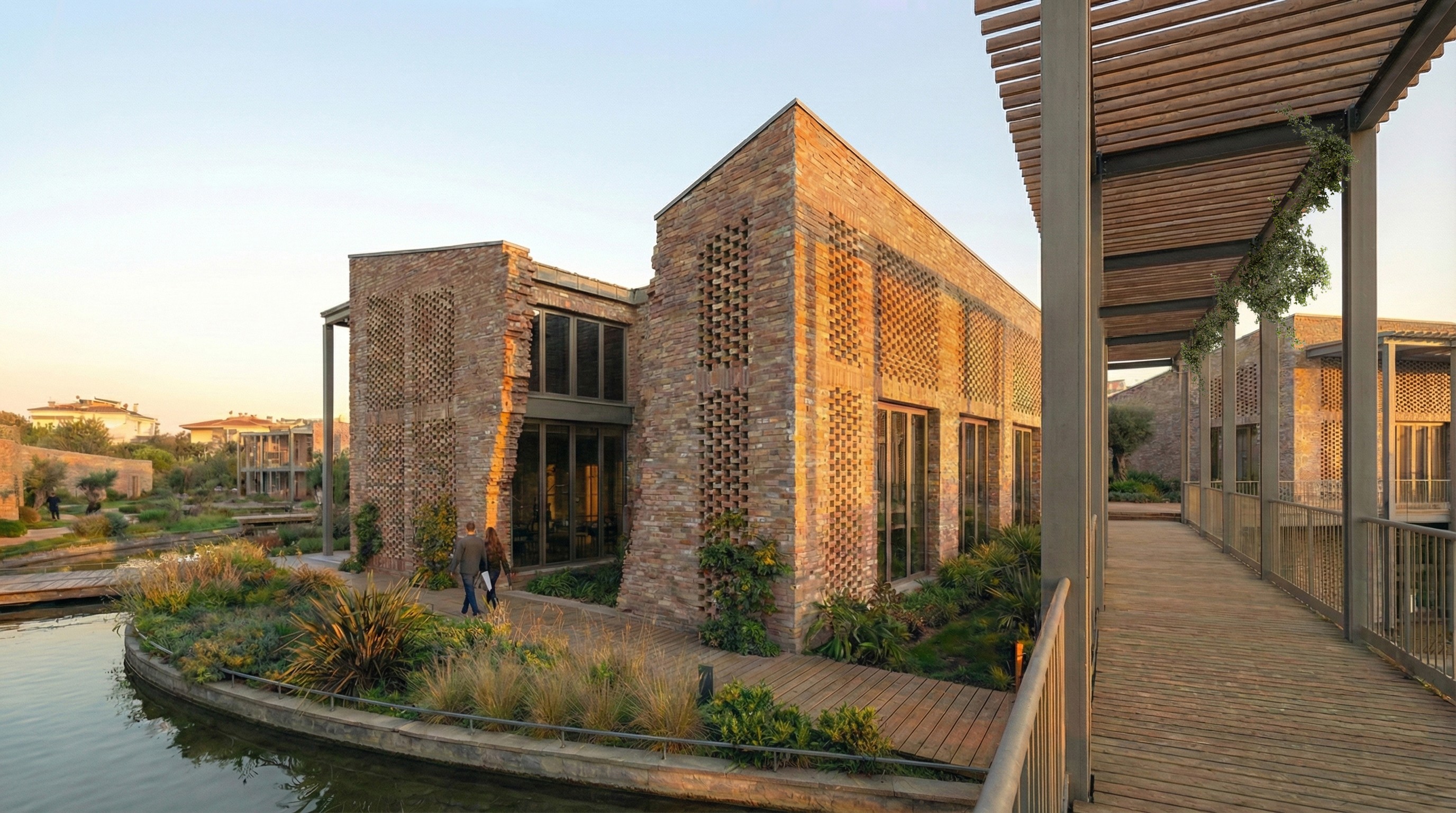
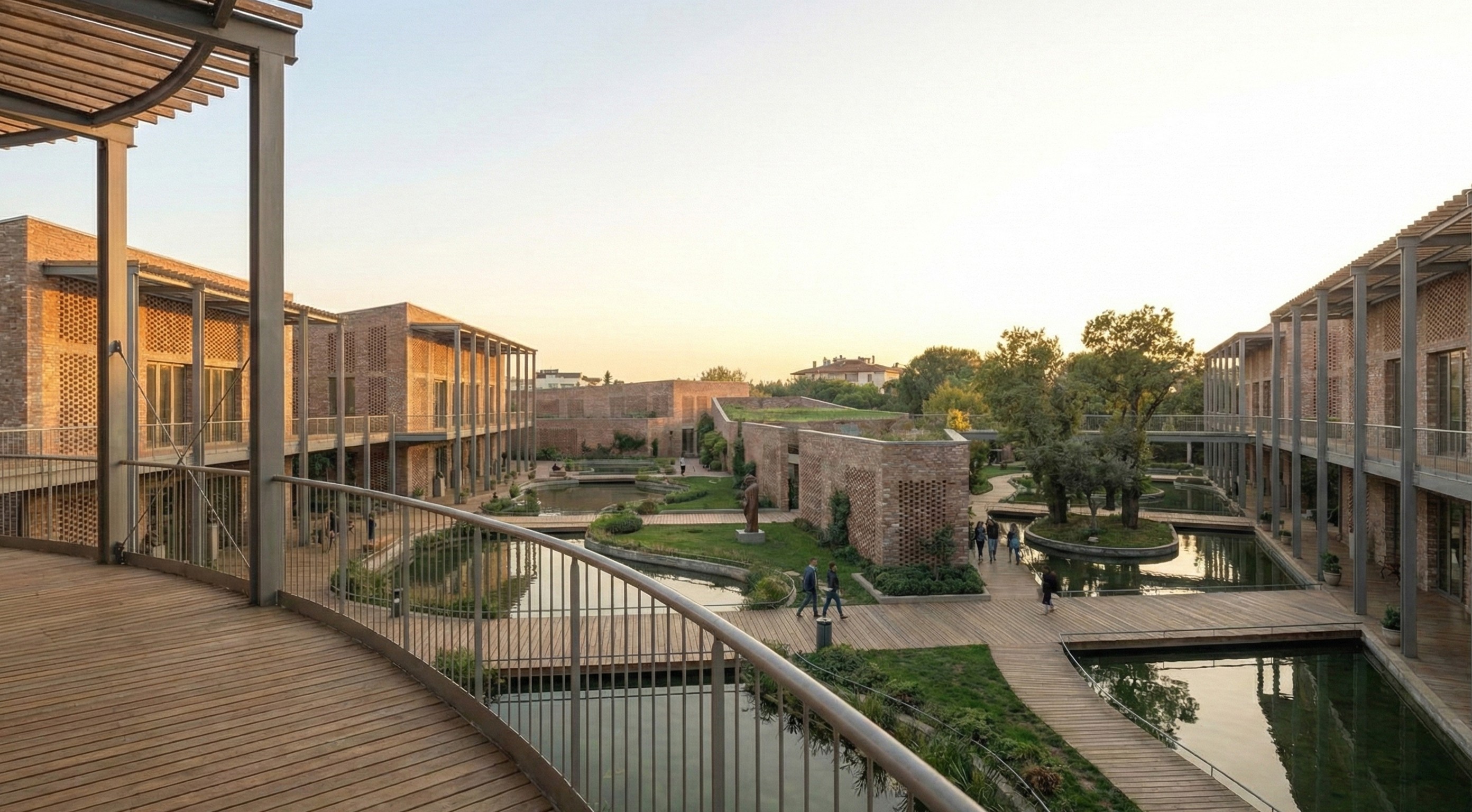
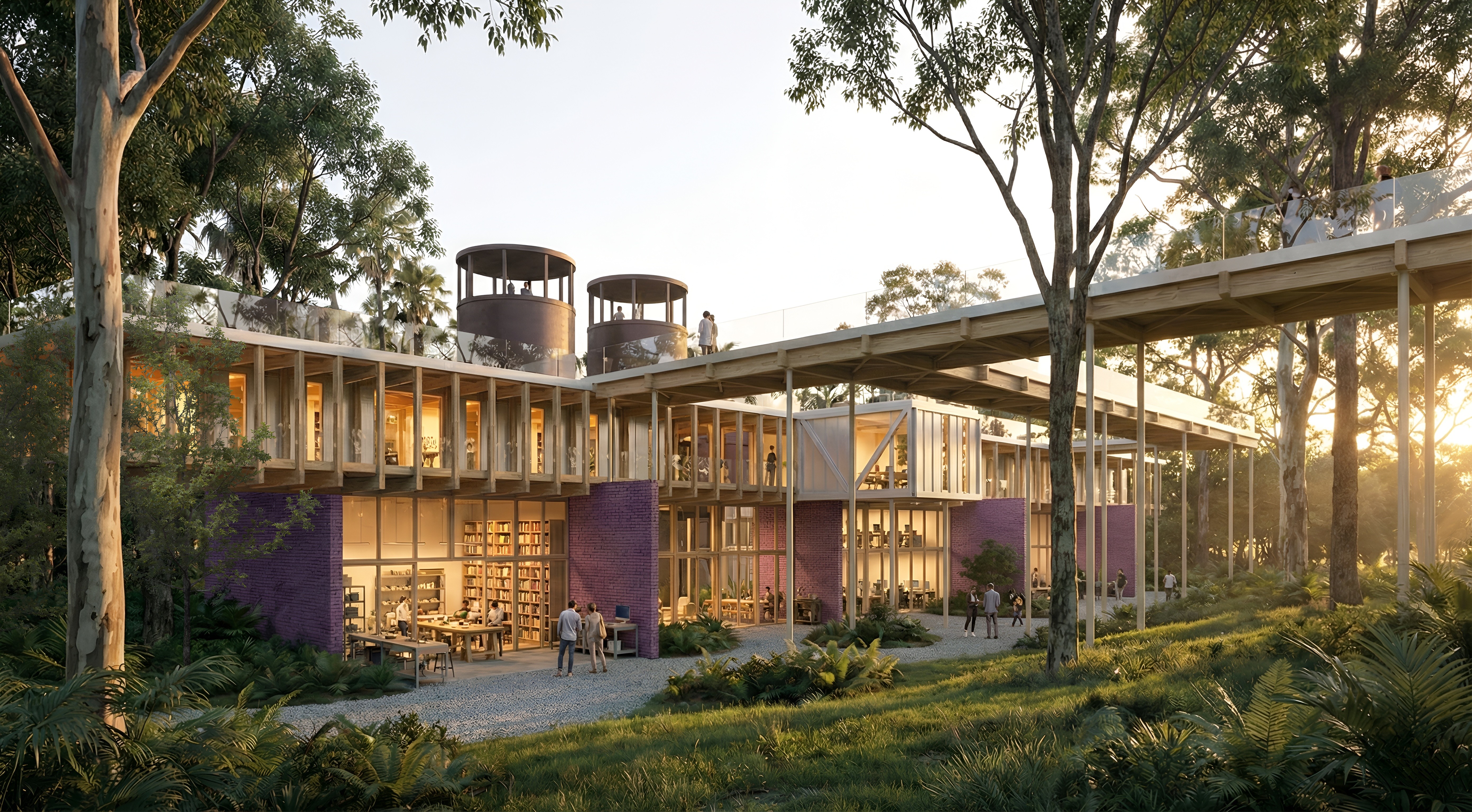
The KU Leuven – Arenberg Campus Extension is conceived as a spatial continuation rather than a formal addition, extending the campus through landscape logic, material continuity, and calibrated architectural restraint. The project positions itself deliberately outside the language of iconic expansion, proposing instead an academic environment where architecture recedes into a supporting framework for research, learning, and collective intellectual life.
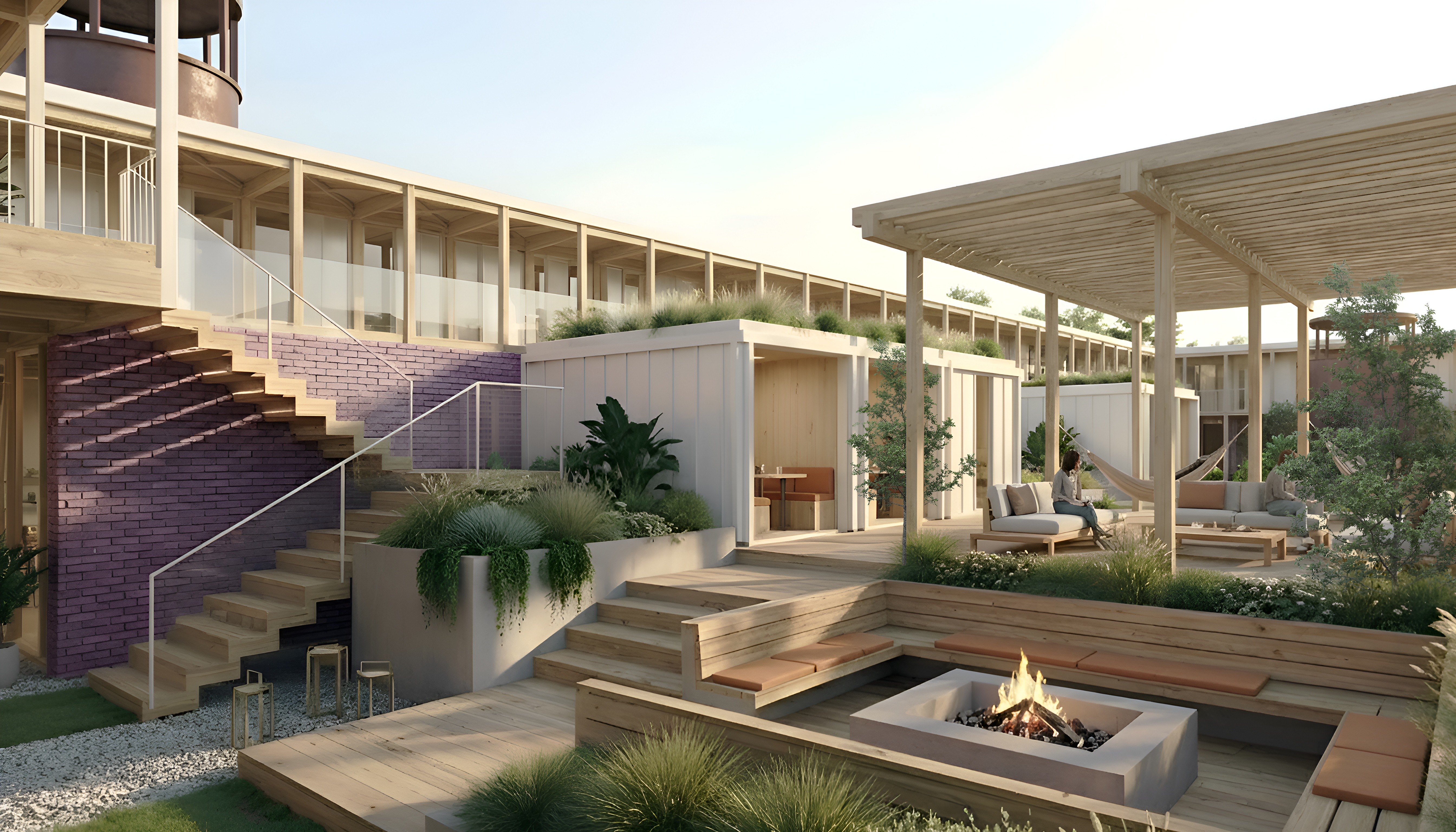
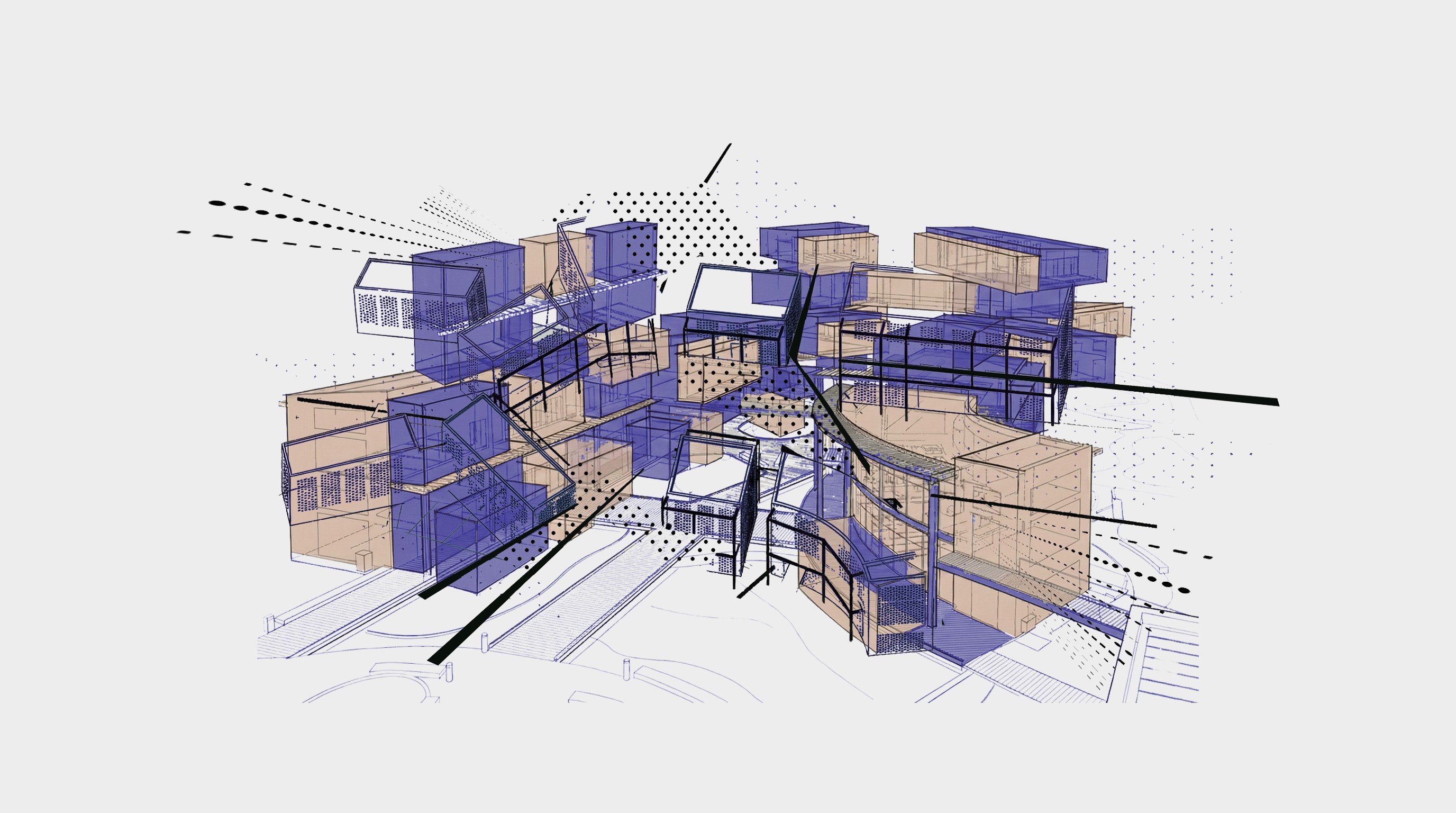
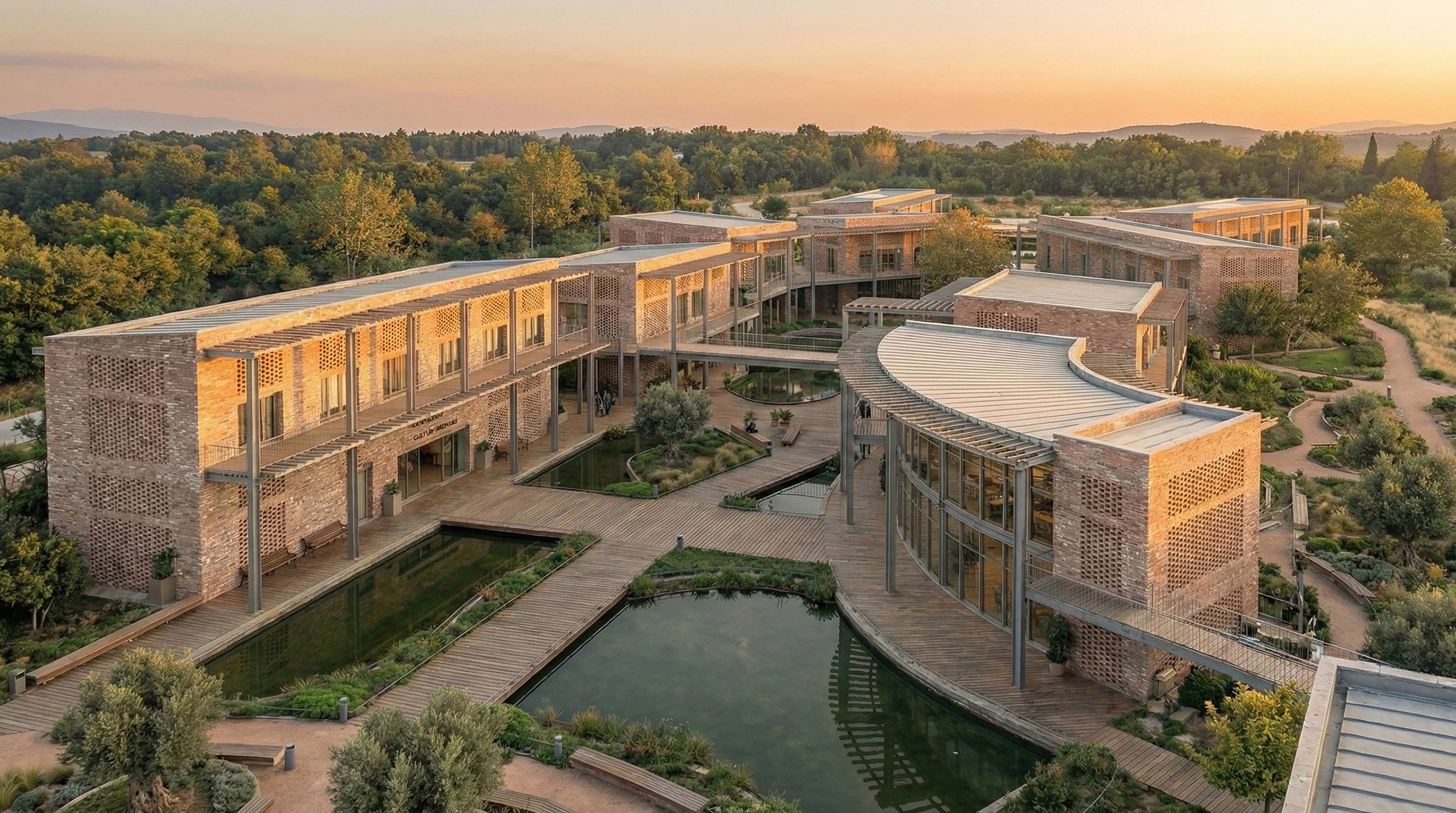
The extension is organized as a constellation of low-rise pavilions embedded within the existing green structure of the Arenberg Campus. These volumes are arranged to establish a porous academic ground, where built form and landscape operate as a continuous field. Courtyards, planted clearings, and shaded circulation routes articulate a sequence of spatial conditions that mediate between enclosure and openness, allowing academic activities to unfold in close dialogue with the environment. Rather than prioritizing monumentality, the project emphasizes continuity, legibility, and the everyday rhythms of campus life.
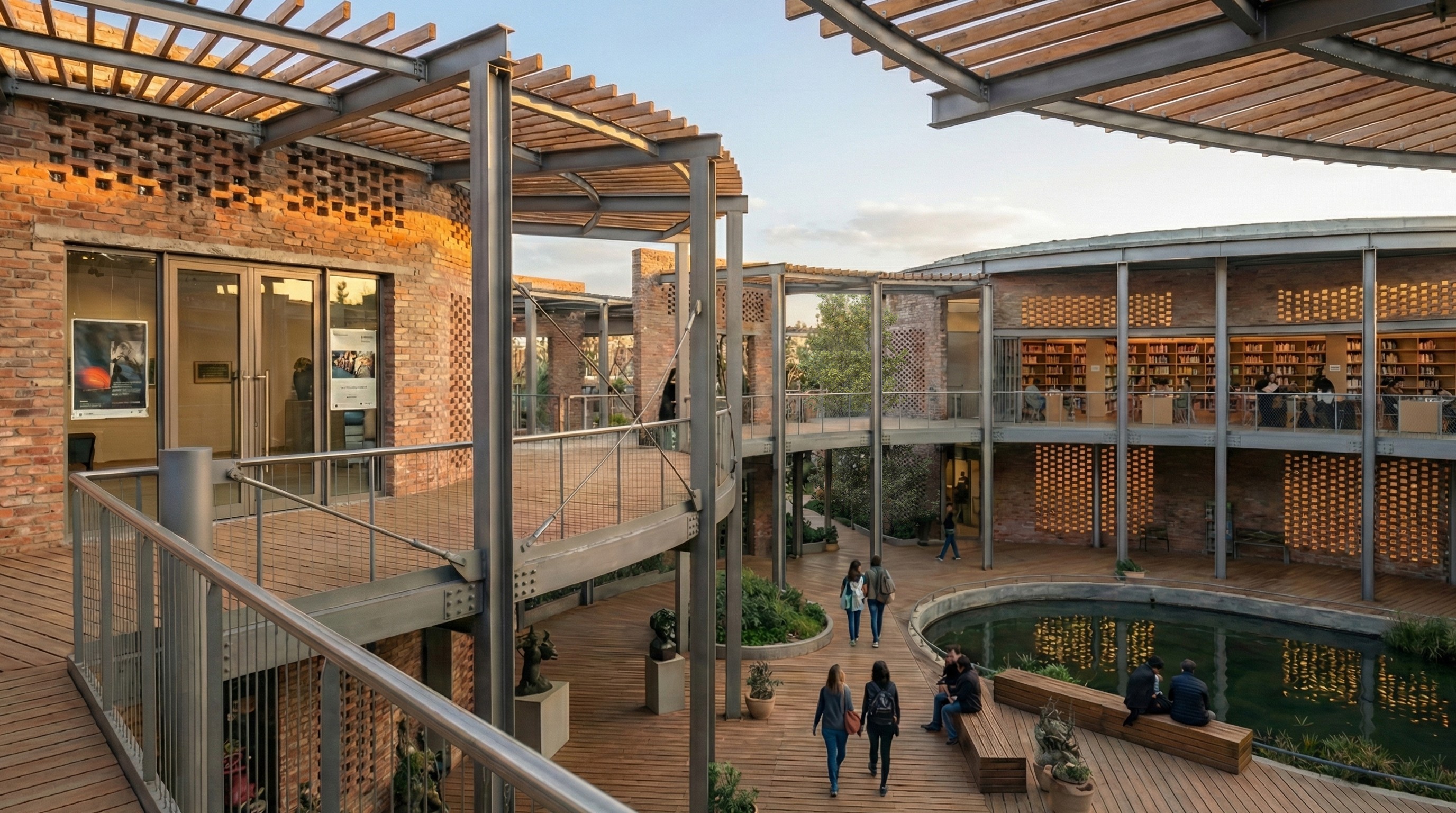
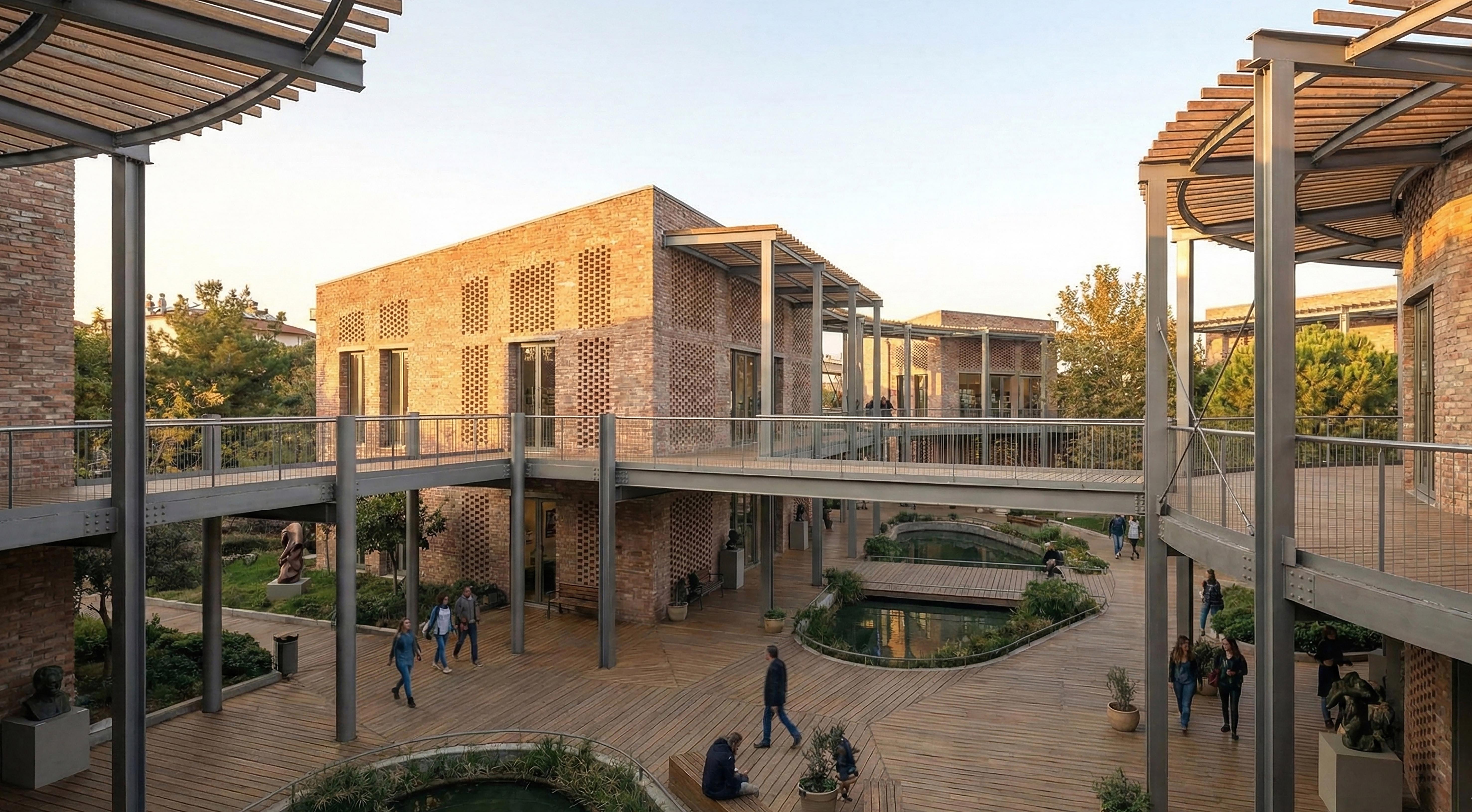
Programmatically, the extension accommodates interdisciplinary research studios, graduate learning environments, shared academic facilities, and informal spaces for encounter and exchange. The spatial organization avoids rigid functional zoning, recognizing that contemporary academic culture is defined by overlap, proximity, and incidental interaction. Circulation is therefore conceived as an active academic space, where movement becomes an opportunity for visual connection, intellectual exchange, and collective presence.
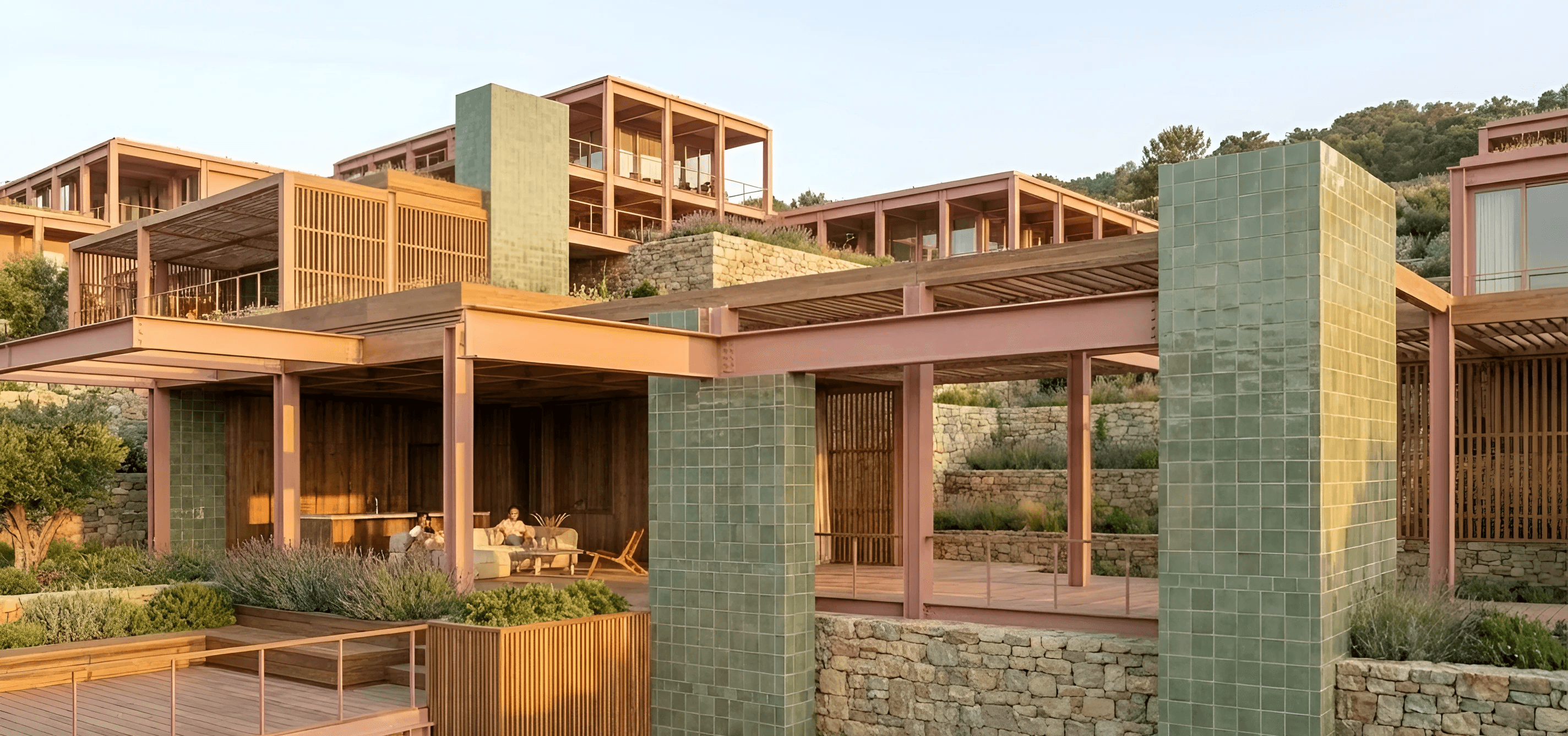
Material choices are grounded in the architectural lineage of the Arenberg Campus and its broader context. Brick, exposed concrete, and timber are employed with restraint and precision, privileging tectonic clarity, durability, and tactile depth over expressive effect. These materials are not treated as surface applications, but as integral components of a coherent construction logic, reinforcing the project’s emphasis on longevity and institutional continuity.
Environmental performance is embedded within the spatial and material organization of the campus extension. Courtyards operate as microclimatic moderators, supporting natural ventilation, daylight control, and seasonal adaptability. Shaded walkways, planted surfaces, and permeable edges contribute to passive comfort strategies while reinforcing the campus’s ecological framework. Architecture and landscape function as a single environmental system, where spatial configuration supports both academic use and long-term resilience.
The project is developed as an institutional context–based research proposal, engaging critically with the spatial, environmental, and pedagogical conditions of the KU Leuven Arenberg Campus without representing a commissioned work. It approaches the notion of extension not as an increase in scale or capacity, but as an act of refinement—intensifying academic life through measured intervention, spatial continuity, and a deliberate integration of architecture, landscape, and institutional culture.
In this sense, the Arenberg Campus Extension is less an object than a condition: a calibrated academic terrain that supports research as a collective, spatially grounded practice. It proposes an architecture that does not seek attention, but sustains inquiry; one that frames intellectual life through continuity, precision, and an enduring relationship with the landscape it inhabits.
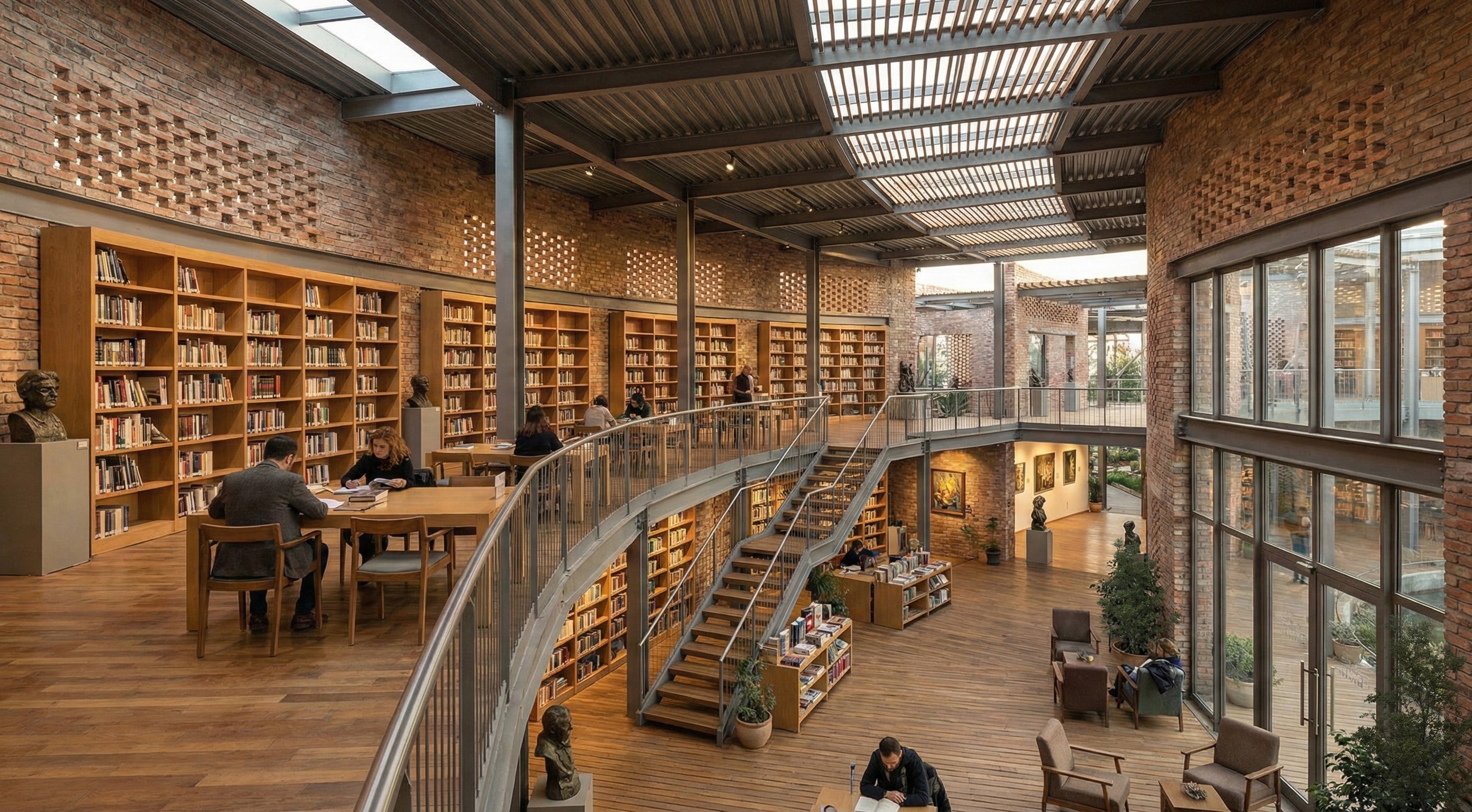
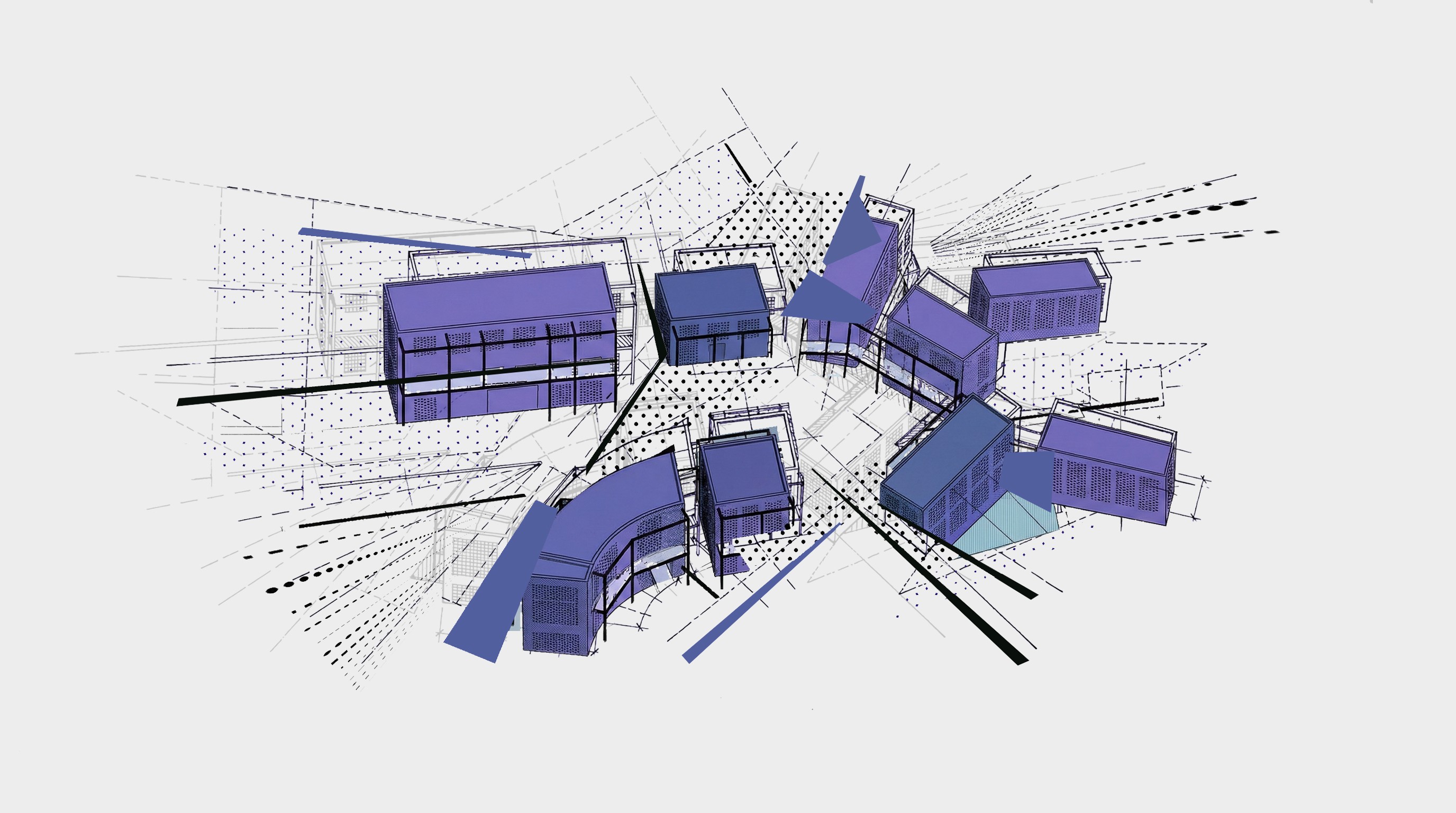
The KU Leuven – Arenberg Campus Extension is conceived as a spatial continuation rather than a formal addition, extending the campus through landscape logic, material continuity, and calibrated architectural restraint. The project positions itself deliberately outside the language of iconic expansion, proposing instead an academic environment where architecture recedes into a supporting framework for research, learning, and collective intellectual life.
The extension is organized as a constellation of low-rise pavilions embedded within the existing green structure of the Arenberg Campus. These volumes are arranged to establish a porous academic ground, where built form and landscape operate as a continuous field. Courtyards, planted clearings, and shaded circulation routes articulate a sequence of spatial conditions that mediate between enclosure and openness, allowing academic activities to unfold in close dialogue with the environment. Rather than prioritizing monumentality, the project emphasizes continuity, legibility, and the everyday rhythms of campus life.
Programmatically, the extension accommodates interdisciplinary research studios, graduate learning environments, shared academic facilities, and informal spaces for encounter and exchange. The spatial organization avoids rigid functional zoning, recognizing that contemporary academic culture is defined by overlap, proximity, and incidental interaction. Circulation is therefore conceived as an active academic space, where movement becomes an opportunity for visual connection, intellectual exchange, and collective presence.
Material choices are grounded in the architectural lineage of the Arenberg Campus and its broader context. Brick, exposed concrete, and timber are employed with restraint and precision, privileging tectonic clarity, durability, and tactile depth over expressive effect. These materials are not treated as surface applications, but as integral components of a coherent construction logic, reinforcing the project’s emphasis on longevity and institutional continuity.
Environmental performance is embedded within the spatial and material organization of the campus extension. Courtyards operate as microclimatic moderators, supporting natural ventilation, daylight control, and seasonal adaptability. Shaded walkways, planted surfaces, and permeable edges contribute to passive comfort strategies while reinforcing the campus’s ecological framework. Architecture and landscape function as a single environmental system, where spatial configuration supports both academic use and long-term resilience.
The project is developed as an institutional context–based research proposal, engaging critically with the spatial, environmental, and pedagogical conditions of the KU Leuven Arenberg Campus without representing a commissioned work. It approaches the notion of extension not as an increase in scale or capacity, but as an act of refinement—intensifying academic life through measured intervention, spatial continuity, and a deliberate integration of architecture, landscape, and institutional culture.
In this sense, the Arenberg Campus Extension is less an object than a condition: a calibrated academic terrain that supports research as a collective, spatially grounded practice. It proposes an architecture that does not seek attention, but sustains inquiry; one that frames intellectual life through continuity, precision, and an enduring relationship with the landscape it inhabits.
Project team:
S&A
Building physics:
S&A BPC
(Other works)