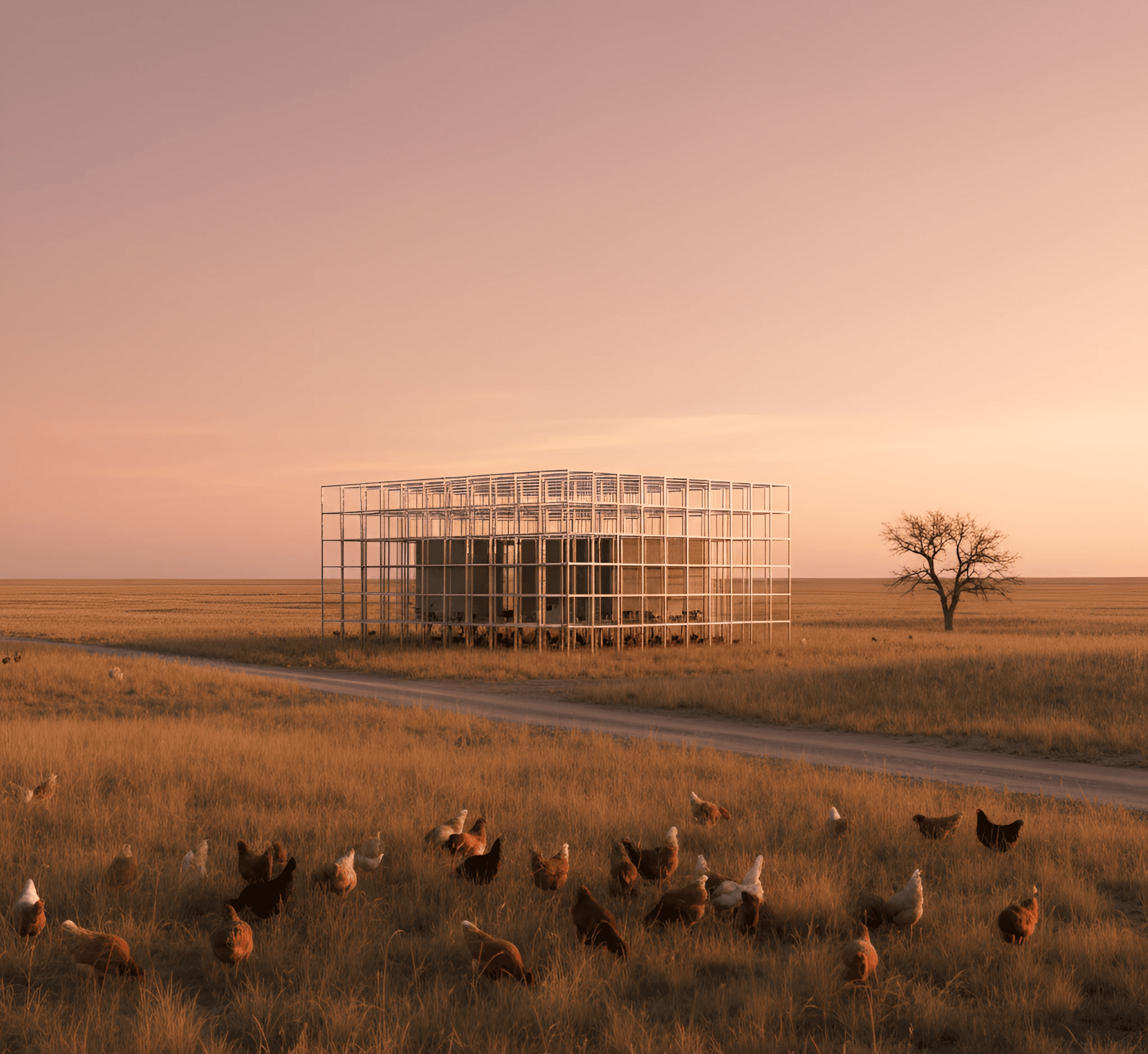
Nallıhan Avian Research Station
Status:
R&D
Year:
2020
Type:
Research Station
Size:
900 m²
Client:
Ercüment Uysal
Location:
Davutoğlan, Nallıhan, Ankara
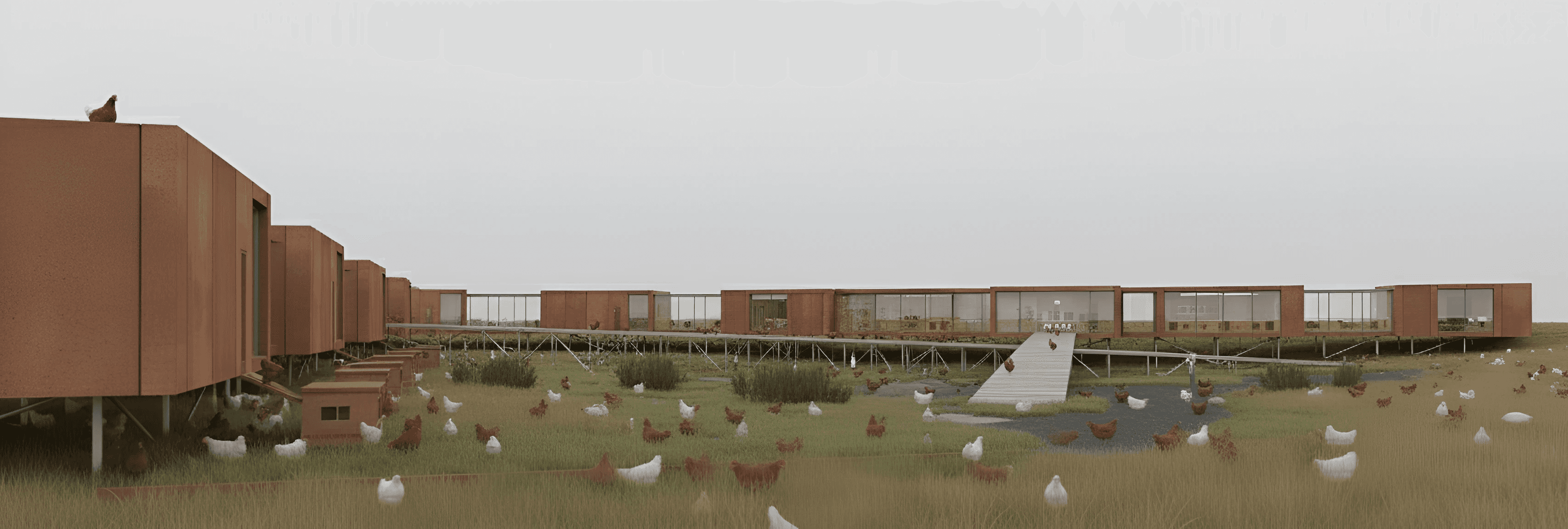
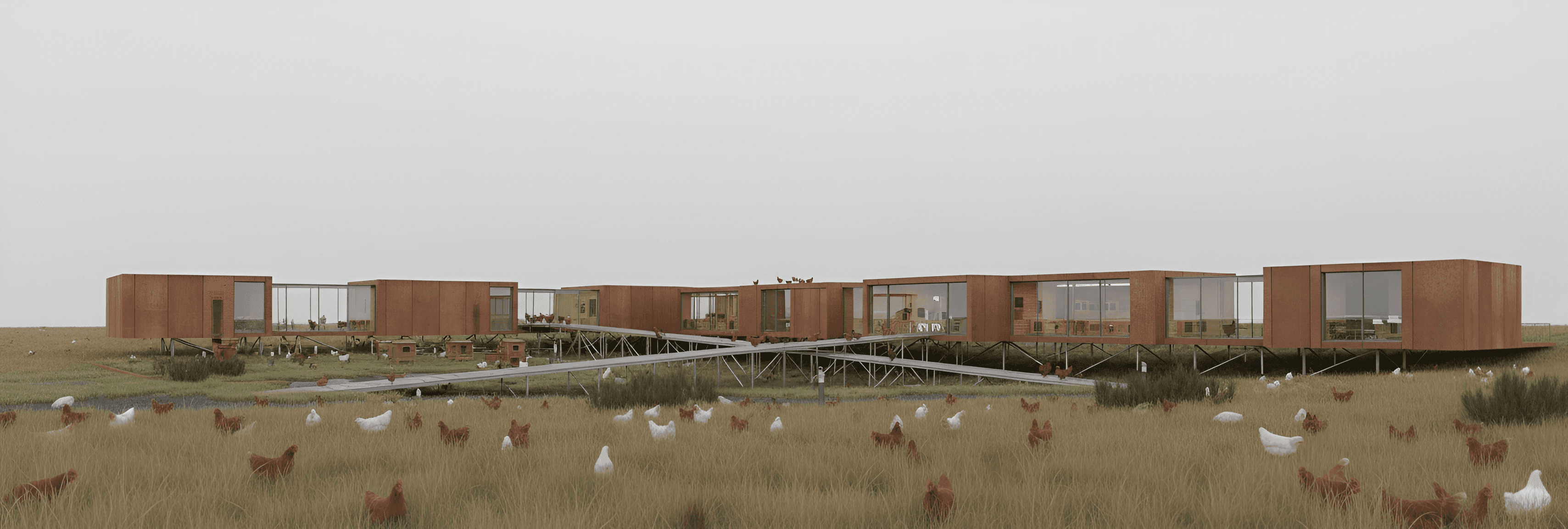
Nallıhan Avian Research Station is conceived as a field-based architectural instrument positioned at the ecological threshold of steppe, wetland, and rocky habitats in Nallıhan, Ankara. Rather than operating as a conventional research building, the project is articulated as a quiet infrastructural presence—one that supports long-term ornithological observation while minimizing spatial, visual, and acoustic disturbance to its surroundings.
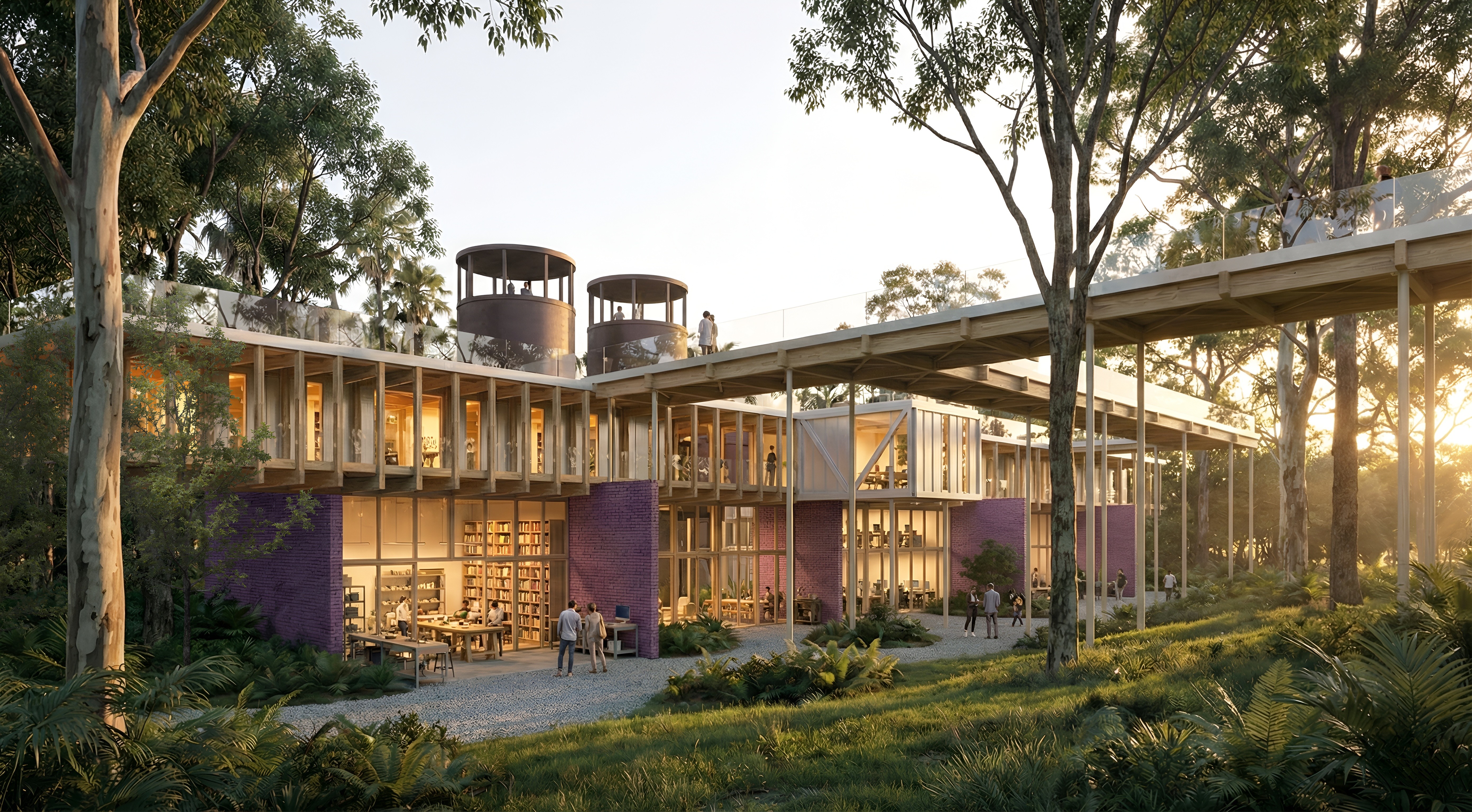
Located near one of Türkiye’s most significant bird corridors, the station engages directly with seasonal migration, nesting, and feeding patterns. The architectural language deliberately avoids monumentality. Instead, it adopts a low-profile, elevated configuration that allows natural water flows, vegetation growth, and animal movement to continue uninterrupted beneath the structure. The building does not occupy the landscape; it hovers within it.
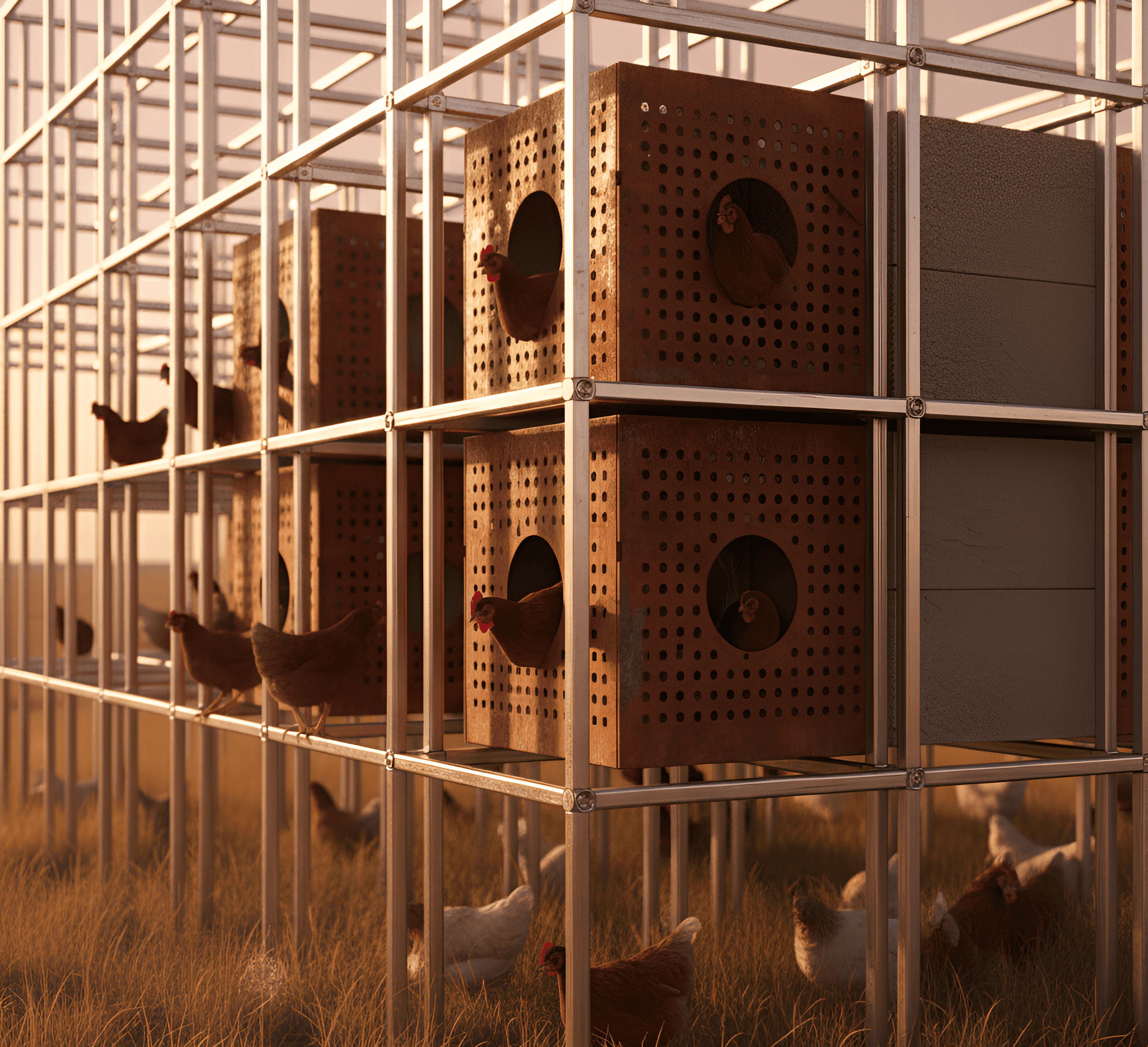
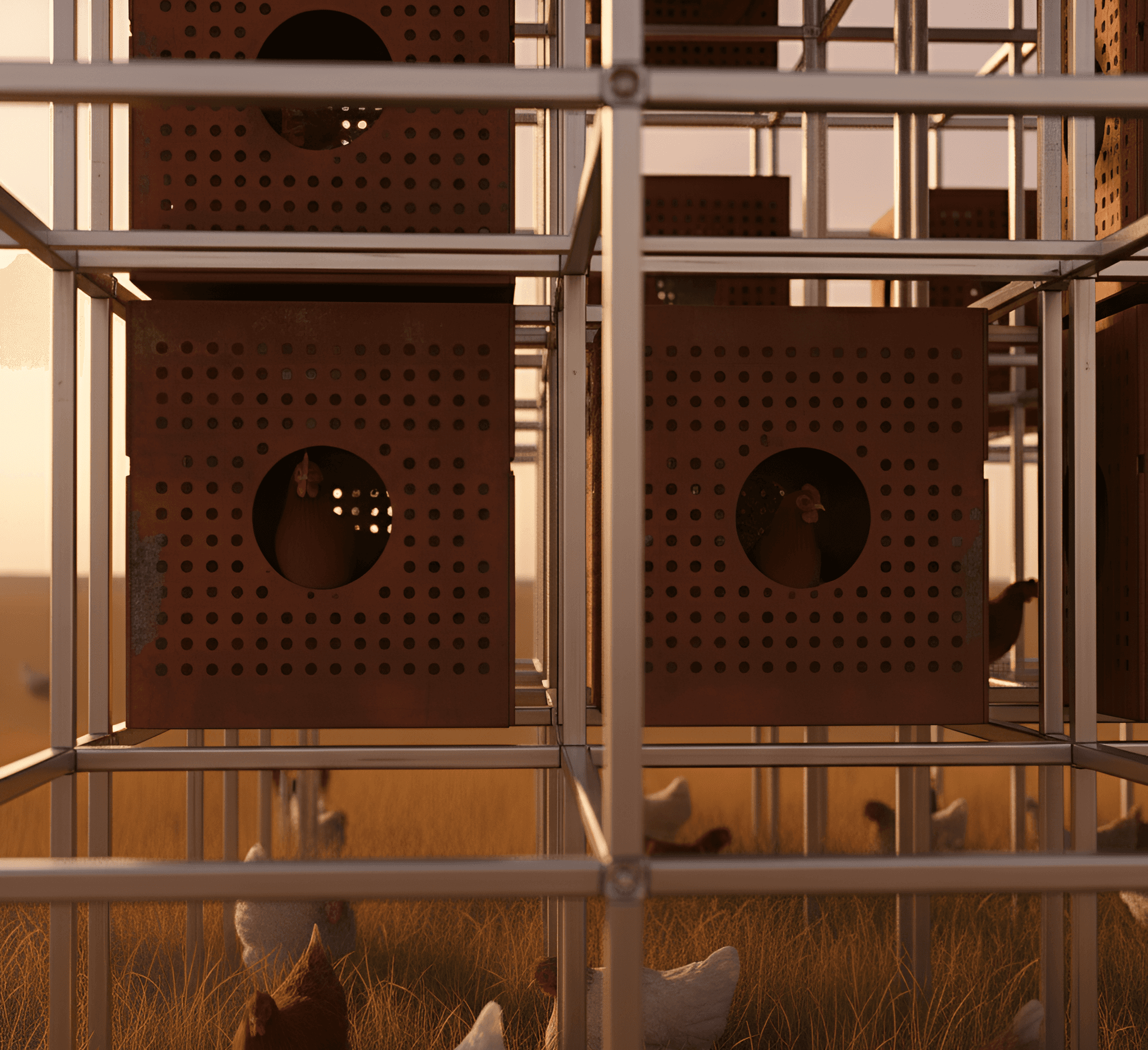
The project combines two intertwined programs: an experimental poultry and avian habitat structure, and a compact research facility for observation, recording, and care. Modular roosting units are distributed along a linear structural spine, allowing different species to inhabit separated yet visually connected zones. These units are designed with variable porosity—mesh, timber slats, and shaded membranes—enabling precise control of light, wind, and temperature while maintaining constant visual contact between birds, researchers, and the landscape.
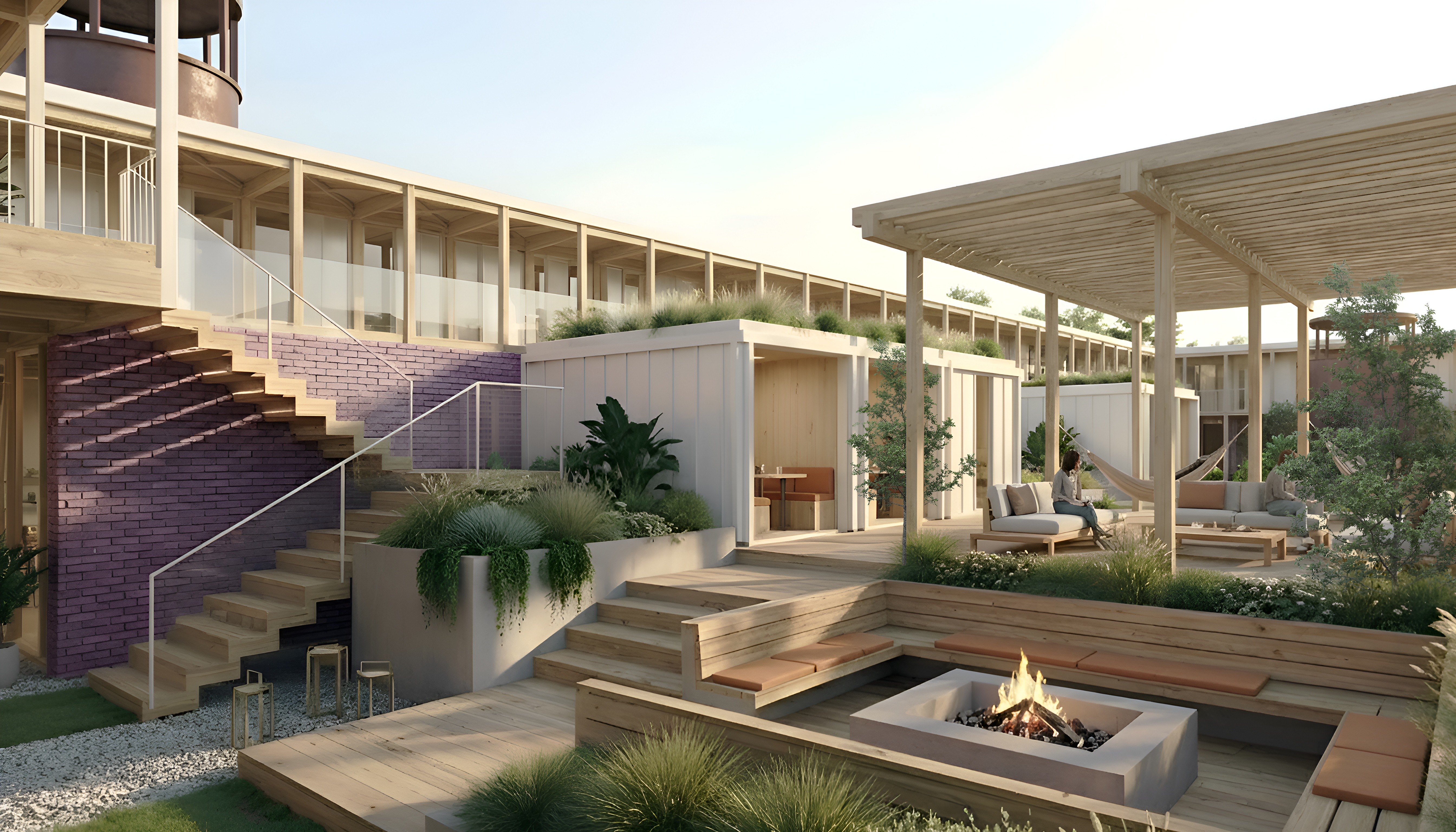
Research spaces are embedded within this system rather than isolated from it. Observation rooms, data collection points, and small laboratory units are positioned as pauses along the circulation path, reinforcing a continuous relationship between movement, watching, and recording. Semi-open terraces function as transitional spaces where human presence dissolves into the environment, reducing behavioral disruption to bird populations.
Material choices emphasize durability, reversibility, and ecological restraint. A lightweight steel frame provides structural clarity and long-span flexibility, while untreated timber and galvanized mesh age naturally with the climate. The architecture is intentionally legible: joints, connections, and assemblies are exposed, allowing the building to be read as a constructed system rather than a sealed object.
Ultimately, Nallıhan Avian Research Station positions architecture as a mediator between scientific inquiry and ecological continuity. It proposes a model in which research infrastructure does not dominate nature but listens to it—operating quietly, precisely, and with long-term environmental responsibility.
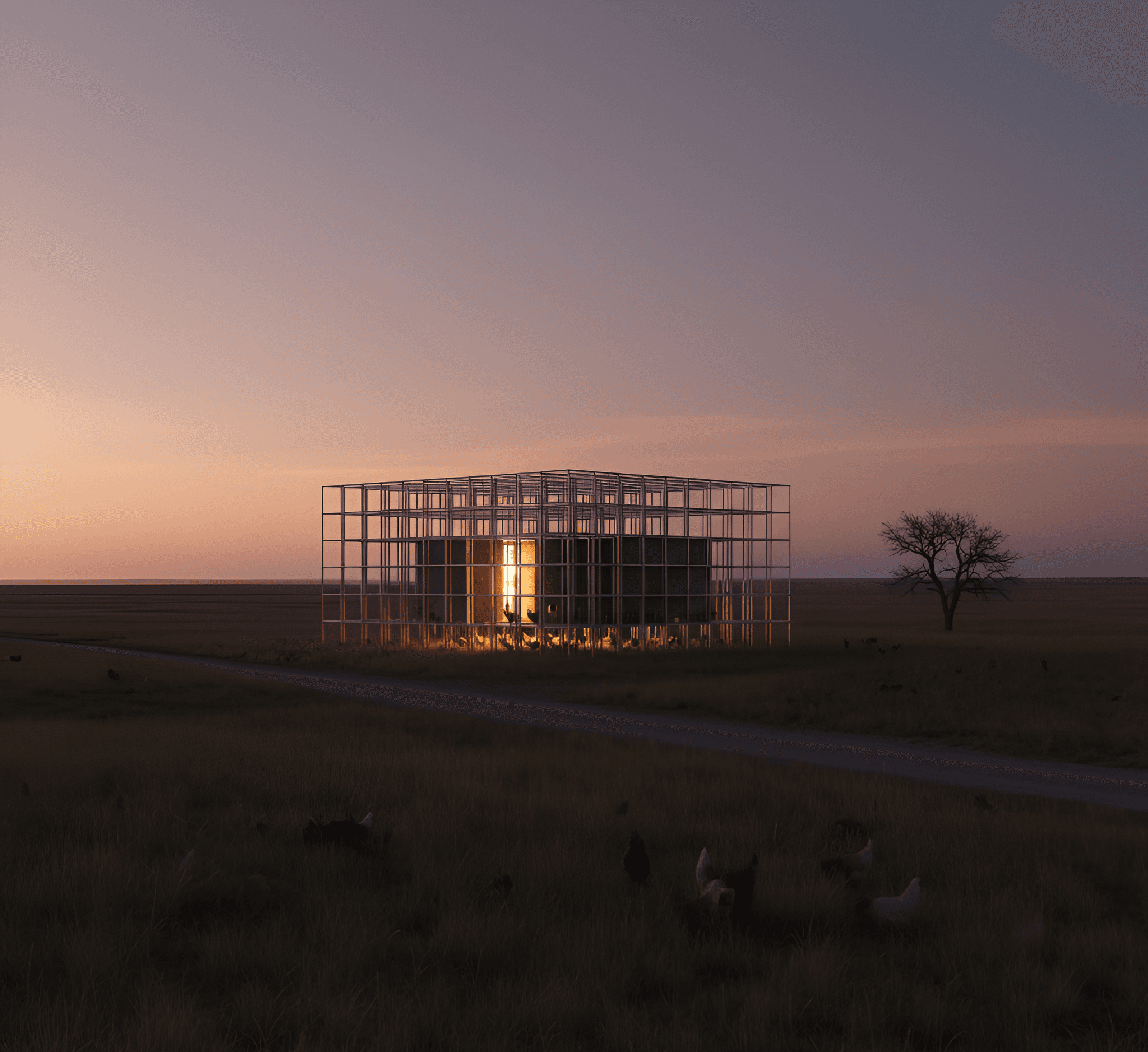
Nallıhan Avian Research Station is conceived as a field-based architectural instrument positioned at the ecological threshold of steppe, wetland, and rocky habitats in Nallıhan, Ankara. Rather than operating as a conventional research building, the project is articulated as a quiet infrastructural presence—one that supports long-term ornithological observation while minimizing spatial, visual, and acoustic disturbance to its surroundings.
Located near one of Türkiye’s most significant bird corridors, the station engages directly with seasonal migration, nesting, and feeding patterns. The architectural language deliberately avoids monumentality. Instead, it adopts a low-profile, elevated configuration that allows natural water flows, vegetation growth, and animal movement to continue uninterrupted beneath the structure. The building does not occupy the landscape; it hovers within it.
The project combines two intertwined programs: an experimental poultry and avian habitat structure, and a compact research facility for observation, recording, and care. Modular roosting units are distributed along a linear structural spine, allowing different species to inhabit separated yet visually connected zones. These units are designed with variable porosity—mesh, timber slats, and shaded membranes—enabling precise control of light, wind, and temperature while maintaining constant visual contact between birds, researchers, and the landscape.
Research spaces are embedded within this system rather than isolated from it. Observation rooms, data collection points, and small laboratory units are positioned as pauses along the circulation path, reinforcing a continuous relationship between movement, watching, and recording. Semi-open terraces function as transitional spaces where human presence dissolves into the environment, reducing behavioral disruption to bird populations.
Material choices emphasize durability, reversibility, and ecological restraint. A lightweight steel frame provides structural clarity and long-span flexibility, while untreated timber and galvanized mesh age naturally with the climate. The architecture is intentionally legible: joints, connections, and assemblies are exposed, allowing the building to be read as a constructed system rather than a sealed object.
Ultimately, Nallıhan Avian Research Station positions architecture as a mediator between scientific inquiry and ecological continuity. It proposes a model in which research infrastructure does not dominate nature but listens to it—operating quietly, precisely, and with long-term environmental responsibility.
Project team:
S&A
Building physics:
S&A BPC
(Other works)